
By Noe Chartier
Prime Minister Mark Carney says discussions on Canada joining the United States’ new continental air defence system are headed in the right direction.
Carney made the comment to reporters on Feb. 17 in Montreal after unveiling his defence industrial strategy, which seeks to build domestic capacity and reduce foreign dependencies for military supplies.
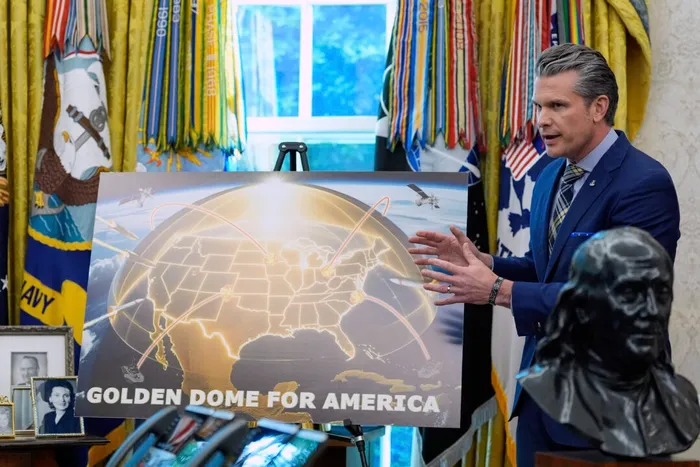
U.S. President Donald Trump has dubbed the new air defence system the “Golden Dome” and Ottawa has previously said it would consider joining the program. Trump has announced different price tags for Canada’s participation, ranging between US$61 billion and US$71 billion.
Carney said that talks with Washington on Canada joining the Golden Dome are “going well” and noted the project is currently under development.
“If it’s in the right interest of Canada, and I think there are certainly many scenarios where it will be in the right interest of Canada, we will be a willing participant,” he said.
Carney said there are many areas of close cooperation on defence between Canada and the United States, such as continental defence under the North American Aerospace Command (NORAD). He noted that Canada is taking steps to improve its contribution to the program, including through the purchase of an over-the-horizon radar system.
“But we are also exploring the next phase of that defence with the United States,” he said, mentioning the need to protect against increasingly sophisticated threats such as hypersonic missiles.
While there have been trade tensions between Canada and the United States, Canadian officials working in the fields of defence and intelligence say cooperation has remained robust.
Carney’s comments on the Golden Dome came after a reporter quoted Trump saying Carney doesn’t want the Golden Dome to be extended over Greenland.
“I apologize, I don’t recognize the comment of the president, it’s certainly not representing my point of view,” Carney said in response.
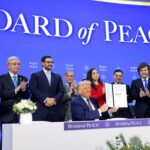
Trump had made the comment on social media in late January, at the end of the week during which he and Carney delivered speeches at the World Economic Forum (WEF) annual meeting in Davos, Switzerland. Carney used thinly-veiled criticism to target Trump’s policies in his speech, while Trump said in his address that Carney was not “grateful” for Canada’s relationship with the United States.
“Canada is against The Golden Dome being built over Greenland, even though The Golden Dome would protect Canada,” Trump said in a Jan. 23 Truth Social post.
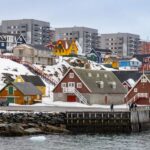
Greenland, a self-governing Danish territory, had been the source of intense focus and geopolitical frictions between the United States and European countries in the days leading to the WEF meeting.
Trump said acquiring Greenland represented a critical national security action focused on facilitating the deployment of the Golden Dome’s components to defend against possible aerial threats from Russia and China. The United States military currently operates the Pituffik Space Base in Greenland, which supports missile warning and defence missions.
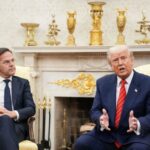
Tensions around the issue subsided when Trump said in Davos he would not seek to annex Greenland by force. He also said a framework for a deal on the territory had been established after meeting with NATO Secretary General Mark Rutte.
Canada has expressed support for Denmark and Greenland’s sovereignty amid the row. Canada and Denmark signed a defence cooperation agreement last week, and Canada opened a consulate in Greenland in early February. Plans for the consulate predated Trump’s arrival at the White House last January.
Carney’s comments on the Golden Dome were made on the same day he released his defence industrial strategy. The plan calls for using various federal levers to broaden Canada’s industrial base to better fulfill domestic defence needs and to increase exports of military hardware.
This follows Carney’s commitment to meet in this fiscal year NATO’s previous guideline of spending 2 percent of GDP on defence. The military alliance agreed last year to raise the guideline to 5 percent by 2035.
“The truth is, over the last few decades, Canada has neither spent enough on our defence nor invested enough in our defence industries,” Carney said. “We’ve relied too heavily on our geography and others to protect us. This has created vulnerabilities that we can no longer afford, and dependencies that we can no longer sustain.”