

By Bill Pan
The White House said on April 15 that President Donald Trump is considering relief measures for American farmers who face falling prices and rising production costs during the trade dispute with China.
At a press briefing on Tuesday, when asked whether the president would roll out a support package similar to the one implemented during his first term, White House press secretary Karoline Leavitt confirmed that the idea is under active discussion.
“The secretary of agriculture, I know, has spoken to the president about that, and … it’s being considered,” Leavitt said.
Leavitt was also asked about a Trump proposal to allow farmworkers who are in the United States illegally to temporarily leave the country and return as legal workers. She said the president is in “constant communication” with his Cabinet about ways to support farmers but did not provide specifics or a timeline for rollout.
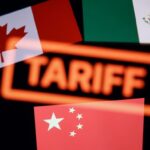
Trump has imposed tariffs on a wide range of commodities from across the world, including a 25 percent levy on steel and aluminum, as well as on certain goods from Canada and Mexico. The most punishing among them is a 145 percent levy on imports from China, which has retaliated with a 125 percent tariff on U.S. goods following multiple rounds of escalating trade penalties between the two nations.
In 2018 and 2019, Trump authorized $28 billion in payments to farmers to offset the losses caused by China’s retaliatory tariffs. During that period, Beijing deliberately targeted agricultural products—such as pork, corn, sorghum, and soybeans—produced in rural states that voted for Trump in the 2016 election.
One of the hardest-hit sectors was soybean farming. China—once the largest market for American soybeans—sharply reduced its purchases from American suppliers and instead turned to Brazilian beans as a replacement. Brazil, where a mild climate allows for two harvests per year and vast areas of savannah and forest have been cleared for crop production, has emerged as the world’s top soybean producer, accounting for 40 percent of the global market and 70 percent of China’s soybean imports.
The first-term trade war culminated in the 2020 Phase One trade deal, under which Beijing committed to buying an additional $200 billion in U.S. goods and services over two years, including $80 billion in agricultural products. An analysis from the Peterson Institute for International Economics found that China ultimately purchased just over 70 percent of the agreed-upon agricultural total.
Tariffs are now markedly higher than they were six years ago.
Earlier this month, during an appearance on Fox News, Agriculture Secretary Brooke Rollins acknowledged that the current tariff landscape is creating uncertainty for farmers and ranchers, many of whom already operate on thin profit margins. However, she hinted that relief may be on the horizon.
“It is certainly a time of angst when you look at everything as a whole, especially as we’re talking about these tariffs,” Rollins said. “But I believe we’re going to see very quick relief again.”
The secretary did not provide a specific timeline but suggested that the new aid package could arrive within three to four months, which would align with the harvest season.
“We’re already starting to think about what a mitigation effort might look like,” she said. “Hopefully, none of that is necessary.”