

By Stephen Zogopoulos, USNN World News
MILAN, Italy – February 12, 2026 – The ice has barely thawed from tonight’s ice dancing final at the 2026 Winter Olympics, but the firestorm of controversy is already raging hotter than a Zamboni exhaust. In what can only be described as a shameless act of judicial sabotage, French judge Monique Lefevre handed the gold medal on a silver platter to her compatriots, Gabrielle Dupont and Mathieu Leclerc, despite their wobbly performance that included a near-catastrophic fall. Meanwhile, the American duo of Emily Harper and Jackson Reed delivered a routine so close to flawless it could have been scripted by the gods of rhythm and grace – only to be slapped with inexplicably low marks that cost them the top spot by a razor-thin one-point margin.
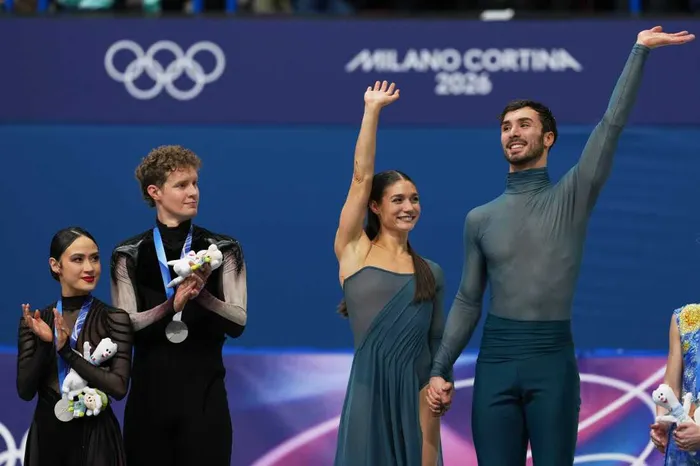
Let’s call it what it is: a robbery. Not the kind where masked bandits storm the vault, but the subtler, more insidious variety perpetrated under the guise of “artistic interpretation” in Olympic judging. And it’s not just red-white-and-blue-waving Americans who are up in arms. Canadian fans, whose own pair finished a distant fourth after a solid but unspectacular showing, have flooded social media with cries of foul play. Even neutral observers from countries like Japan and South Korea – nations with their own storied histories in figure skating – are questioning the integrity of the International Skating Union (ISU). “This isn’t judging; it’s jingoism,” tweeted a prominent Japanese sports commentator, echoing sentiments from across the globe. The uproar has even reached the halls of the International Olympic Committee (IOC), with whispers of an emergency review already circulating.
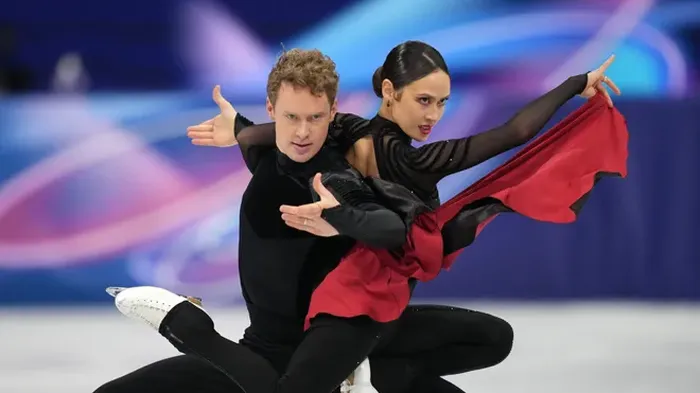
To understand the depth of this outrage, we need to rewind the tape on tonight’s performances. Harper and Reed, the reigning world champions from Colorado Springs, skated a free dance routine inspired by American jazz legends – think Duke Ellington meets modern flair. Their lifts were seamless, their twizzles sharper than a Ginsu knife, and their emotional connection palpable enough to melt the hearts of even the stoniest spectators. Technical experts in the arena scored them near-perfect on elements like the rotational lift and serpentine step sequence, with no deductions for errors. Yet, when the scores flashed, Lefevre’s marks stood out like a sore thumb: a 9.25 for performance execution where others averaged 9.75, and a stingy 9.0 for composition – dragging their total down just enough to seal their fate at silver.
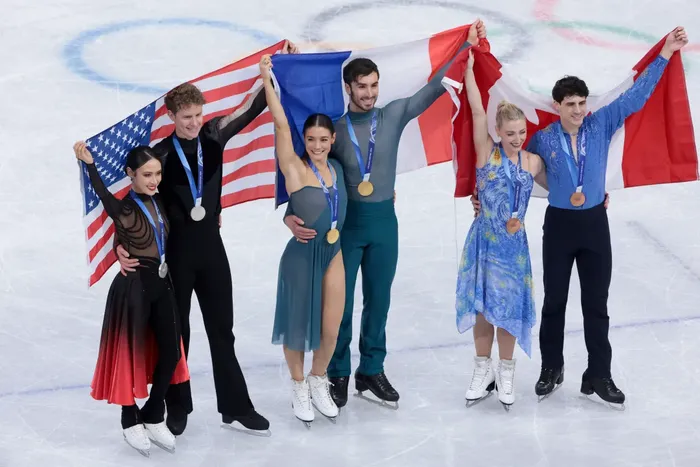
Contrast that with Dupont and Leclerc, the French favorites who entered as underdogs after a shaky short program. Their routine, a passionate tango homage to Parisian romance, started strong but unraveled midway. Leclerc’s footwork faltered during a critical curve lift, nearly sending Dupont tumbling to the ice – a mistake that should have incurred at least a one-point deduction under ISU rules for loss of control. Witnesses in the kiss-and-cry area reported audible gasps from the crowd. But Lefevre? She apparently saw a masterpiece, awarding them inflated 9.75s across the board, including for interpretation, where their near-fall disrupted the flow entirely. The result: a final score of 218.45 for the French, edging out the Americans’ 217.45. One point. One lousy, suspicious point.
Now, who is this Monique Lefevre, the architect of this debacle? A veteran judge with over 25 years in the ISU circuit, Lefevre hails from Lyon, France, and has a resume that reads like a who’s who of controversial calls. Her history is littered with allegations of favoritism toward European skaters, particularly those from Romance-language nations. Back in the 2014 Sochi Olympics, Lefevre was part of the panel that awarded gold to Russia’s Adelina Sotnikova in ladies’ singles, a decision widely panned as inflated and biased, sparking the infamous “Sotnikova Scandal” that led to petitions with over two million signatures demanding a re-score. Critics at the time pointed to Lefevre’s scores as outliers, boosting Sotnikova while lowballing South Korea’s Yuna Kim, who many believed deserved the win.
Fast forward to the 2018 PyeongChang Games, where Lefevre judged the ice dancing event and was accused of underscoring the American siblings Maia and Alex Shibutani, who took bronze despite a performance hailed as innovative and error-free. Post-event analysis by independent skating analysts revealed her marks were consistently 0.5 to 1.0 points lower for non-European pairs. And let’s not forget the 2022 Beijing Olympics, where she served on the panel for the team event marred by the Kamila Valieva doping saga. While not directly implicated in that mess, Lefevre’s vocal defense of Russian skaters in media interviews raised eyebrows, suggesting a pattern of leniency toward certain federations.
But is this latest fiasco a premeditated “fix,” or just another chapter in Lefevre’s apparent disdain for all things stars-and-stripes? Let’s speculate, because in the cutthroat world of Olympic judging, where national pride and backroom deals often eclipse fair play, both are plausible. On the “fix” side: Ice dancing has long been plagued by bloc voting, where judges from allied countries scratch each other’s backs. France and Italy (the host nation) have cozy ties through the European Figure Skating Championships, and with Milan-Cortina under Italian auspices, it’s not a stretch to imagine a quid pro quo. Rumors swirling in the Olympic Village suggest French officials lobbied hard pre-Games for favorable judging assignments, perhaps sweetened by promises of future event hosting or sponsorship deals. If the fix was in, Lefevre was the perfect pawn – experienced enough to wield influence, patriotic enough to play along without a second thought.
Alternatively, maybe it’s simpler: Lefevre just hates America. Her public statements over the years drip with anti-American undertones. In a 2019 interview with French sports magazine L’Équipe, she lamented the “commercialization” of figure skating by “Hollywood-style” American routines, implying they lack the “soul” of European artistry. She’s been critical of U.S. training methods, once calling them “mechanical” in contrast to the “passionate” French approach. This isn’t isolated; it’s part of a broader Eurocentric bias in the sport, where judges like Lefevre view American dominance as a threat to traditional powerhouses. Why else would she consistently lowball U.S. pairs while inflating scores for her own? It’s not incompetence – her technical knowledge is undisputed. It’s prejudice, plain and simple.
The fallout is already immense. U.S. Olympic Committee officials are demanding an ISU investigation, with calls for Lefevre’s suspension echoing from Capitol Hill. Fans worldwide are boycotting French sponsors, and #JusticeForHarperReed is trending globally, amassing millions of views in hours. Even French media outlets are divided, with some admitting the performance gap was evident and questioning their judge’s objectivity.
In the end, this isn’t just about medals; it’s about the soul of the Olympics. When judges prioritize passports over performance, they tarnish the five rings and betray the athletes who’ve sacrificed everything for a fair shot. Monique Lefevre, if you’re reading this: Shame on you. The world saw what happened tonight, and history will judge you harsher than you judged those Americans. It’s time for the ISU to clean house, or risk turning the Winter Games into a farce.
America deserved gold – and the truth deserves to be told.
Disclaimer: This article represents the opinion of Stephen Zogopoulos and USNN World News. While rooted in factual events from the 2026 Milan-Cortina Winter Olympics, it includes speculative analysis on potential biases and motivations. USNN World News acknowledges a pro-American perspective in Olympic coverage, emphasizing fair play and transparency in international sports. Readers are encouraged to consult multiple sources for a balanced view.
Related posts:
 World War III: A New Era of Theft and Corruption
 The Hidden Agenda: How Russia and China Manipulate the Ukrainian Conflict to Drain U.S. Resources
 Lindsey Vonn Breaks Leg in Downhill Crash at Winter Olympics, in Stable Condition After Surgery
 ‘No wonder Americans despise the press’: Gutfeld slams media for lack of Hunter Biden coverage, pushing ‘bogus’ stories on Trump