
By Andrew Moran
Federal Reserve Chair Jerome Powell plans to remain as head of the U.S. central bank until his nominated successor, Kevin Warsh, is confirmed.
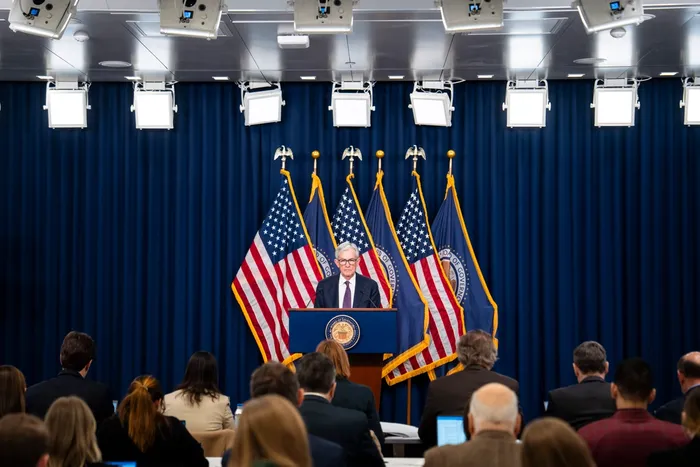
Speaking to reporters at the post-meeting press conference on March 18, Powell stated that he would serve as “chair pro tem” if President Donald Trump’s pick to lead the Fed is not approved by the Senate.
This follows the law, he said, and “that’s what we’ve done on several occasions, including involving me, and that’s what we’re going to do in this situation.”
In addition, Powell reaffirmed that he doesn’t intend to leave the Fed’s Board of Governors “until the investigation is well and truly over with transparency and finality.”
Powell’s seat on the Board does not end until early 2028. He has not confirmed whether he will leave the central bank before his term expires.
“I have not made that decision yet,” Powell said. “I will make that decision based on what I think is best for the institution and for the people we serve.”
Powell said in January that the Department of Justice had served the Fed with grand jury subpoenas related to his June 2025 testimony about cost overruns for renovation of the central bank’s headquarters.
This past week, U.S. District Judge James Boasberg quashed the grand jury subpoenas issued as part of a criminal investigation. He determined that the Department of Justice shared “essentially zero evidence” that the Fed chief committed a crime.
“A mountain of evidence suggests that the Government served these subpoenas on the Board to pressure its Chair into voting for lower interest rates or resigning,” Boasberg wrote.
Trump has said that he was unaware of the criminal investigation regarding Powell’s testimony in June 2025. The president has regularly criticized Powell and his colleagues at the Fed for not lowering interest rates fast enough and for the overbudget renovations of the central bank’s headquarters.
U.S. Attorney for the District of Columbia Jeanine Pirro said she will appeal the ruling, calling it “outrageous.”
“Jerome Powell is now bathed in immunity,” she told reporters on March 13. “This is wrong, and it is without legal authority.”
The nomination process for former Fed Governor Kevin Warsh, meanwhile, has yet to begin.
In January, Trump selected Warsh as Powell’s successor, but his selection has faced pushback.
Sen. Thom Tillis (R-N.C.) has reaffirmed that he will block Warsh’s nomination until the Justice Department’s probe of Powell is resolved or dropped. Many of his Republican colleagues, however, have expressed support for the former White House economist.
Democrats have urged the Senate Banking Committee to delay proceedings until the investigation is done.
Warsh has proposed a range of reforms for the Federal Reserve. While he has expressed sympathy with the president’s goal of lowering interest rates, it is unclear whether Warsh would immediately loosen monetary policy upon arriving at the Fed.
Investors have already pushed back their policy expectations, pricing in a one-quarter-point interest rate cut in December, according to futures market data.
At Powell’s second-to-last Federal Open Market Committee meeting, the Fed voted 11—1 to leave the benchmark federal funds rate in its existing range of 3.5 percent to 3.75 percent.
Based on the Summary of Economic Projections—a quarterly snapshot of officials’ expectations for monetary policy and the broader economy—the Fed is forecasting one rate cut in 2026 and another in 2027.
The post-meeting committee statement and Powell remarked on the “uncertainty” of economic fallout from the three-week-old war in Iran, which began on Feb. 28.
“Near-term measures of inflation expectations have risen in recent weeks, likely reflecting the substantial rise in oil prices caused by the supply disruptions in the Middle East,” Powell said.
“In the near term, higher energy prices will push up overall inflation, but it is too soon to know the scope and duration of the potential effects on the economy.”
The Fed will hold its two-day policy meeting on April 28 and 29.