
By Ryan Morgan
U.S. Secretary of State Marco Rubio hosted the Israeli and Lebanese ambassadors to the United States for a set of direct talks on April 14, amid ongoing Israeli military operations in southern Lebanon. The parties reported constructive discussions, but no immediate deal out of the talks in Washington.
Rubio said the meetings were not just about reaching a ceasefire between Israel and Lebanon, but about marginalizing Hezbollah—a designated terrorist organization that’s active within Lebanon. Hezbollah holds influence within Lebanon’s Shia Muslim population and keeps ties with Iran’s Shia Islamic leadership.
“This is about bringing a permanent end to 20 or 30 years of Hezbollah’s influence in this part of the world,” Rubio said in comments ahead of the Tuesday talks.
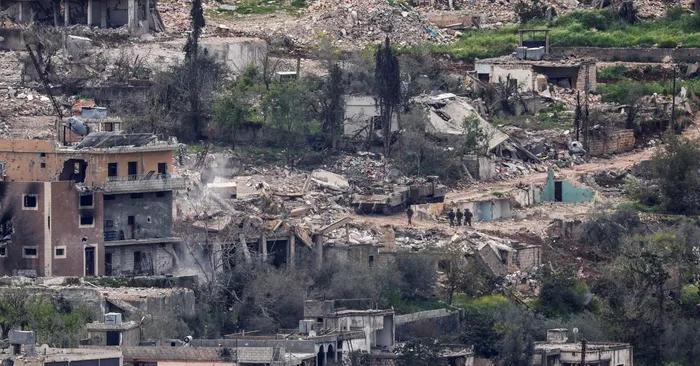
Israeli forces have maintained a presence on the ground in southern Lebanon since October 2024, after marching across the Israel-Lebanon border to uproot Hezbollah. Israel and Lebanon reached a ceasefire in November 2024, but Israeli forces have continued military operations in Lebanon.
After U.S. and Israel forces commenced large-scale military operations in Iran on Feb. 28, Hezbollah intensified its drone and rocket attacks on Israel. In turn, Israeli forces ramped up air strikes and ground combat operations within Lebanon.
Israeli forces have continued combat operations in Lebanon after the fighting with the Iranian regime hit a pause on April 7.
Lebanon’s Health Ministry has reported that at least 2,124 people have been killed and around 1 million more have been displaced as a result of recent Israeli strikes. The Israeli military has indicated it won’t allow the displaced to return to southern Lebanon until the area is deemed sufficiently demilitarized.
The Tuesday meeting—which included Israeli Ambassador to the United States Yechiel Leiter and Lebanese Ambassador to the United States Nada Hamadeh Moawad—marked the first time since 1993 that the Israeli and Lebanese governments have openly engaged in direct diplomatic talks with one another.
Acknowledging the historically strained diplomatic ties between Israel and Lebanon, Rubio said progress in the talks will take time.
“This is a process, not an event,” Rubio said. “This is more than just one day.”
Discussions wrapped on Tuesday after about two hours.
The U.S. State Department said the parties discussed transforming the November 2024 ceasefire into a more comprehensive peace deal. The State Department said the Lebanese government could potentially gain access to reconstruction assistance and support for its economic recovery by continuing with the talks.
In comments to reporters as the talks concluded, Leiter said he was encouraged by a sense of shared opposition to Hezbollah. The Israeli ambassador also hailed Lebanese President Joseph Aoun for defying Hezbollah’s calls for his government to forego the meeting in Washington.
“This is the beginning of a very strong and fortified, consistent battle against Hezbollah,” Leiter said. “They are weakened as they’ve never been, and together, we’ll continue to rid the threat of this Iranian proxy, which is so malign and so malignant in the region.”
In a statement to Reuters, Moawad described the Tuesday meeting as constructive.
The Lebanese ambassador called for a ceasefire and for displaced people to be able to return to their homes. She also called for humanitarian support for Lebanon.
The Associated Press and Reuters contributed to this report.