
By Naveen Athrappully
The United States is considering releasing up to 92.5 million barrels of crude oil from its Strategic Petroleum Reserve (SPR), with the Department of Energy (DOE) soliciting bids from companies.
“Today’s solicitation opens competitive bidding, continuing DOE’s execution of President Trump’s swift 172-million-barrel release as part of a coordinated 400-million-barrel action by International Energy Agency (IEA) member nations’ strategic reserves,” the DOE said in a statement on April 30.
The 172-million-barrel release was announced in March to tackle rising oil prices amid the Iran War. At the time, the DOE had said that the full release would take roughly 120 days to deliver and that it expected a total of around 200 million barrels to be returned to the SPR within the next year “at no cost to the taxpayer.”
In its recent statement, DOE said that the participating companies in the 92.5 million barrel “emergency exchange” will return them with “additional premium barrels, ensuring the SPR grows beyond current levels while delivering immediate supply to refiners and global oil markets.”
Roughly 80 million barrels have already been released through three previous emergency exchange RFPs [Request for Proposals]. In these exchanges, the winning companies agreed to deliver 24 percent more crude oil barrels while returning the original supply.
DOE has “executed a historic, record-speed series of SPR exchange solicitations—the largest in the Reserve’s 50-year history, moving critical crude oil supplies quickly to market to address short-term oil flow disruptions and strengthen energy security for the United States and its allies,” the department said.
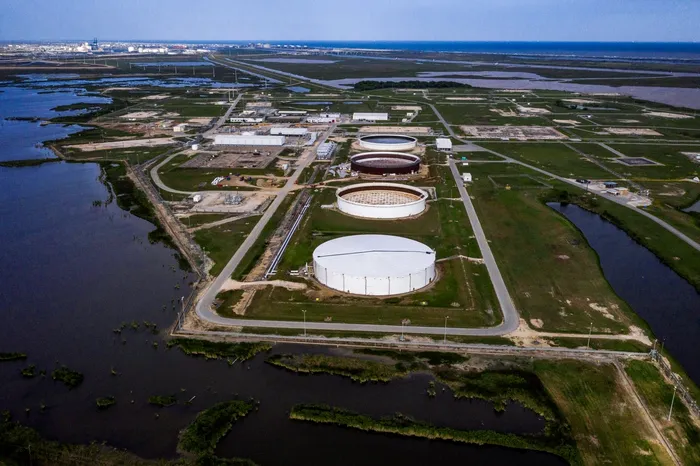
The oil will come from the SPR’s Bayou Choctaw, Bryan Mound, Big Hill, and West Hackberry sites.
According to an April 30 post by the Energy Information Administration, the SPR, established in the 1970s to mitigate the effects of unexpected oil supply disruptions, can hold up to 714 million barrels of crude oil across its four storage sites. Currently, SPR stocks are at 397.9 million barrels.
For the week ending April 24, the DOE released 7.1 million barrels of oil from the reserve, “the most released since the week ending October 7, 2022,” the EIA said.
Oil and Gasoline Prices
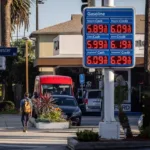
When the DOE announced the 172 million barrel release in March, the national average gasoline price was around $3.58 per gallon. More than a month and a half since the announcement, gas prices have shot up.
On May 1, the national average price of regular gas was $4.39 per gallon, according to data from the American Automobile Association.
In Nevada, Oregon, Washington state, and Hawaii, prices were higher than $5 per gallon, and in California, the price has exceeded $6.
During a press event at the Oval Office on Thursday, President Donald Trump suggested that gasoline prices would plummet once the Iran War ends.
“The gas will go down. As soon as the war’s over, it’ll drop like a rock,” Trump said. “There’s so much of it, it’s all over the place, sitting all over the oceans of the world.”
Brent crude oil futures ended Feb. 27, the day before the war began, at around $72 per barrel. Oil was trading at around $110 per barrel as of 8:25 a.m. ET on Friday.
In an April 30 post, ING Bank said that the oil market has shifted from “over-optimism” to face the reality of supply disruption caused by the Iran War.
“The breakdown of talks between the US and Iran, along with President Trump reportedly rejecting Iran’s proposal for a reopening of the Strait of Hormuz, has the market losing hope for any quick resumption in oil flows,” the bank said.
Trump had rejected Tehran’s proposal to reopen the Strait of Hormuz and decided to continue the naval blockade of Iran until a nuclear deal is reached.
“While we estimate demand destruction in the region of 1.6m b/d, which is significant, it’s clearly not enough to fill the supply gap we are currently facing. The longer this disruption persists, the less the market can rely on inventory, and the greater the need for further demand destruction. The only way to drive this would be through higher oil prices,” ING said.