

By Frank Fang
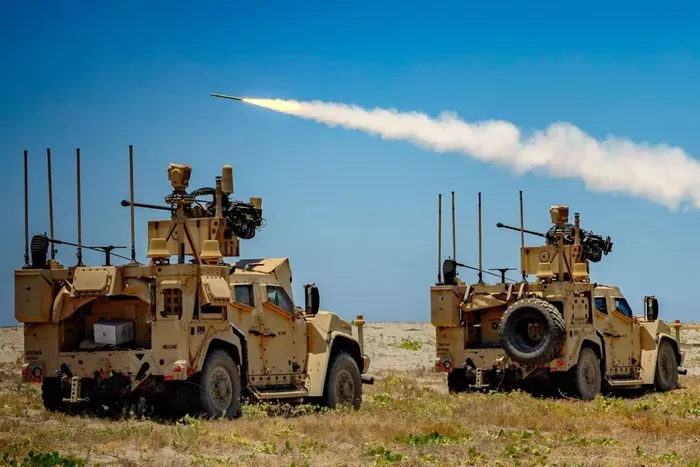
The Trump administration plans to deploy more advanced missile systems to the Philippines to help deter the Chinese communist regime’s aggression, following high-level talks between senior officials from both sides in Manila on Feb. 16.
The U.S. Department of State issued a joint statement on Feb. 16 regarding the 12th Philippines–United States Bilateral Strategic Dialogue, which focused on expanding economic, political, and security engagements and boosting collaboration with regional allies.
Washington and Manila highlighted the importance of reestablishing deterrence in the Indo-Pacific.
“Both sides condemned China’s illegal, coercive, aggressive, and deceptive activities in the South China Sea, recognizing their adverse effects on regional peace and stability and the economies of the Indo-Pacific and beyond,” the two countries said in the statement.
The United States installed a mid-range missile system, known as Typhon, in the northern Philippines in 2024, followed by the deployment of an anti-ship missile launcher in 2025.
Beijing has urged Manila to withdraw the missile systems from its territory, a request that officials led by Philippine President Ferdinand Marcos Jr. have rejected.
The joint statement outlined specific defense and security plans for the year ahead, including a pledge to “continue and work to increase deployments of U.S. cutting-edge missile and unmanned systems to the Philippines” and “expand and modernize the Philippines’ civilian and military cyber defense capabilities and ability to detect and disrupt cyber threats.”
The Philippine ambassador to the United States, Jose Manuel Romualdez, who participated in the Feb. 16 dialogue, said defense officials from both sides discussed the potential deployment this year of “upgraded” U.S. missile launchers, which the Philippines may ultimately choose to purchase.
“It’s a kind of system that’s really very sophisticated and will be deployed here in the hope that, down the road, we will be able to get our own,” Romualdez told The Associated Press.
Romualdez said that the Typhon missile system, which the U.S. Army deployed to Luzon in the northern Philippines in April 2024, and an anti-missile launcher called the Navy Marine Expeditionary Ship Interdiction System, deployed in April 2025, have remained in the Philippines.
The U.S. missile deployment is “purely for deterrence,” Romualdez said. “Every time the Chinese show any kind of aggression, it only strengthens our resolve to have these types.”
Indo-Pacific
The dialogue, first convened in 2011, was last hosted in April 2024.
“Both sides underscored their unwavering commitment to uphold a free, open, prosperous, and secure Indo-Pacific, grounded in mutual respect for sovereignty, territorial integrity, international law, and the peaceful resolution of disputes,” the Feb. 16 joint statement reads.
The two nations vowed to maintain “a vigilant posture in the Indo-Pacific to prevent conflict” and to develop “strong measures along with the deterrence to keep sea lanes open and not subject to arbitrary control by one country,” according to the statement.
“Collective defense is critical to denying and deterring aggression anywhere in the First Island Chain,” the statement reads.
In recent years, Manila has accused Beijing of ramming its boats and blasting them with water cannons, and firing flares at its aircraft, with most of the incidents occurring around the contested Sabina Shoal in the South China Sea.
Following an incident in October 2025, in which a Chinese coast guard vessel struck a Philippine government ship in the South China Sea, Washington reaffirmed its support for Manila by citing the 1951 United States–Philippines Mutual Defense Treaty. State Department spokesperson Thomas Pigott said at the time that the treaty “extends to armed attacks on Philippine armed forces, public vessels, or aircraft—including those of its Coast Guard—anywhere in the South China Sea.”
The first island chain—which stretches from the southern Japanese island of Kyushu, Taiwan, the Philippines, to the Malay Peninsula—is considered a strategic barrier that prevents China from gaining easy access to the Pacific Ocean for its naval and air forces.
The Feb. 16 joint statement highlighted significant milestones achieved by both sides since 2024, including a meeting between U.S. President Donald Trump and Marcos Jr. in Washington in 2025, and the Philippines’ joining the U.S.-led Artemis Accords on space cooperation in October last year.
The two sides also agreed on the importance of maintaining peace and stability across the Taiwan Strait.
China conducted large-scale military drills around Taiwan for two days at the end of 2025, prompting international criticism, including from Washington and Manila. According to the Philippine News Agency, Philippine Defense Secretary Gilberto Teodoro Jr. said at the time that Beijing’s actions “undermine regional peace and stability.”
The Associated Press contributed to this report.
Related posts:
 US to Deploy Nuclear-Capable B-52 Bombers to Australia Amid Increasing Beijing Tensions: Report
 US Announces $567 Million for Taiwan’s Defense
 NORAD Shows Dramatic Video of Russian Fighter Jet Flying Close to Aircraft Off Alaska
 US Greenlights $2 Billion Arms Deal With Taiwan, Featuring Advanced Missile Defense