

By Naveen Athrappully
Mortgage delinquency rates on one- to four-unit residential properties increased in the fourth quarter of 2025 on both a quarterly and annual basis, the Mortgage Bankers Association (MBA) said in a Feb. 12 statement.
The fourth-quarter delinquency rate was a seasonally adjusted 4.26 percent of all outstanding loans, up by 27 basis points from the third quarter and up by 28 basis points from a year ago.
Mississippi saw the largest quarterly jump in the overall delinquency rate, followed by Louisiana, Maryland, Oklahoma, and Indiana.
Marina Walsh, MBA’s vice president of industry analysis, said delinquencies rose across all three major loan types in the past three months of the year: conventional loans, Federal Housing Administration (FHA) loans, and Department of Veterans Affairs loans.
“The most pronounced uptick was with FHA loans, which reached a delinquency rate of 11.52 percent, the highest level since the second quarter of 2021,” Walsh said.
“While earlier-stage FHA delinquencies remained relatively flat compared to the previous quarter, later-stage, 90+ day delinquencies increased by 76 basis points. The FHA foreclosure inventory rate also grew to the highest level since the first quarter of 2020.”
Walsh suggested the fourth-quarter jump in delinquencies may partly be the result of “disparities in the labor market,” which she said was a key determinant of mortgage delinquency levels.
In a Feb. 10 post at Liberty Street Economics, economists from the Federal Reserve Bank of New York suggested that as labor markets weaken, households increasingly struggle to meet mortgage obligations in a timely manner.
The economists analyzed unemployment rates and mortgage delinquency data of various counties.
“Counties experiencing the steepest increases in unemployment saw a notable worsening in mortgage delinquency by nearly 0.6 percentage points over the past year,” the post reads.
“In contrast, in counties where unemployment rates have remained stable or declined, the increase in newly delinquent mortgages has been relatively modest—around 0.2 percentage points.”
According to data from the Bureau of Labor Statistics, the unemployment rate has been on an upward trend since it hit a low of 3.4 percent in April 2023, rising by almost 1 percentage point as of January this year.
Since January, the unemployment rate has remained at or above 4 percent each month. On the positive side, the rate has started to decline over the past few months. In November, the unemployment rate was 4.5 percent, and it fell over the following two months to 4.3 percent in January.
More Than 40,000 Properties Foreclosed
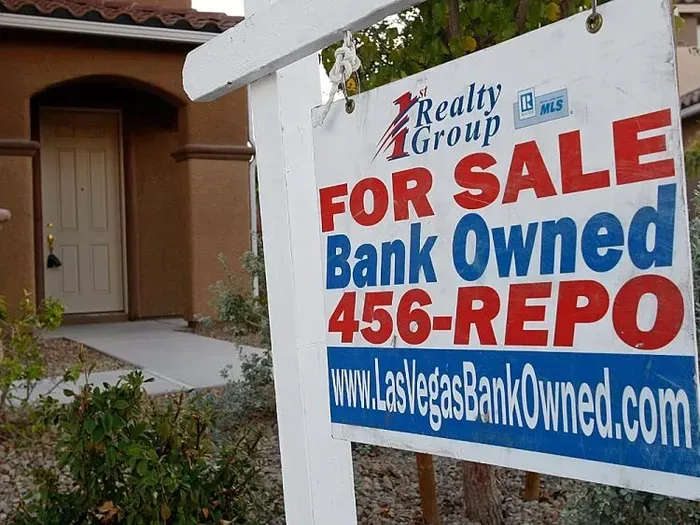
In addition to rising mortgage delinquencies, foreclosure rates are rising on an annual basis. In January, 40,534 properties across the United States made a foreclosure filing, according to a Feb. 12 report from real estate analytics company ATTOM.
While this was 10 percent down from December, it was 32 percent higher than January 2025, the report said, adding that this was the 11th consecutive month of annual foreclosure activity increases.
States with the highest foreclosure rates were Delaware, Nevada, Florida, South Carolina, and Maryland, ATTOM said.
The Trump administration has taken steps to ease the burden on homeowners in terms of lowering their monthly payments.
In a post on Truth Social last month, President Donald Trump ordered the purchase of $200 billion worth of mortgage bonds.
The purchase is expected to lower mortgage rates, with subsequent effects on homeowners’ monthly payments.
Other strategies proposed by the Trump administration to make housing affordable include introducing 50-year terms for mortgages to bring down monthly payments for borrowers; opening up federal lands for construction activity; eliminating capital gains taxes on home sales; and making a national housing emergency declaration to speed up development activities.
Meanwhile, housing affordability has improved over the past year. The income required to afford a typical home for sale has fallen by 4 percent from a year ago, according to real estate brokerage Redfin.
As for mortgage rates, the average weekly rate of a 30-year fixed-rate mortgage has declined from 6.87 percent a year back to 6.09 percent as of Feb. 12, according to data from Freddie Mac.