

By Andrew Moran
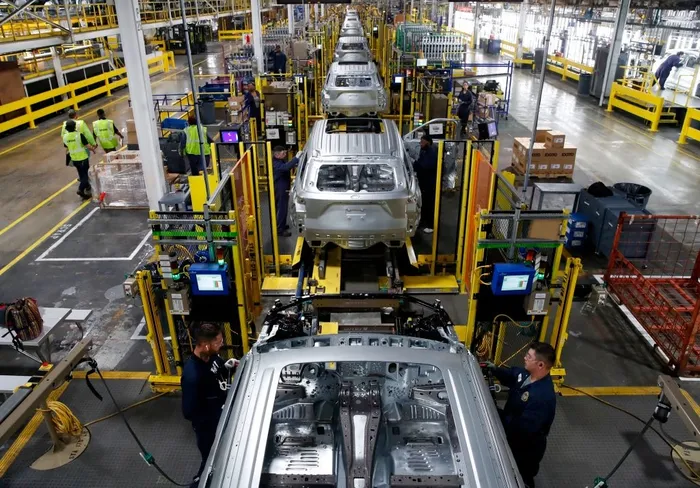
U.S. manufacturing activity held steady in April, despite the war in Iran driving up factory costs, new industry data released on May 1 show.
April’s purchasing managers’ index—a monthly survey of firms indicating the sector’s prevailing economic direction—was unchanged at 52.7, according to the Institute for Supply Management.
While it fell short of the market estimate of 53.0, it was the highest level since August 2022.
New orders accelerated, production expanded, and supplier deliveries lengthened. Employment levels declined at the fastest rate in four months.
Prices advanced last month, climbing at the sharpest pace in more than four years, driven by rising oil and diesel costs tied to the nine-week-old Iranian conflict.
The Iran war remained top of mind for respondents, but tariffs were also a second concern for manufacturing companies, said Susan Spence, chair of the organization’s business survey committee.
“In this second month of the Iran war (at the time of data collection), 31 percent of the comments were positive and 69 percent negative, with a positive to negative sentiment ratio of 1 to 2.2,” Spence said in a news release.
“As was the case last month, some panelists referenced both topics within a single comment or in mixed sentiment.”
S&P Global’s alternative report was even better, with the manufacturing sector registering its best activity since May 2022.
But while exports suffered their eleventh straight monthly drop due to tariffs and Middle East tensions, new orders, output growth, and purchasing activity surged to their best levels in four years.
Likewise, input cost inflation and output charges jumped, reaching a 10-month high last month.
The ISM and S&P Global PMIs are comparable to the Federal Reserve’s regional findings.
Story continues below advertisement
The Fed’s latest Beige Book—a summary of economic conditions across the central bank’s 12 districts—found robust manufacturing growth in much of the country.
Looking ahead, business confidence rebounded on hopes that the conflict would be resolved, says Chris Williamson, chief business economist at S&P Global Market Intelligence.
“More encouragingly, business expectations for output in the year ahead have improved, partly reflecting hopes that the US will be less affected by the war than previously feared, and less than other economies, as well as reduced concerns over the impact of tariffs given the recent Supreme Court ruling,” Williamson said in the report.
“However, some of these improved expectations of future production gains reflected a reaction to better than anticipated order book inflows in April, which may prove to be a chimera as the stock building boost fades.”
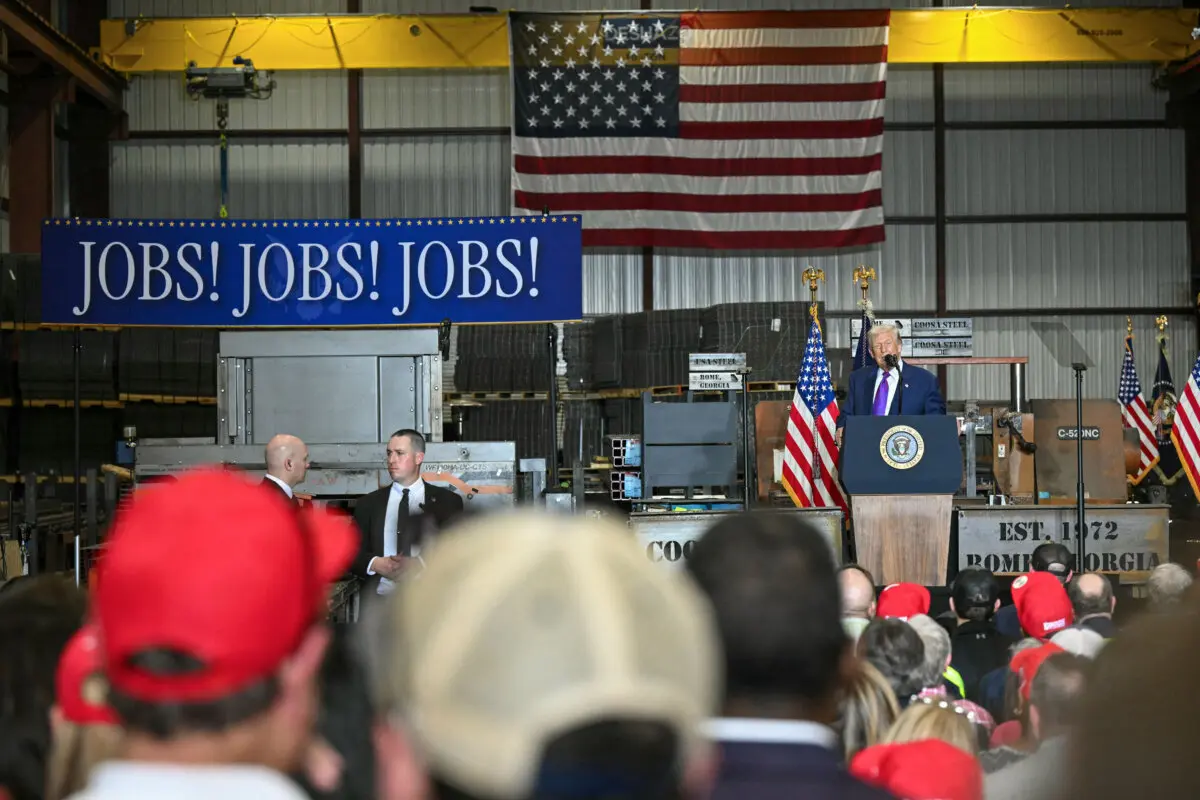
In February, the U.S. Supreme Court ruled against President Donald Trump’s use of the International Emergency Economic Powers Act (IEEPA) to impose sweeping global tariffs. While he has implemented a universal 10 percent tariff, the federal government has begun the process of tariff refunds.
Rebalancing Global Trade
A key objective behind the White House’s tariff agenda is to reshore manufacturing and rebalance international trade.
Prior to the North American Free Trade Agreement in the 1990s, manufacturing played a substantial role in economic growth and employment. Since then, however, the industry represents a smaller share of gross domestic product and jobs.
At the end of 2025, manufacturing accounted for 9.4 percent of the economy, down from the peak of 25 percent in the 1970s. In addition, manufacturing payrolls total about 12.5 million, down from the high of almost 20 million in 1979.
Over the past year, scores of domestic and foreign companies have committed hundreds of billions of dollars to revitalize the U.S. manufacturing, from building chip-building facilities to expanding pharmaceutical factories. Several companies, including Apple and Nvidia, have pledged to establish or expand training programs to enhance workers’ skills.
Despite the president’s expansive tariffs, a recent independent analysis concluded that these efforts have not yet resulted in a manufacturing renaissance.
“Tariffs didn’t seem to drive significant near-term increases in reshoring or reduce America’s total import dependence,” Kearney, a global management consulting firm, wrote in the report.
Still, Trump remains focused on using tariffs to advance his economic agenda.
The president said on May 1 that he will increase the tariffs on automobiles and trucks imported from the European Union to 25 percent, effective next week.
“Many Automobile and Truck Plants are currently under construction, with over 100 Billion Dollars being invested, A RECORD in the History of Car and Truck Manufacturing,” Trump said on Truth Social. “These Plants, staffed with American Workers, will be opening soon—There has never been anything like what is happening in America today.”
Jack Phillips contributed to this report.