

By Jack Phillips
The United States has flown more than 8,000 combat flights and struck more than 7,800 targets in Iran since the conflict began three weeks ago, U.S. Central Command (CENTCOM) said on March 18, as Iranian state-run media warned of imminent strikes on nearby countries’ oil refineries.
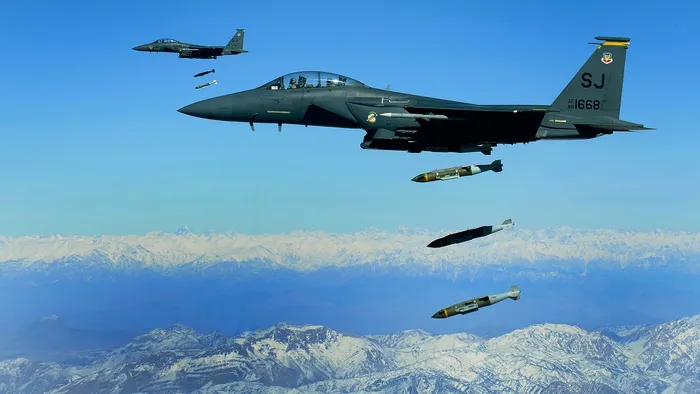
On Wednesday, CENTCOM also said U.S. planes dropped several 5,000-pound bombs on what it described as “hardened Iranian missile sites” along the Strait of Hormuz in a bid to allow oil tankers to pass through the strategic waterway. Since combat operations started on Feb. 28, around 120 Iranian military ships have also been destroyed.
Israeli officials said that its military killed Iran’s intelligence minister, Esmail Khatib, on Wednesday, a day after killing powerful security chief Ali Larijani and another official who was in charge of a volunteer militia.
“No one in Iran has immunity and everyone is in the crosshairs,” said Israeli Defense Minister Israel Katz. He and Prime Minister Benjamin Netanyahu had authorized the Israeli military “to target any senior Iranian official for whom an intelligence and operational opportunity arises, without the need for additional approval,” Katz said.
During a Fox News interview on March 18, White House press secretary Karoline Leavitt described Khatib as a “known terrorist.”
“Of course, this man is no longer with us here on earth,” she said. “And that’s a good thing for the United States. And it’s a good thing for the American people who have long been threatened by this rogue terrorist regime.”
Iranian state-run media on March 18 said Tehran would start attacking oil and gas infrastructure in neighboring Saudi Arabia, Qatar, and the United Arab Emirates, specifically threatening strikes on Saudi Arabia’s Samref Refinery and its Jubail Petrochemical Complex. This came after Iran stated that its South Pars gas field and associated infrastructure came under attack on Wednesday.
Warning that civilians should avoid those sites, Iranian state media said that Al Hasan Gas Field in the United Arab Emirates, as well as multiple plants and a refinery in Qatar, could come under attack.
The state-run Tasnim News said the Iranian Islamic Revolutionary Guards Corps (IRGC) “had already given clear and repeated warnings to the rulers of those three Arab countries against entering such a hazardous path or gambling on the fate of their nations.”
The price of oil surged to more than $109 per barrel on international markets, increasing the cost of gasoline and other goods, as well as putting pressure on consumers and economies around the world as traffic in the Strait of Hormuz effectively stopped. The Trump administration said it has eased sanctions on Venezuela and temporarily waived maritime shipping requirements in a bid to boost oil production.
Responding to higher gas prices nationwide, Vice President JD Vance predicted that the price increases will be transitory but noted there is a “rough road ahead of us for the next few weeks.”
“Look, gas prices are up, and we know that they’re up and we know that people are hurting because of it, and we’re doing everything we can to ensure they stay lower,” Vance said during an event in Michigan on Wednesday.
He added that the Trump administration is “working on a number of things—in fact, a couple of things that I think will be announced in just the next 24 to 48 hours.”
Reuters contributed to this report.