
By Bill Pan
The United States and Argentina have finalized a new trade deal under which two of the Western Hemisphere’s largest economies will lower barriers to each other’s goods.
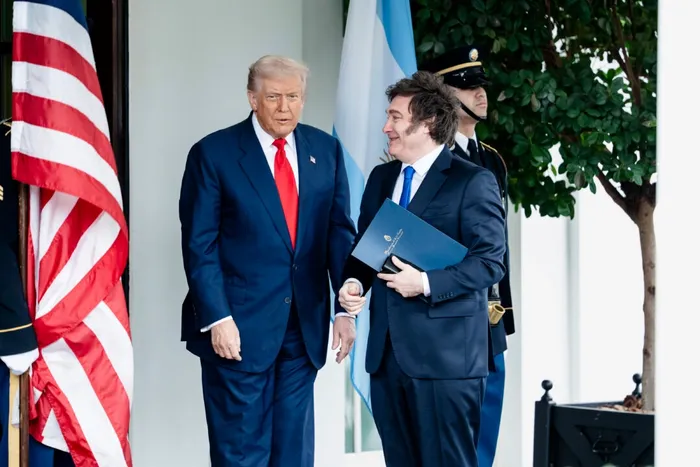
On Feb. 5, U.S. Trade Representative Jamieson Greer and Argentine Foreign Minister Pablo Quirno signed a trade and investment agreement in Washington, formalizing a framework the two sides agreed upon in November 2025.
Under the agreement, Argentina will eliminate trade barriers on 221 categories of U.S. goods, including chemicals, machinery, and medical devices, according to a statement from Quirno’s office.
“Today Argentina sent a clear signal to the world: We are a reliable partner, open to trade and committed to clear rules, predictability, and strategic cooperation,” Quirno wrote in a post on X.
Buenos Aires also pledged to cut tariffs to 2 percent on another 20 categories, mainly auto parts, and to grant tariff-free quotas for vehicles and certain agricultural products, such as live cattle and dairy. Those sectors were long shielded by steep tariffs until Argentine President Javier Milei, a self-described anarcho-capitalist, moved to open the market to global competitors.
The United States will eliminate reciprocal tariffs on 1,675 Argentine products, a change the Argentine government says could boost export earnings by more than $1 billion.
Washington will also grant a major expansion of preferential access for Argentine beef, raising the quota to 100,000 metric tons. That represents an additional 80,000 metric tons on top of the 20,000 metric tons already allowed, and it is expected to lift Argentine beef exports to the United States by about $800 million.
In a Feb. 6 proclamation increasing certain categories of beef imports, the White House confirmed that the entire additional 80,000 metric tons will be sourced from Argentina.
The United States also agreed to review its 50 percent tariffs on Argentine steel and aluminum imports.
The deal comes amid Milei’s ongoing efforts to dismantle Argentina’s long-standing protectionist policies and a parallel push by President Donald Trump to lower food prices for American consumers.
“We are working on beef, and I think we have a deal on beef,” Trump said in October 2025 as his administration sought to increase the volume of Argentine beef entering the U.S. market.
Beef prices in the United States have climbed to record highs after cattle ranchers cut their herds in response to a years-long drought in the West that dried up grazing land and pushed up feed costs.
By early 2026, the U.S. herd had shrunk to 86.2 million cattle—including 27.6 million beef cows—extending a multiyear decline, according to U.S. Department of Agriculture data. Retail beef prices peaked at $6.68 per pound in December 2025, Federal Reserve figures show.
Domestic cattle ranchers, however, have questioned the new imports. The National Cattlemen’s Beef Association, the main group representing American producers, previously cheered on Trump’s reciprocal tariffs but called the increased access for Argentine beef a “misguided effort” that will hurt “the livelihoods of American cattlemen and women, while doing little to impact the price consumers are paying at the grocery store.”
Rather than turning to foreign beef, the association says, the administration should focus on combating destructive pests and making additional investments to protect the domestic herd from foreign animal diseases, as well as easing regulatory burdens—such as restrictions on controlling predators such as gray wolves—that it argues are holding back U.S. ranchers.