
By Tom Ozimek
Relative calm was gradually returning to Mexico on Feb. 25 after the killing of drug lord Nemesio Oseguera Cervantes, known as “El Mencho,” unleashed a wave of cartel violence that paralyzed highways, grounded flights, and sent residents and tourists scrambling for safety.
President Claudia Sheinbaum said at a Feb. 24 briefing that authorities were working to restore order following Sunday’s military operation in Tapalpa, Jalisco, that left the Jalisco New Generation Cartel (CJNG) leader dead after a shootout.
“Today there was no school, but tomorrow activities are expected to return to normal,” she said. “In the Guadalajara airport, practically all flights have already resumed, and in Puerto Vallarta, little by little, things are returning to normal.”
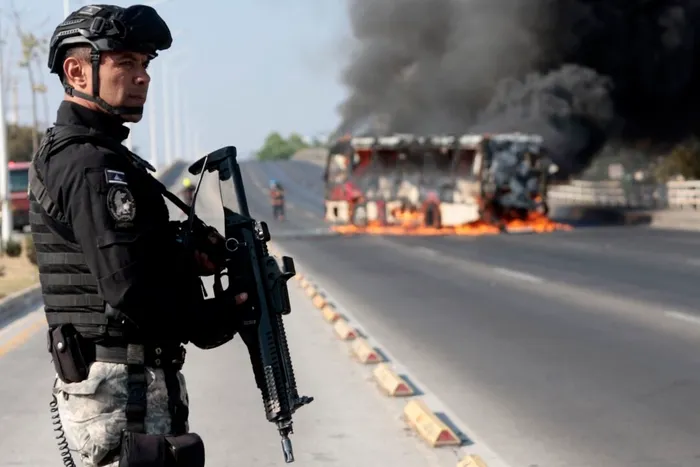
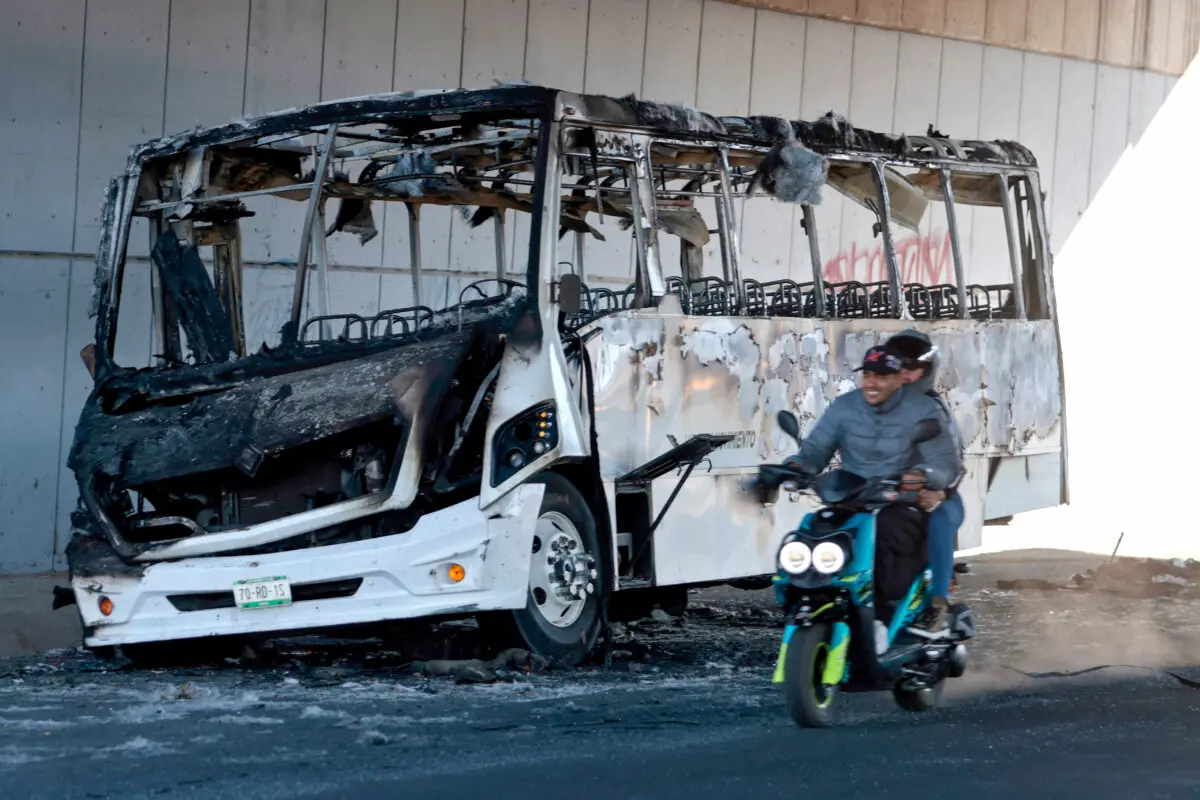
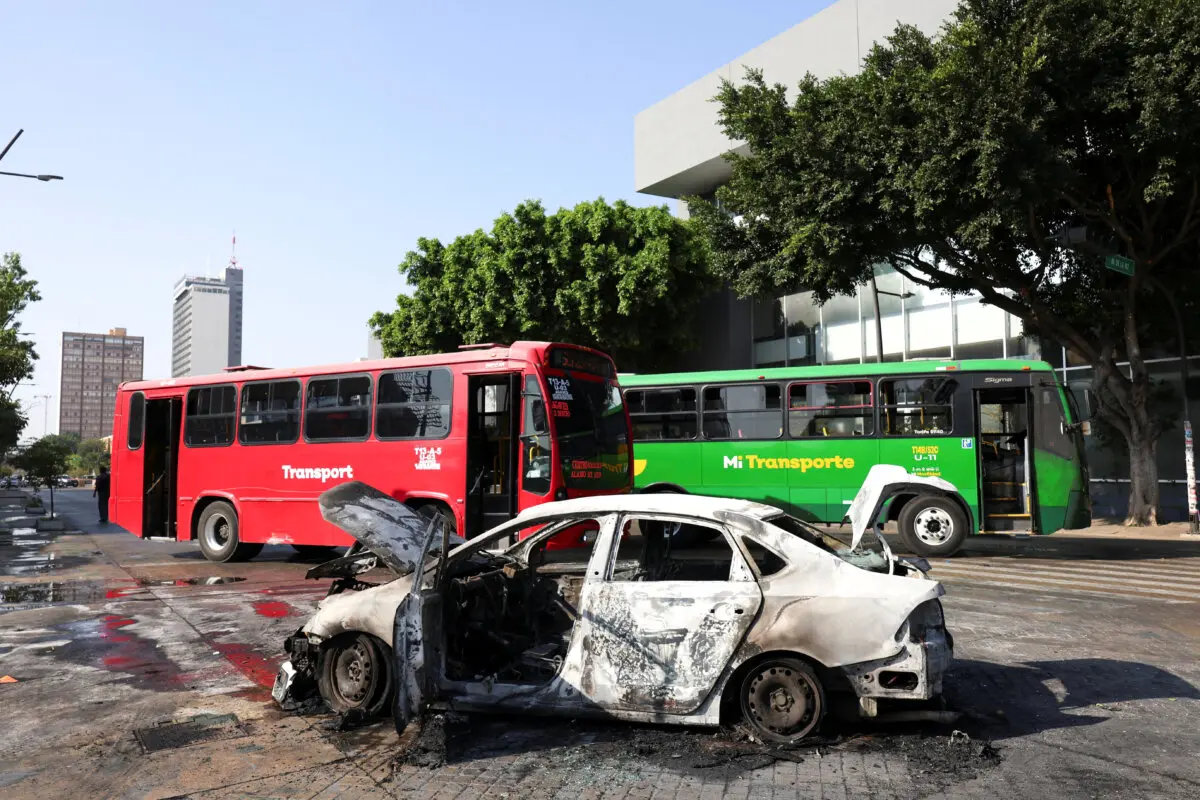
Sheinbaum added that there were still some burned vehicles on roadsides that would be removed.
Mexico’s Security Cabinet said in a Feb. 24 post on X that affected states are experiencing “a gradual reopening of economic and educational activities, with progressive normalization of mobility and strategic operations,” according to a translation.
“In Michoacán, nearly all damaged vehicles have been removed, and in Jalisco, coordinated efforts are underway to remove units that were obstructing roadways,” the Cabinet said. “Some bus services from Mexico City to Colima and Monterrey remain partially suspended, as do routes in Zamora; a blockade remains in place on the Zapotlanejo–Lagos highway near Tepatitlán.”
The Cabinet said it continues to hold coordination meetings with local authorities to ensure public safety and an orderly return to activities.
Jalisco Governor Pablo Lemus Navarro said in a post on X that the state had lifted its highest security alert level, known as the “Red Code,” while keeping security forces deployed, particularly along federal and state highways.
“This morning, public transportation service is operating normally throughout the state,” Navarro wrote, noting that Guadalajara’s light rail system was running regularly and conventional bus routes were resuming service at roughly 60 percent capacity. Businesses—including markets, self-service stores, and financial institutions—were reopening, he added.
World Cup Security Assurances
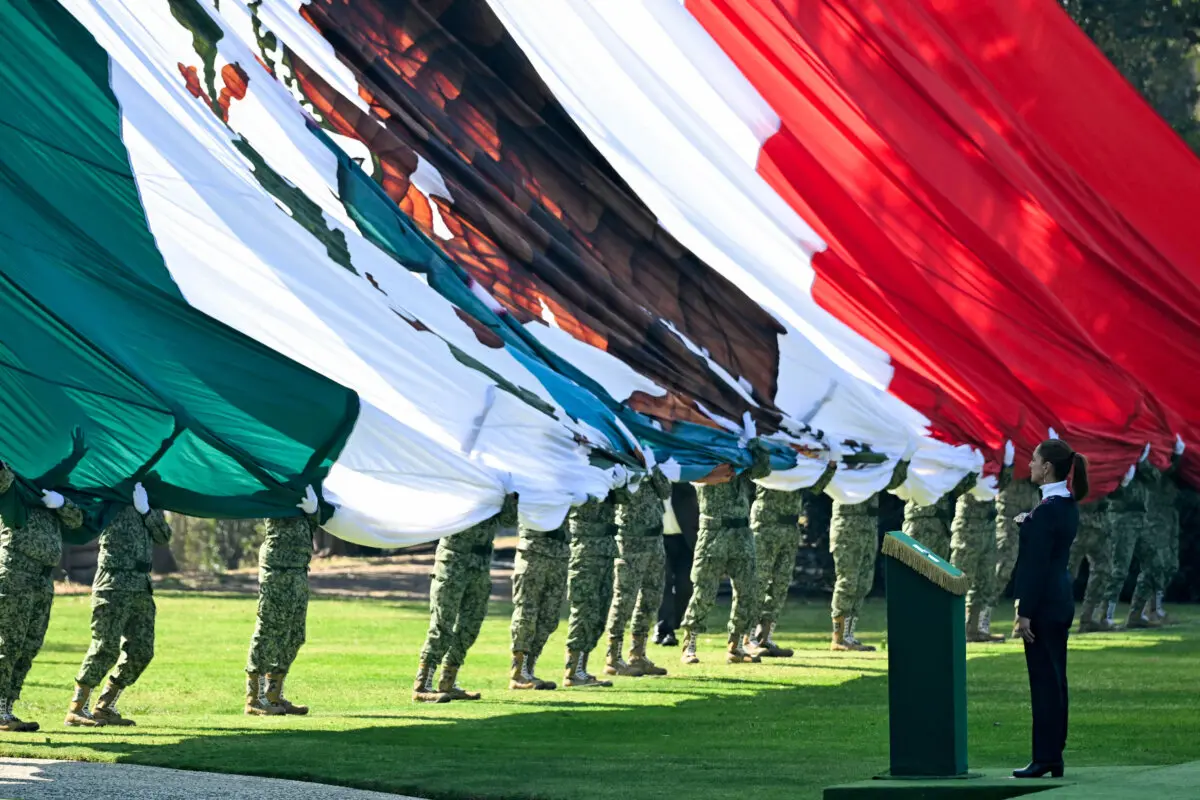
Sheinbaum also sought to reassure international visitors ahead of the 2026 FIFA World Cup, telling reporters on Feb. 24 that there was no risk to fans traveling to Mexico despite the recent violence.
She said “all the guarantees” for safety are in place for the tournament, which is expected to draw large numbers of fans to matches in Mexico City, Monterrey, and Guadalajara.
Mexico is set to host 13 of the 104 matches in the expanded tournament, including four in Guadalajara, the capital of Jalisco state, which was among the areas hit by cartel reprisals.
A spokesperson for FIFA said the organization was monitoring the situation closely.
“We will continue to follow the actions and directions from the different government agencies, aimed at maintaining public safety and restoring normalcy, and we reiterate our close collaboration with federal, state, and local authorities,” the spokesperson said.
The soccer tournament is set to open on June 11.
Heavy Toll in Clashes
The violence followed one of the most significant blows against Mexico’s cartels in a decade.
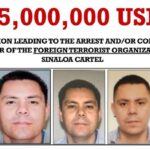
Oseguera, long one of the United States’ most wanted fugitives, was killed after Mexican forces tracked a key associate linked to his inner circle, Defense Secretary Gen. Ricardo Trevilla Trejo said on Feb. 23. The cartel leader and two bodyguards fled into a wooded area and were fatally wounded in a firefight.
More than 50 people died in the operation and its aftermath, authorities said Monday. Twenty-five members of Mexico’s National Guard were among the dead, according to Security Secretary Omar García Harfuch. Eight CJNG members were killed during the raid itself, Trevilla said.
The White House said the United States provided intelligence support for the operation. U.S. officials later warned cartels against targeting American citizens in retaliation.
Criminal gangs should “know not to lay a finger on a single American or they will pay severe consequences under this president, and they already are,” White House press secretary Karoline Leavitt told “Fox & Friends” in an interview on Feb. 24. “Right now, we are unaware of any reports of any Americans being hurt, kidnapped, or killed.”
The CJNG, one of Mexico’s fastest-growing criminal organizations and a major trafficker of fentanyl and methamphetamine to the United States, responded to Oseguera’s death with widespread violence. Gunmen torched vehicles, erected roadblocks across multiple states, and exchanged fire with security forces.

Tourists Caught in the Chaos
In the Pacific resort city of Puerto Vallarta, plumes of black smoke rose above downtown as explosions and gunfire echoed through the streets.
Steve Perkins, a 57-year-old tourist from Oklahoma, said he and his wife were drinking coffee on their hotel terrace when they heard the first blast.
“We heard an explosion and really didn’t think too much of it because we often hear construction noise, you know, going on around downtown,” Perkins said.
But within minutes, he said, they “started seeing more and more and hearing more and more explosions and booms. And then seeing more and more fires.”
“The entire downtown in the bay was just covered in thick black smoke, pretty scary,” he added.
At one point, he said, they heard screams from nearby streets.
“So then we started getting really worried,” he said.
The couple swapped their flip-flops for running shoes in case they “needed to make a run for it,” he said.
Perkins, who has visited Puerto Vallarta annually since 2012, said the experience left him shaken.
“We’ve never felt unsafe ever—not at one time—until yesterday,” he said, adding that they do not plan to return.
The U.S. Embassy said personnel in multiple cities sheltered in place and worked remotely on Monday, urging American citizens in affected areas to do the same.
By Tuesday, however, officials on both sides of the border said that mobility was improving and security was being restored.
“Flight schedules have returned to normal in Guadalajara, and many airlines have additional flights scheduled for today, February 24, in Puerto Vallarta,” the U.S. Embassy in Mexico said in a Feb. 24 post on X. “Both airports are secure and have services available.”
The Associated Press and Reuters contributed to this report.