
By Naveen Athrappully
The United Nations has adopted a “leaner, better prioritized” regular budget for 2026 that saves $570 million and cuts nearly 2,900 posts, Jeff Bartos, U.S. representative for U.N. management and reform, said in a Dec. 30 post on X.
These are “unprecedented reforms that represent an important first step to make the UN more accountable, more disciplined and better equipped to deliver real results,” Bartos wrote. “The United States will continue to advance President Trump’s vision for a back-to-basics UN that meets its full potential.”
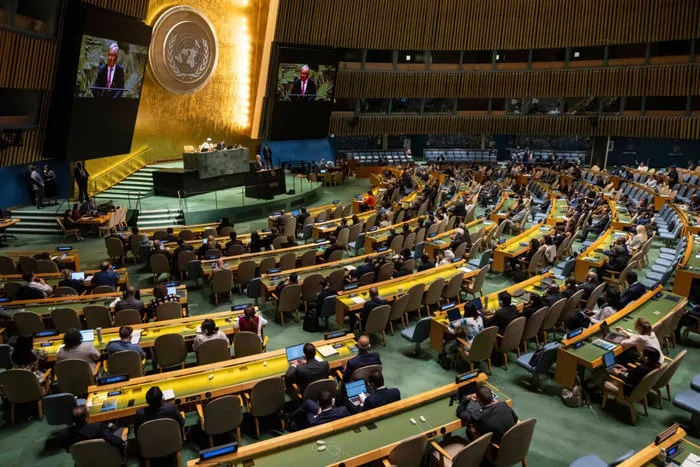
The $3.45 billion budget for 2026 was approved during the U.N. General Assembly Fifth Committee meeting on Tuesday, the organization said in a Dec. 30 statement.
The budget largely reflects the U.N. secretary-general’s proposal to cut financial resources by 15 percent and staffing by nearly 19 percent, it said.
During his address at the meeting, Bartos said the job cuts reduce the “bloated bureaucracy” at the organization.
“As our collective resolution clearly states: Reforms are not a one-time exercise. To that end, we expect ambitious and tangible reform proposals in the 2027 and 2028 budgets, including structural realignments, improved efficiency, and the elimination of duplication,” he said.
“Next year’s comprehensive review of U.N. compensation and benefits must produce significant changes—including lowering the margin to bring U.N. compensation in line with the U.S. civil service comparator. These commonsense reforms are essential to ensure that the U.N.’s compensation system is fair, sustainable, and respectful of the taxpayers who fund this institution.”
The United States contributes almost a third of all funding for the U.N., according to a post by the Council on Foreign Relations.
President Donald Trump has been a vocal critic of the United Nations, questioning the effectiveness of the organization when it comes to resolving international conflicts.
On Feb. 4, Trump signed an executive order withdrawing the United States from the U.N. Human Rights Council (UNHRC), while banning funding to the U.N. Relief and Works Agency (UNRWA).
According to the order, UNRWA employees were involved in the Oct. 7, 2023, Hamas attack against Israel. As for UNHRC, the order criticized the council for having “protected human rights abusers by allowing them to use the organization to shield themselves from scrutiny.”
“I’ve always felt that the U.N. has tremendous potential,” Trump said at the time. “It’s not living up to that potential right now. It hasn’t for a long time.”
During a September address to the U.N. General Assembly, Trump criticized the organization for failing to contribute to peace deals in recent years. He also accused the U.N. of “funding an assault on Western countries and their borders” by promoting and aiding illegal immigration.
The Epoch Times reached out to a spokesperson for the U.N. secretary-general for comment regarding budget cuts and criticism from the Trump administration, but did not receive a response by publication time.
The U.N. budget cut announcement came a day after the United States and the U.N. finalized an agreement, with Washington committing to $2 billion in humanitarian funding.
Under the agreement, the U.N. is required to “consolidate humanitarian functions to reduce bureaucratic overhead, unnecessary duplication, and ideological creep,” the U.S. State Department said in a Dec. 29 statement. “Individual UN agencies will need to adapt, shrink, or die.”
The department alleged that many U.N. bodies had abandoned their mission to protect global peace and security, instead promoting “radical social ideologies” and undermining American interests and values.
As part of the deal, the U.N. Office for the Coordination of Humanitarian Affairs will create new accountability and impact teams, instituting fresh oversight and reporting procedures that provide American policymakers greater insight into the organization’s humanitarian operations.
This will ensure that “funds are efficiently allocated and are never diverted to terrorist groups or American adversaries,” according to the department.
Addressing delegates at the Fifth Committee meeting on Tuesday, U.S. Controller Chandramouli Ramanathan praised the committee for steering a complicated process to a timely conclusion, according to the U.N.’s Dec. 30 statement.
The fact that the committee reached an agreement by consensus once again despite arduous negotiations was “something remarkable that you should not underestimate,” he said.
The 2,900 positions are set to be cut by Jan. 1, 2026, with the separation of more than 1,000 staff members already finalized, the U.N. said. The organization employs around 37,000 workers across offices in 193 countries.