

By Catherine Yang
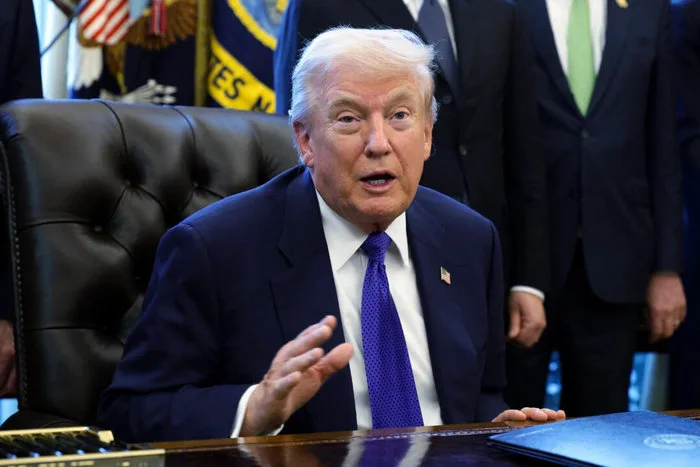
President Donald Trump announced on Feb. 2 a new strategic private sector critical minerals stockpile.
“Project Vault” is being seeded with $1.67 billion in private capital and a $10 billion loan from the U.S. Export-Import Bank, and it is meant to insulate U.S. industries from market disruptions such as the seismic critical minerals rule change Beijing previewed in 2025.
The Pentagon already has a critical minerals stockpile, kept in six locations across the country, to be used in the event of a national emergency. However, Beijing announced a major rule change in 2025 that would subject all sales of critical minerals mined or processed in China—which could be up to 90 percent of global supply—to review and approval from Chinese authorities.
That would upend the status quo by severely restricting or disrupting the supply chain, and Beijing’s announcement accelerated global efforts to find alternative sources. When Chinese authorities implemented a much smaller-scale version of a critical minerals licensing regime earlier in 2025, it caused supply disruptions, and within weeks, some auto part manufacturers were forced to shut down entire production lines.
After a U.S.–China meeting in October 2025, Beijing agreed to pause its new licensing regime for one year, during which, Trump said, the United States will have found other reliable sources.
“We don’t want to ever go through what we went through a year ago,” Trump said at a press briefing at the Oval Office.
Project Vault is meant to be a key component of that derisking strategy, and it has buy-in from some of the biggest U.S. companies. Participants already include General Motors, Boeing, Corning, Stellantis, and Google.
The venture will allow participating companies continued access to their requested critical minerals at set prices in exchange for paying a stockpile maintenance fee, making an up-front payment on their purchases, and agreeing to continue to buy those materials in future years.
John Yovanovitch, head of the U.S. Export-Import Bank, said the president directed agencies to come up with a solution that did not put the cost burden on taxpayers.
“Manufacturers and workers all across the country can rest assured they’ll have what they need when they need it most,” he said at the Feb. 2 briefing. “And the best part about it is that the American taxpayer will earn a return on financing the first ever strategic critical minerals reserve in history.”
The purchasing of raw materials for the stockpile will be handled by energy commodity trading companies Hartree Partners, Traxys North America, and Mercuria Energy Group.
The set pricing mechanism counters the Chinese regime’s predatory pricing practices that drove global critical minerals miners and processors out of business years ago. Chinese state-subsidized companies have undercut multiple industries over the years by flooding the market with products priced below their competitors’ costs.
Because the companies participating in Project Vault are making long-term purchasing agreements at set prices, the venture would function to establish price floors for the industry that Treasury Secretary Scott Bessent previewed in 2025.
The project also follows an executive order Trump signed earlier this month directing the U.S. trade representative and commerce secretary to negotiate critical minerals agreements with trading partners on the basis of national security. One of the goals was to secure price floors with trading partners, and the United States would guarantee minimum import prices for critical minerals in exchange.
The United States has secured several international partnerships on critical minerals since the start of the second Trump administration, including with Japan, Australia, and Ukraine. The agreements range from cooperation on research and development to multibillion-dollar investments and pricing safeguards.
Interior Secretary Doug Burgum said during the briefing that announcements of partnerships with 11 more countries will be forthcoming this week and that 20 more countries are interested in joining.
The State Department announced that it is hosting the first U.S. Critical Minerals Ministerial on Feb. 4 to “create momentum for collaboration to secure these critical components vital to technological innovation, economic strength, and national security.”
Related posts:
 US Would Face ‘Deep and Immediate Recession’ If Chips from Taiwan Stop Flowing, Warns Commerce Secretary
 Biden Administration’s Semiconductor Export Controls Face Mounting Hurdles
 Data Reveal Drop in US Imports From China Amid Tariff Showdown
 MP Materials, Pentagon, Saudi Mining Company to Build Rare Earth Refinery in Saudi Arabia