

By Kimberly Hayek
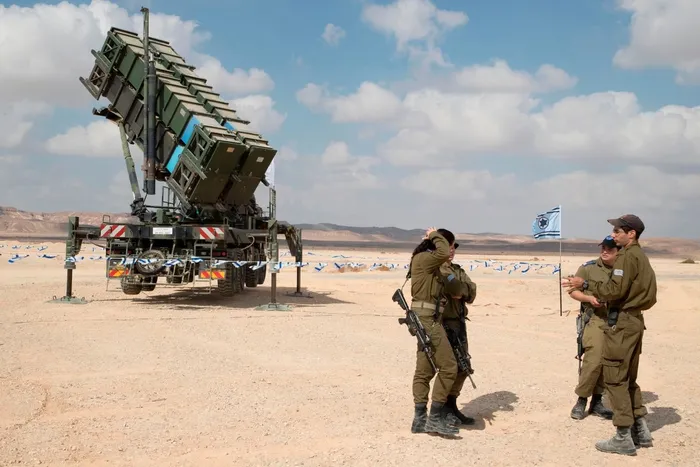
The Trump administration invoked emergency powers on May 1 to go around congressional review and approve more than $8.6 billion in military sales to Middle East partners, including advanced precision munitions and missile defense systems for Israel, Qatar, Kuwait, and the United Arab Emirates.
U.S. Secretary of State Marco Rubio concluded that emergencies necessitated immediate action, precluding the standard congressional notification under the Arms Export Control Act, which typically requires Congress to review major foreign weapons sales, giving lawmakers time to raise objections or block deals.
The State Department announcements on Friday came as the United States and Israel’s war against Iran marked nine weeks since its start and more than three weeks since a fragile ceasefire came into effect.
The announcements said the sales improve partners’ self-defense ability without changing the regional military balance.
The largest package will go to Qatar, which will receive Patriot air and missile defense systems valued at an estimated $4.01 billion, including 200 PAC-2 Guidance Enhanced Missiles and 300 PAC-3 Missile Segment Enhancement missiles, as well as spare parts, repair services, and technical support. Qatar also secured $992.4 million in Advanced Precision Kill Weapon System (APKWS) II all-up-rounds.
The UAE was approved to receive $147.6 million in APKWS guidance sections and related equipment.
Israel was approved for $992.4 million in APKWS systems. Israel also receives 10,000 APKWS II rounds as part of the deal.
Also approved was the sale to Kuwait of an integrated battle command system at a cost of $2.5 billion.
Principal contractors for the systems are BAE Systems for APKWS, and Lockheed Martin and RTX for Patriot. Northrop Grumman, RTX, and Lockheed Martin were the principal contractors in the integrated battle command system sale to Kuwait.
The APKWS is a laser-guided rocket system of the Hydra 2.75-inch rocket, used to counter the increased use of drones and precision weapons, which have been on display in the Iran conflict. The system is described as a cost-effective option against small targets, such as drones and boats.
On Jan. 30, weeks before the conflict began, more than $15 billion in arms sales were approved for Israel and Saudi Arabia.
The United States and Israel attacked Iran on Feb. 28 in what has been called Operation Epic Fury by Washington. Iran responded with its own strikes on Israel and Gulf states that host U.S. bases. The conflict has involved sustained missile exchanges, cyber operations, and proxy engagements across the Middle East.
Reuters contributed to this report.