
By Jack Phillips
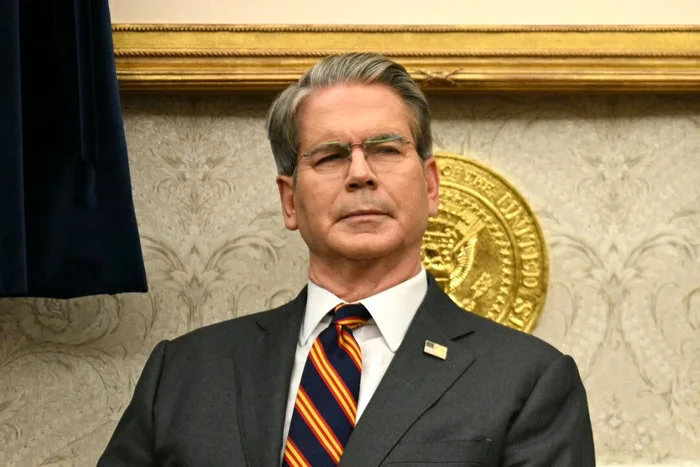
Treasury Secretary Scott Bessent said that his department can easily cover any refunds related to tariffs if the Supreme Court rules against the administration on their legality.
“It won’t be a problem if we have to do it, but I can tell you that if it happens—which I don’t think it’s going to—it’s just a corporate boondoggle,” Bessent told Reuters in an interview over the weekend. “Costco, who’s suing the U.S. government, are they going to give the money back to their clients?”
The Treasury currently has $774 billion, more than enough to cover any potential refunds if the Supreme Court issues such an order, Bessent said.
“We’re not talking about the money all goes out in a day,” the secretary said. “Probably over weeks, months, may take over a year, right?”
Bessent said that companies, however, have not been passing the tariff costs on to consumers, saying there was “very, very little, if any, pass-through,” and disputed that President Donald Trump’s tariffs contributed to inflation. He said goods inflation had been below headline inflation.
While there had been speculation that the Supreme Court would issue a tariff-related ruling on Jan. 9, the high court only released one opinion, related to a criminal case. The justices set Jan. 14 as the court’s next date for issuing orders.
Last week, Bessent said during an event at the Economic Club of Minnesota that he expects the Supreme Court to issue a mixed ruling. “If they rule against us, then it will be some kind of a mishmash of ‘you can do this; you can’t do that.’”
The Treasury secretary told Reuters that he expects Treasury budget data for calendar year 2025 to show a deficit reduction of $300 billion to $400 billion from calendar 2024, providing additional capacity. The government operates on a fiscal-year basis, reporting a deficit of $1.775 trillion for fiscal 2025, which ended on Sept. 30.
The Trump administration has used the International Emergency Economic Powers Act to issue a broad range of tariffs against nearly every country under the 1977 law’s emergency provision. A number of companies, including Costco, have sued the Trump administration over the legality of how the tariffs were implemented.
Multiple lower federal courts have ruled against the tariffs, prompting the White House to appeal the matter to the Supreme Court.
In recent weeks, Trump has said that the tariffs are needed as leverage for national security-related matters and added that the duties have been used to stop wars.
“If a President is not allowed to use Tariffs, we will be at a major disadvantage against all other Countries throughout the World,” Trump wrote in a post on Truth Social in November.
Story continues below advertisement
Weighing in on the Supreme Court’s decision, Trump wrote in a post on Jan. 2 that “tariffs are an overwhelming benefit to our Nation, as they have been incredible for our National Security and Prosperity” and that “losing our ability to Tariff other countries who treat us unfairly would be a terrible blow to the United States of America.”
According to data released by Bureau of Economic Analysis on Jan. 8, the U.S. trade deficit narrowed sharply in October 2025 and fell to its lowest level in 16 years. The United States has collected $98 billion in tariff revenue so far this year, the Treasury Department said.
Reuters contributed to this report.