

By Louis Navellier
Last Wednesday, the Federal Open Market Committee (FOMC) cut key interest rates 0.25% for the third time this year, as expected, and also lowered its inflation forecast for 2026 to a 2.4% annual pace, down from 2.6% previously, and raised its 2026 GDP forecast to 2.3%, well above its previous 1.8% forecast.
The Fed also signaled there would be just one more key interest rate cut in 2026 – even though the Fed funds futures market expects two key interest rate cuts, due in part to a new Fed Chair taking over in May.
Chairman Powell’s term ends next May. Who will replace him? Kevin Hassett is currently the favorite, and The Wall Street Journal reported that Hassett said he would rely on his own judgment and would not bow to political pressure over cutting interest rates. Of course, Hassett has to say that to get confirmed by the Senate, but Hassett added that there is “plenty of room” to cut rates in the months ahead, so his views align with President Trump – arguing that interest rates need to come down to stimulate housing and other interest rate-sensitive sectors of the U.S. economy. When asked whether he would listen to Trump if the president took to Truth Social to order Hassett to cut rates, Hassett replied he would, “Do the right thing.” Obviously, Hassett is mastering the “double talk” that all Fed Chairmen must use from time to time.
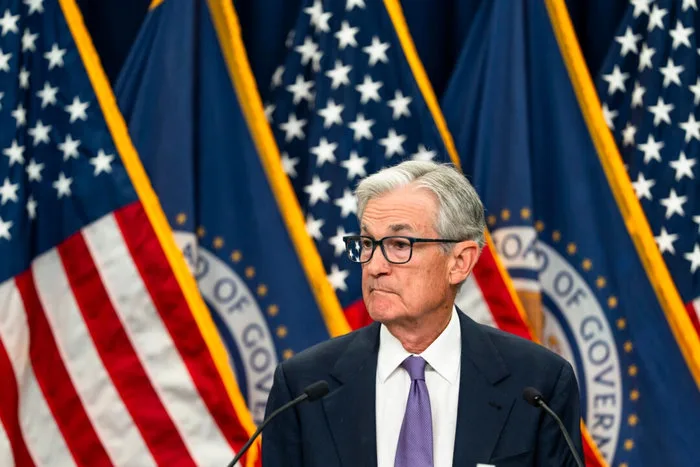
During Chairman Jerome Powell’s press conference last week, he acknowledged that the housing market remained weak, but he also stressed the Fed was “well positioned” moving forward. Powell also said, “Job creation may be negative,” but he added, “We think there’s an overstatement in these (i.e., Labor Department) numbers,” a surprising dovish comment that helped to further boost stocks and bonds.
Now that Chairman Powell has admitted he does not trust the jobs data, I am wondering if he will also distrust other economic data.
Here are the most important developments recently and what they mean:
– There is a lot of important economic news being announced this week. Bad economic news like continue job creation problems and lackluster retail sales are expected to be viewed as good news, since it is expected to convince the Fed to continue to cut key interest rates. I am expecting weak inflation news due to falling home and rental prices, plus a crude oil glut that is helping to keep crude oil prices low.
– I get a lot of questions about what could go wrong. My answer is deflation. Specifically, much of our consumer inflation was tied to shelter costs based on Owners’ Equivalent Rent, but now that rental prices have fallen for four consecutive months according to the Costar Apartment Monthly Rent Report, the shelter cost component (owners’ equivalent rent) should be plunging and show up in the Consumer Price Index (CPI) report. Furthermore, CNBC reported that home prices have declined 1.4% in the past three months, and home listings rose 13% so the inventory of homes for sale is rising. The other deflationary forces are the fact that we are importing deflation from China and that crude oil prices are expected to remain low until the current supply glut dissipates.
– Since all economists and central bankers are trained to fight inflation, I suspect that the Fed may have to have an emergency meeting to slash key interest rates if deflation materializes in upcoming inflation data. The primary catalyst for deflation is that the industrialized world is shrinking and losing households (other than India and the U.S.), which causes demand to drop. This demographic conundrum is causing growth to stall in Asia and Northern Europe. Furthermore, China is running bigger trade surpluses with every country, except India and the U.S., which, in turn, curtails global economic growth. Finally, despite the fact that China is running a record $1.076 trade surplus for the first 11 months of 2025, its domestic growth has collapsed due to a shrinking population and fewer households, so China continues to be plagued by hideous deflation that can only be eventually solved by a currency devaluation.
– Speaking of China, The Wall Street Journal reported that Germany is seeking an economic divorce from China, since its free trade policy is no longer helping boost Germany’s economy. If anything, by allowing China access to German machinery, Germany has effectively created a serious competitor that is now hindering its domestic economy. The WSJ said “Chinese manufacturers are increasingly leading in sectors that German companies dominated until recently, not only in China but also in other markets, including in Europe.”
– In theory, economic growth can persist when households are shrinking if there are big productivity gains, as there has been in Japan in the past, but economic growth is still swimming upstream when a population shrinks, and households disappear. In theory, AI is going to make America and the rest of the world more productive, plus robots are expected to leave the factories and warehouses and finally arrive in our homes within the next decade. In this brave new world where AI and robotics thrive, productivity and prosperity are anticipated to soar. Much of this prosperity may not occur in my lifetime, but that is the vision of many technology leaders like Elon Musk.
The bottom line is, under new Fed leadership, Kevin Hassett is expected to join Howard Lutnick, Scott Bessent, and President Trump and be another cheerleader for the U.S. economy. Most of the economic growth is currently tied to onshoring and data center growth, but will spread as lower interest rates stimulate interest rate sensitive parts of the U.S. economy, like the automotive and housing sectors. So, I want you not to worry and be happy, since 2026 is expected to post the fastest GDP growth for the U.S. since the economic boom in the 1950s.
*Views expressed in this article are opinions of the author and do not necessarily reflect the views of USNN World News.