

By Alex Wu
After the U.S. Supreme Court ruled on Feb. 20 that President Donald Trump’s global tariffs implemented under the International Emergency Economic Powers Act (IEEPA) were unlawful, analysts told The Epoch Times that it won’t affect U.S. trade relations with China, as there are other legal options for the Trump administration to impose levies.
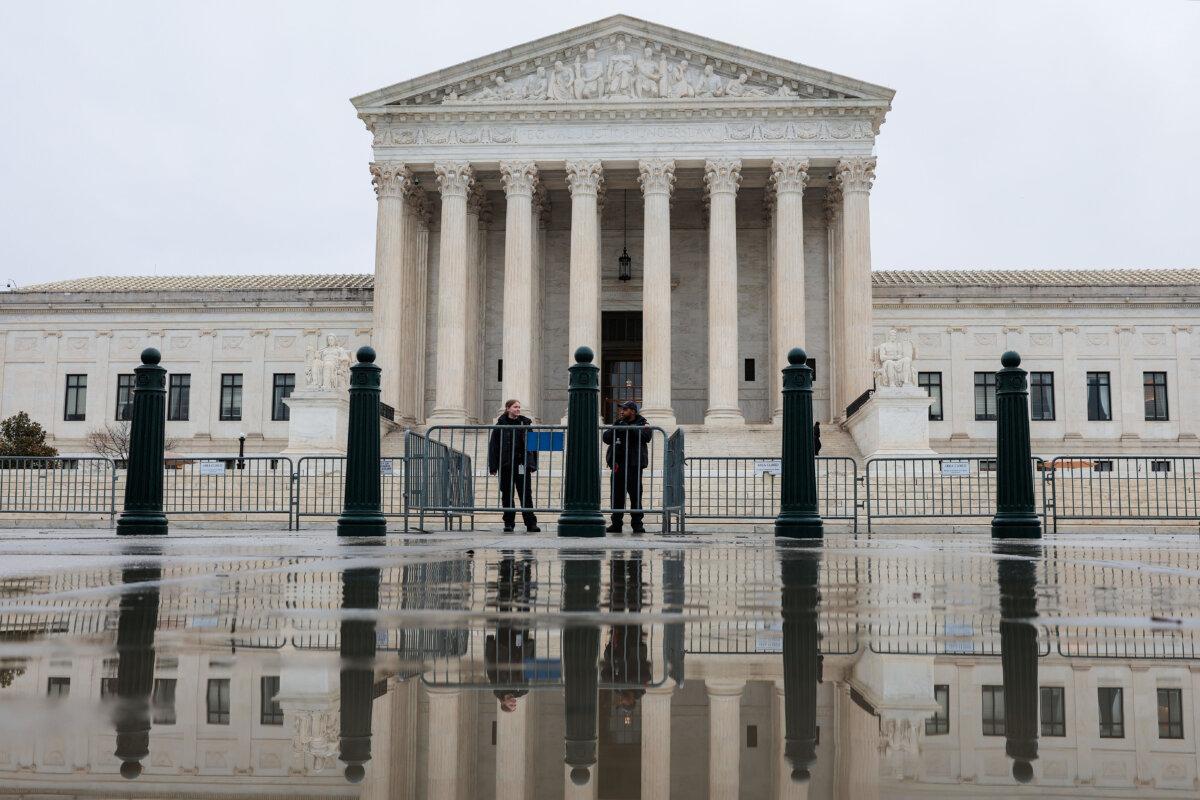
By a vote of 6–3, the court ruled that IEEPA does not authorize the president to impose tariffs, including retaliatory tariffs and fentanyl-related tariffs targeting China, Canada, and Mexico.
In his dissent, Justice Brett Kavanaugh noted that “the decision might not substantially constrain a President’s ability to order tariffs going forward.”
“That is because numerous other federal statutes authorize the President to impose tariffs and might justify most (if not all) of the tariffs at issue in this case. … Those statutes include, for example, the Trade Expansion Act of 1962 (Section 232); the Trade Act of 1974 (Sections 122, 201, and 301); and the Tariff Act of 1930 (Section 338),” he wrote.
Trump raised global tariffs to 10 percent, effective on Feb. 24, after the Feb. 20 ruling under a separate trade law, Section 122. The president increased it to 15 percent the next day, effective for 150 days.
Impact on Trade With China
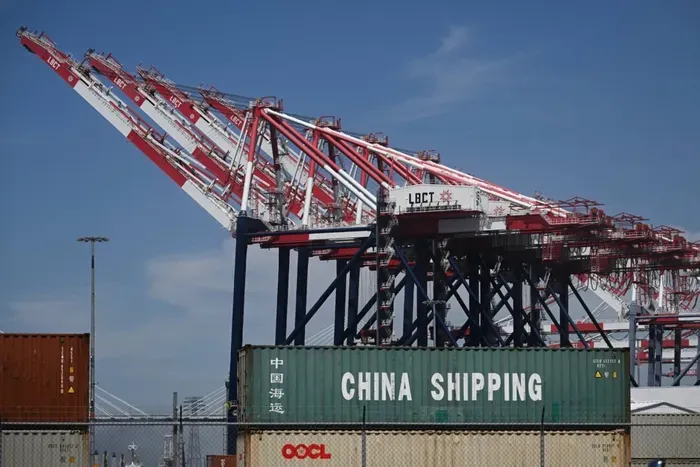
The United States and China reached a one-year trade truce in 2025 to de-escalate trade tensions, in which the United States reduced tariffs on goods related to fentanyl issues from 20 percent to 10 percent while China reduced tariffs on U.S. agricultural products and pledged to increase purchases of U.S. soybeans and energy.
This month, Chinese Communist Party (CCP) leader Xi Jinping promised to purchase more American soybeans and agricultural products in a phone call with Trump.
Frank Xie, a professor at the Aiken School of Business at the University of South Carolina, told The Epoch Times that the Supreme Court’s ruling did not overturn all of Trump’s tariffs, but rather prevented Trump from invoking IEEPA to impose tariffs.
“There are other legal tools that allow Trump to continue raising tariffs, so the tariff war will continue, along with tariff penalties against China. Negotiations with China will also continue, and China will likely continue to purchase U.S. soybeans,” he said.
“Actually, the ruling doesn’t change much for either the CCP or the U.S. government. Judging from Trump adding additional … global tariffs immediately afterwards, the tariff war is accelerating,” he said.
U.S.-based independent economist Davy J. Wong told The Epoch Times that the Supreme Court’s ruling may prompt China to reduce or postpone purchases, but it is unlikely to publicly renege on its commitments.
“This is because China’s purchases of U.S. agricultural products have long been driven by both economic and political motives. Now, Beijing can use the instability of the rules as a pretext to adjust the pace of imports and diversify sources, particularly shifting towards supplies from Brazil and South America,” he said.
“However, China’s feed system has a rigid demand for protein raw materials, and the United States remains an important supplementary source.”
U.S.-based China affairs commentator Wang He noted that Trump agreed to visit China in April per Xi’s invitation during their phone call, and “it has special significance for Xi Jinping to maintain relations with the United States and with Trump,” given the current domestic political tension Xi’s facing due to his purge of top military generals.
Wang said it means that the trade truce between China and the United States will continue, and China won’t dare to renege on its commitments to continue purchasing American agricultural products.
However, Wang noted that the CCP will continue to promote diversification of foreign trade.
“Because the United States and China are currently decoupling, regardless of the Supreme Court’s ruling, this fundamental trend of decoupling is unchangeable. This trend is unaffected by tariff rulings. The CCP will simply use this to its advantage, to pressure Trump in negotiations. The CCP will try to rally more countries to counter the United States,” he said.
Wong said the Chinese economy remains highly dependent on external demand and manufacturing exports, especially from the United States.
So, the CCP will exert pressure in specific areas, such as rare-earth and key-materials export controls, while avoiding a complete trade rupture with the United States, he added.
Wong concluded that the Supreme Court’s ruling does not change the structural reality of Sino-U.S. trade competition.
“China’s purchases from the U.S. will be more strategic, and U.S. economic constraints on China will become more institutionalized. Both sides prefer competition within a controllable scope rather than a complete decoupling.”
Luo Ya and Reuters contributed to this report.