

By Andrew Moran
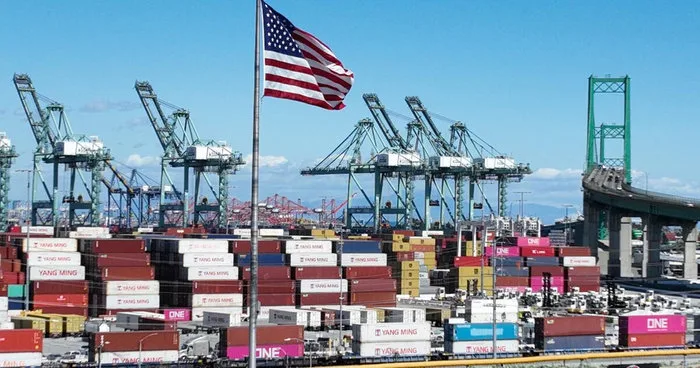
The U.S. trade deficit in goods and services widened by the most since 1992, one month after plummeting to the lowest level in 16 years, spotlighting volatility in international flows.
The trade gap in November 2025 surged almost 95 percent from the previous month to a four-month high of $56.8 billion, according to data released by the Bureau of Economic Analysis on Jan. 29.
The trade deficit for October was revised slightly lower to $29.2 billion, the lowest since early 2009.
Economists had penciled in a November reading of $40.5 billion.
Following five straight months of growth, U.S. exports took a breather, falling by 3.6 percent, or $10.9 billion, to $292.1 billion. This is down from the all-time high of $303 billion registered in October 2025.
Shipments of goods declined by $11 billion to $185.6 billion, driven mainly by a sharp drop in industrial supplies and materials. Exports of consumer goods also decreased by $1.3 billion.
Imports accelerated by 5 percent, or $16.8 billion, to $348.9 billion.
Consumer goods accounted for about half of the increase, largely due to pharmaceuticals. The flow of capital goods also advanced, buoyed by computers and semiconductors.
A shift in the U.S. trade balances was most notable with the European Union, as the goods deficit surged by $8.2 billion to $14.5 billion. The deficits with China widened by about $1 billion to $14.7 billion, and the imbalance with India increased by about $2 billion to $4.4 billion.
Despite the worse-than-expected headline number, the bureau noted that the three-month moving average indicates a downward trend as President Donald Trump’s tariffs continue to affect the U.S. and global markets.
In the three months ending in November 2025, the average goods and services deficit fell by almost $34 billion year over year. Average exports surged $23.4 billion from the previous year, while average imports dropped by more than $10 billion.
Still, the deficit through November is about 4 percent higher year over year at $839.5 billion.
A bulk of the president’s tariff agenda has been implemented, but Trump’s remarks on social media suggest that his plans continue evolving.
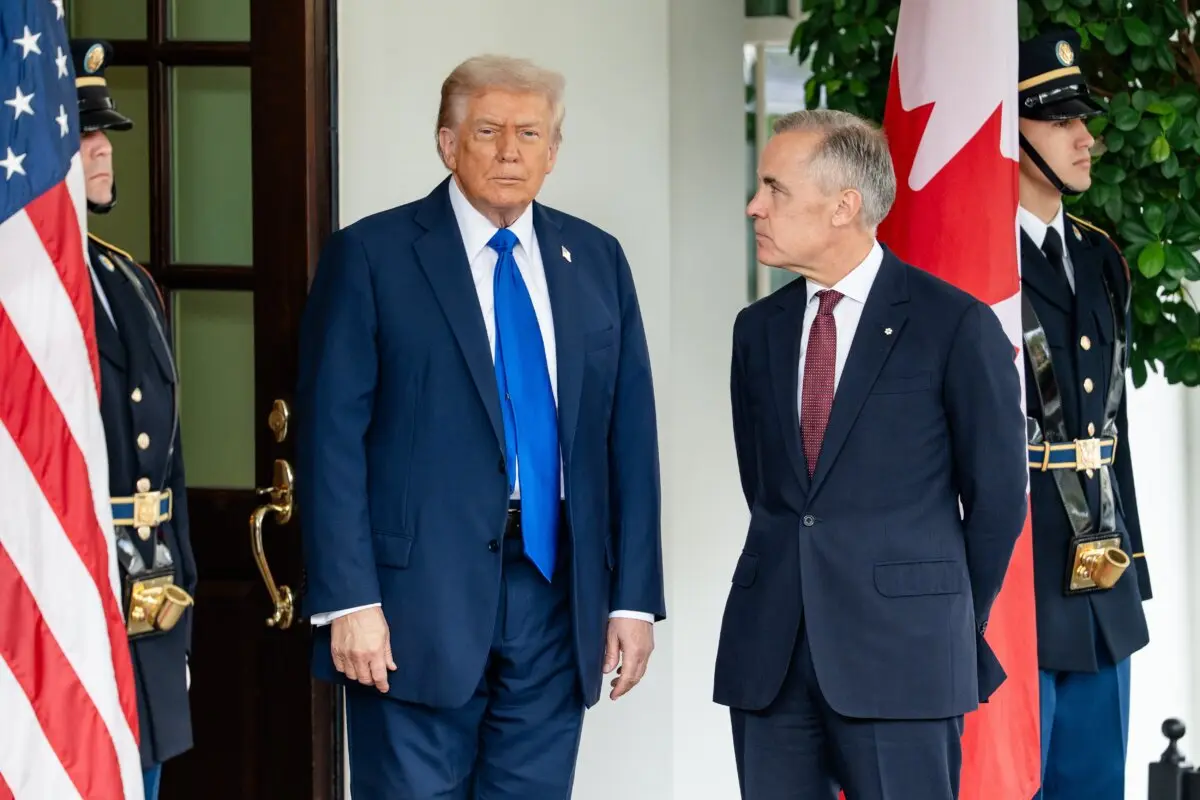
Trump recently warned that a Canada–China free trade agreement would trigger 100 percent tariffs on all Canadian exports to the United States.
“If Governor Carney thinks he is going to make Canada a ‘Drop Off Port’ for China to send goods and products into the United States, he is sorely mistaken,” Trump said in a Jan. 24 Truth Social post. “China will eat Canada alive, completely devour it, including the destruction of their businesses, social fabric, and general way of life.”
The United States, Canada, and Mexico are in the early stages of a joint review of the post-NAFTA trade deal—also known as the USMCA—which is set to take place in July.
Additionally, on Jan. 26, the president said he would raise tariffs on South Korea to 25 percent from 15 percent.
“Because the Korean Legislature hasn’t enacted our Historic Trade Agreement, which is their prerogative, I am hereby increasing South Korean tariffs on Autos, Lumber, Pharma, and all other reciprocal tariffs, from 15% to 25%,” Trump wrote on his social media platform.
Dollar Volatility
One reason for the increase in U.S.-made goods reaching foreign markets is a weaker dollar.
The U.S. dollar index, a measure of the greenback against a weighted basket of currencies, has declined aby lmost 11 percent over the past year. Additionally, the administration’s preferred gauge—the nominal broad U.S. dollar index—has declined by about 7 percent.
A lower buck is good for U.S. exports because it makes American products cheaper for foreign consumers to purchase. In recent years, the dollar’s strength has made it challenging for other nations with weaker currencies to purchase U.S. goods.
Despite the greenback sinking to a four-year low, the administration has shown little concern.
“I think it’s great,” Trump told reporters in Iowa on Jan. 27. “The dollar’s doing great.”
Trump added that he is comfortable allowing the dollar to “seek its own level” in global financial markets.
Treasury Secretary Scott Bessent, in an interview with CNBC on Jan. 27, stated that the White House remains committed to a strong dollar policy.
“But a strong dollar policy means setting the right fundamentals,” Bessent stated.
“If we have sound policies, the money will flow in. We are bringing down our trade deficits, so automatically that should lead to more dollar strength over time.”
The dollar has come under significant downward pressure, driven by central bank diversification, fiscal concerns, and ongoing Federal Reserve policy easing.
Recent movements suggest a further bearish trend ahead, says Adam Turnquist, chief technical strategist at LPL Financial.
“Momentum and sentiment remain bearish,” Turnquist said in a note emailed to The Epoch Times.
“In terms of sentiment, speculator positioning remains bearish while dollar risk reversals are at extremes as the cost of hedging downside risk has notably increased.”
Despite concerns about an anti-dollar push unfolding across global markets, celebrity investor Kevin O’Leary says he is unconcerned, pointing to the lack of realistic alternatives.
“It’s the most liquid currency,” O’Leary told The Epoch Times.
“I think the dollar is here to stay. I would never invest my dollars in Chinese yuan.
“I trust the financial system in the United States, even though it’s got all kinds of challenges, and so does the rest of the world.”
Emel Akan contributed to this report.