

By Guy Birchall
North Korea’s state media said on Nov. 18 that South Korea’s U.S.-approved plan to build nuclear-powered submarines would trigger a hot arms race.
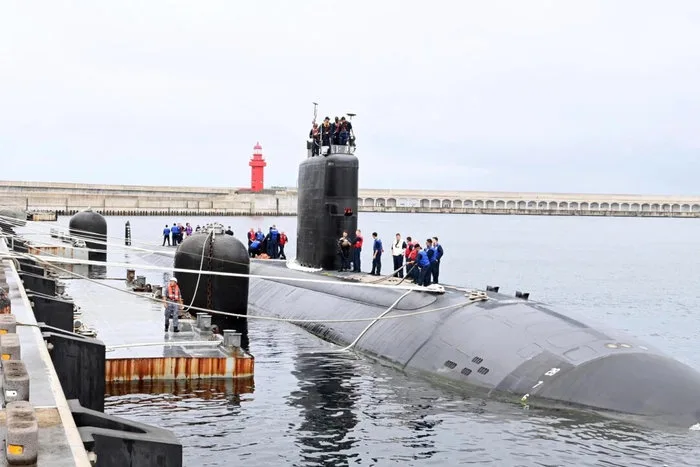
Last week, Seoul and Washington released details of an agreement struck by South Korean President Lee Jae Myung and U.S. President Donald Trump during their summits in August and October to collaborate on constructing commercial and naval vessels, including nuclear-powered submarines.
“The United States has given approval for the ROK to build nuclear-powered attack submarines,” the White House said in a fact sheet. “The United States will work closely with the ROK to advance requirements for this shipbuilding project, including avenues to source fuel.” The Republic of Korea (ROK) is South Korea’s official name.
The Korean Central News Agency (KCNA), the Pyongyang regime’s official outlet, said it revealed “true colors of the confrontational will of the U.S. and the ROK to remain hostile towards the DPRK to the end.” DPRK stands for the Democratic People’s Republic of Korea, North Korea’s official name.
Pyongyang’s mouthpiece said Washington’s approval of the nuclear submarines collaboration was “a serious development that destabilizes the military security situation in the Asia-Pacific region beyond the Korean peninsula,” and accused Seoul of secretly advancing a “long-cherished ambition to possess nuclear weapons.”
That ambition, the KCNA commentary said, was bound to cause a “nuclear domino phenomenon” in the region and spark a “hot arms race.”
“The U.S. and the ROK are openly ignoring the DPRK’s legitimate security concern and aggravating the regional tension,” the opinion piece stated, adding that Pyongyang would “take more justified and realistic countermeasures to defend the sovereignty and security interests of the state and regional peace.”
South Korean presidential office spokesperson Kang Yu-jung said on Nov.18 that Seoul’s aim was still to ease tensions and restore trust between the two countries.
“Contrary to the commentary carried by the KCNA, the government has no hostile or confrontational intent toward the North,” she said, according to The Korea Times.
Kang added that security cooperation with Washington was designed to safeguard national interests and defense.
“The government will continue efforts to ensure the South Korea–U.S. alliance contributes to peace and stability on the Korean Peninsula and in the region,” she said.
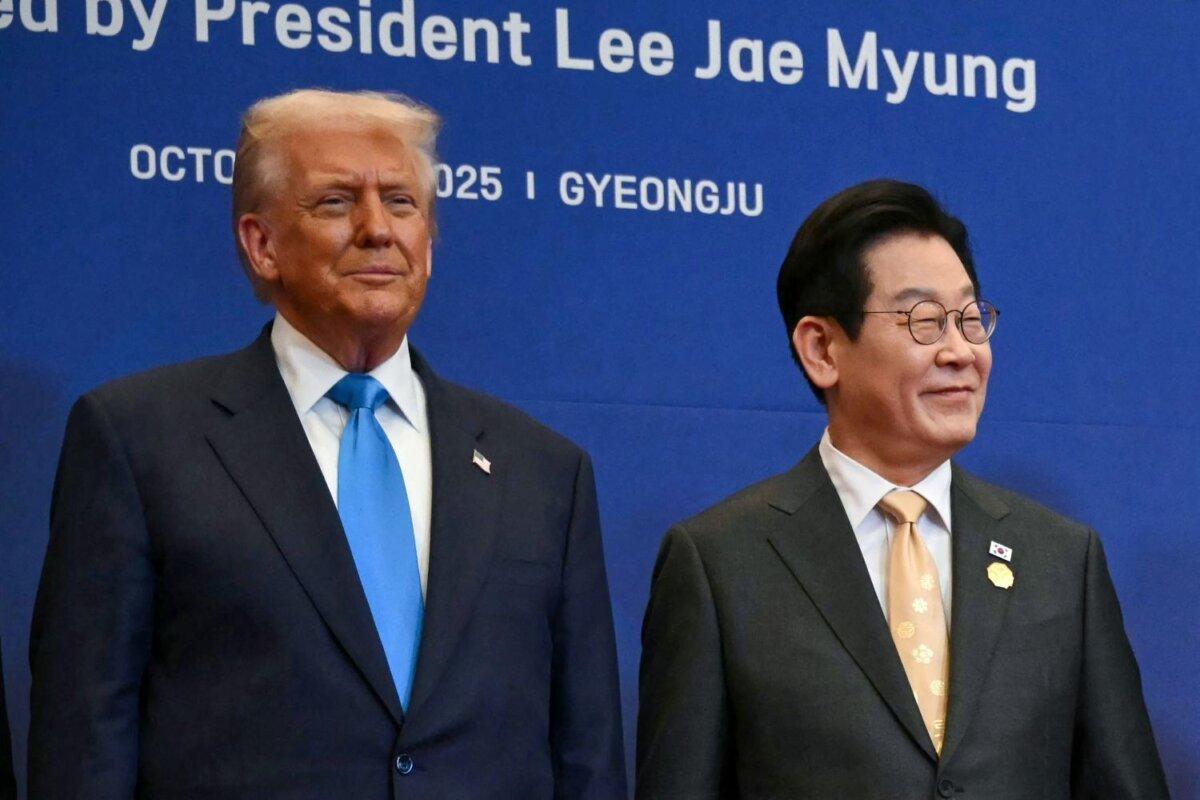
The agreement on nuclear-powered submarines was reached when Lee met with Trump at their second summit in Gyeongju, South Korea, on Oct. 29.
Lee said the submarines would help South Korea “track Chinese and North Korean submarines” and help the United States in the region.
A day after the summit, Trump said in a post on Truth Social that he had approved Seoul’s request to construct nuclear-powered submarines at Philadelphia shipyards.
South Korean shipbuilder Hanwha Ocean purchased Philly Shipyard in 2024. In August, Hanwha Group announced that it was investing $5 billion to revamp infrastructure aimed at boosting production capacity at the shipyard. The announcement was made when Lee was visiting the shipyard after holding his first summit with Trump in Washington.
A fact sheet outlining the specifics of the deal was jointly published by Seoul and Washington on Nov. 13.
The fact sheet stated, “Consistent with the bilateral 123 agreement and subject to U.S. legal requirements, the United States supports the process that will lead to the ROK’s civil uranium enrichment and spent fuel reprocessing for peaceful uses.”
Nuclear-powered submarines use enriched uranium as fuel, allowing them to operate for up to 30 years without refueling.
Bruce Klingner, senior fellow at The Mansfield Foundation, told The Epoch Times that South Korea’s nuclear-powered submarines would be used to monitor China rather than addressing any threat relating to North Korea.
“South Korea does not need nuclear-powered submarines against North Korea’s naval or submarine force. The benefit of nuclear-powered submarines is for long-range missions far from the Korean Peninsula. As such, they are of great utility for regional contingencies, including monitoring Chinese submarines,” Klingner said.
“Trump’s decision was surprising since it reversed years of U.S. reluctance to agree to South Korea nuclear-powered submarines and renegotiating the civilian nuclear agreement. His decision may simply have been that having seemingly established a positive rapport with Lee during two summit meetings, Trump acquiesced to Lee’s nuclear request.”
Christy Lee contributed to this report.
Related posts:
 North Korea Fires Missiles as USS Ronald Reagan Redeploys
 US, South Korea Kick Off Joint Military Drills to Counter North Korean Threats
 US Says 8,000 North Korean Soldiers Have Reached Russia’s Kursk Region, Could Join Battle in Days
 Russia Will Help China Advance Submarine Technology, US Indo-Pacific Commander Says