

By Andrew Moran
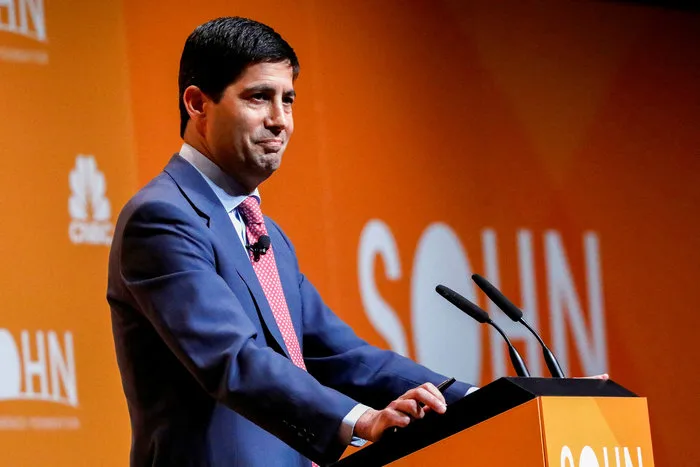
Former Federal Reserve Governor Kevin Warsh has been nominated by President Donald Trump to be the new head of the U.S. central bank.
While the path to confirmation may be bumpy, market watchers are preparing for a possible overhaul at the 113-year-old institution, but how Warsh plans to craft monetary policy is uncertain.
Should Warsh steer the Federal Reserve System over the next four years, he may put the institution on a diet, removing what he calls “central bank fast food” from the menu.
In previous speeches, Warsh has identified four factors that could be overhauled: changing the Fed’s metrics, revising the policy of “data dependence,” pausing near-term forecasting, and abolishing forward guidance.
“It’s necessary to set aside some of the fast food that is part of the current practice of monetary policy,” Warsh said in an April 2025 International Monetary Fund speech.
“Central bank credibility is the coin that purchases American economic strength. In Washington, a central banker can ill-afford to be anything other than a straight-shooter.”
Moving the Goalposts
Warsh said in October 2024 that the central bank has routinely shifted the goalposts for measuring inflation—from average inflation targeting to core inflation ex-housing—and how it conducts policy.
“They don’t seem to have a serious theory of inflation that is theoretical and empirical. It is not obvious that they acknowledge what their role is in prices,” Warsh told CNBC’s “Squawk Box.”
“I think in a world this dangerous, an economic policy where fiscal policy is irresponsible, the central bank needs to be very clear about its reaction function, be clear about its goals, and not look like it is lurching—that’s what put us in the mess we have.”
Based on the Fed’s commentary, the main focus appears to be on core personal consumption expenditure (PCE) inflation.
PCE—sitting at 2.8 percent—is the central bank’s preferred inflation gauge over the consumer price index (CPI).
The former is broader, and the weights and baskets are updated more frequently.
The core component strips out volatile energy and food categories.
While Warsh has stopped short of explicitly concentrating on a specific measure, he has argued that “inflation is a choice.”
Inflation, he says, has been fueled by the use of the printing press and subsidizing congressional spending rather than by the pandemic or Russian President Vladimir Putin’s invasion of Ukraine.
“These criticisms imply that Warsh wants to put more focus on the Fed’s balance sheet size and money supply in the conduct of monetary policy and could also be open to overhauling the Fed research staff,” Deutsche Bank economists said in a note emailed to The Epoch Times.
Balance Sheet
Over the past 20 years, the Fed has relied on the balance sheet to cushion the blows of economic crises.
Known as quantitative easing—or QE—the Fed injects liquidity into financial markets and stabilizes conditions by purchasing assets such as Treasury bonds and mortgage-backed securities.
These efforts apply downward pressure to long-term interest rates and signal that accommodative monetary policy will remain in place for some time.
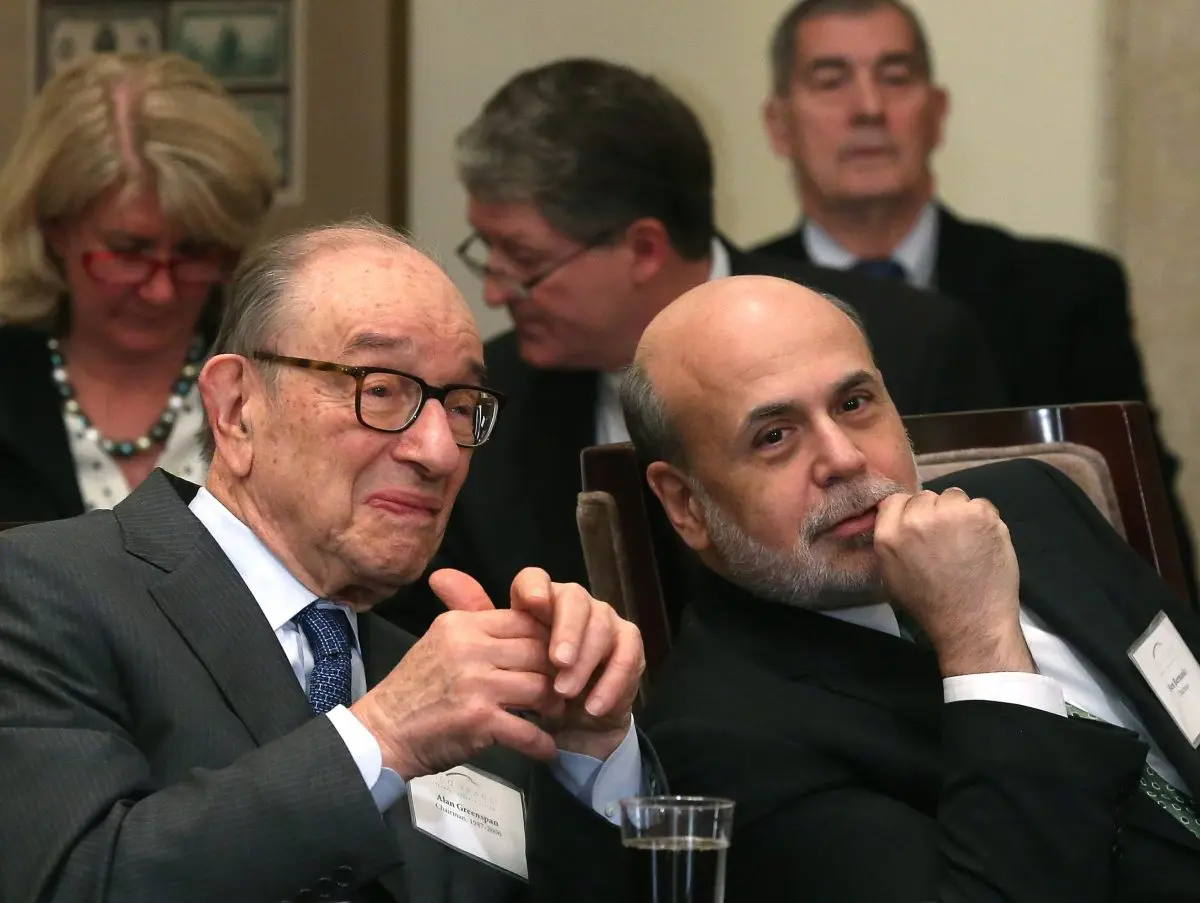
Since his time at the U.S. central bank, Warsh has been a vocal skeptic of quantitative easing, opposing some of the measures instituted by then-Chair Ben Bernanke in 2008.
It was one of the contributing factors behind Warsh’s resignation from the Board of Governors in 2011.
A key criticism by Warsh is that QE tends to benefit the wealthy disproportionately and worsens income inequality by inflating asset prices—boosting valuations of stocks, bonds, and housing.
“We created a product not with bad intent. We created a product that might, may or may not turn out to be counterproductive,” Warsh said at a June 2015 Hutchins Center on Fiscal and Monetary Policy event.
As a result, an institution helmed by Warsh will likely lead to a more conservative use of the balance sheet, which could lead to complications in the financial markets that have turned to the Fed in times of emergency.
“Given his balance sheet stance, we don’t expect the Fed will exert undue influence on long-term rates through past activities such as ‘operation twist,’” Charlie Ripley, senior investment strategist for Allianz Investment Management, said in a note emailed to The Epoch Times.
Operation Twist refers to the Fed’s 1961 plan that rebalanced its portfolio by purchasing long-term Treasury securities and selling short-term ones to lower long-run interest rates without boosting the balance sheet. This was later repeated in 2011 and 2012.
“There is a sense that a Warsh Fed technically leans more hawkish with an unwillingness to utilize the balance sheet to cap long-term rates,” Ripley said.
Forward Guidance
Another change that could come to a Warsh-led Fed is how the central bank communicates.
Forward guidance has been a relatively new policy tool employed by monetary policymakers to signal the likely policy path, particularly interest rates and the balance sheet.
Before the early 2000s, the Fed had been ambiguous in its communications with the public, engaging in what experts called “Fedspeak.” While this ensured financial markets would not overreact to messaging, it prevented clarity.
At the turn of the 21st century, the Fed began incrementally implementing forward guidance—a tool to tell the public about the possible future course of monetary policy.
The goal behind this shift was threefold: avoid market surprises, shape expectations, and encourage financial markets to do some of the Federal Reserve’s work.
The Fed eventually became more direct in how it conveyed its stance to the public.
In 2004, for example, officials suggested that interest rate increases were approaching.
Throughout the global financial crisis, the Fed noted that weak economic conditions would lead to interest rates hovering around 0 percent “for some time,” “for an extended period,” and “at least through mid-2013.”
Following the Great Recession, forward guidance has become a mainstay of policymaking, though there have been some modest changes.
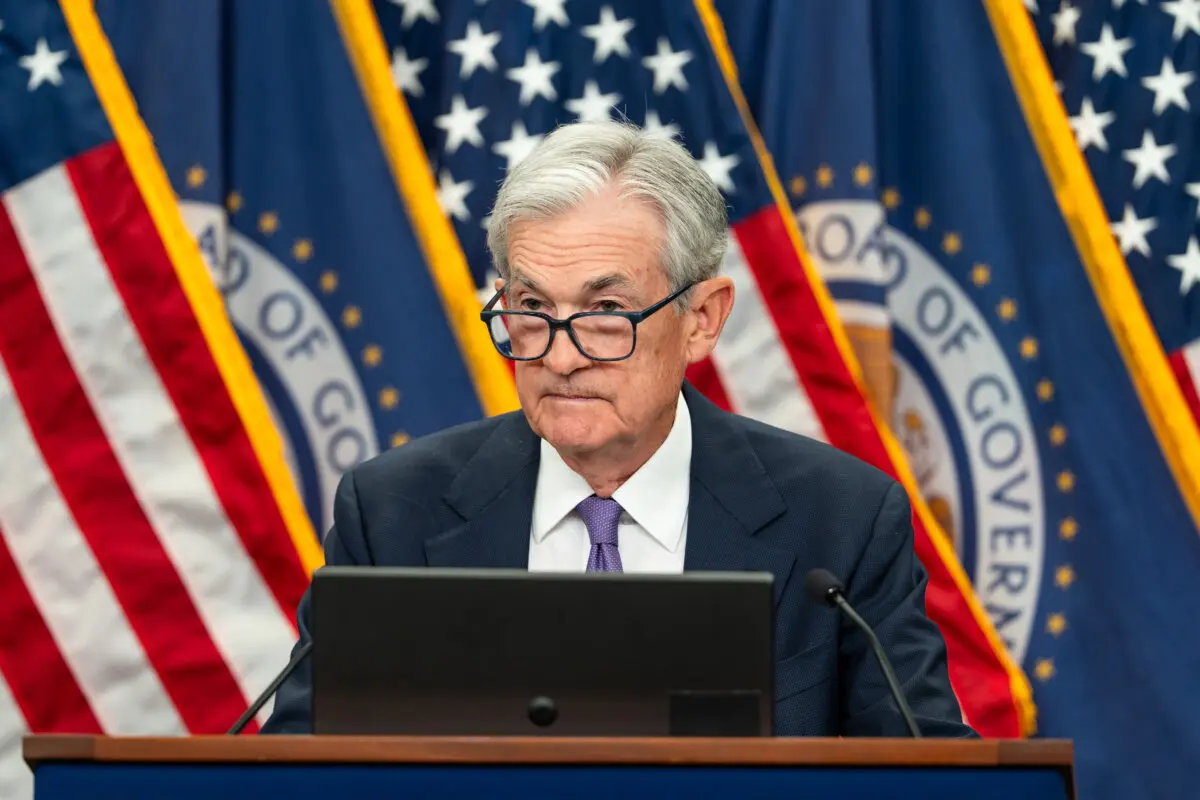
For the past few years, Fed Chair Jerome Powell has refrained from offering explicit guidance, instead relying on terms like “meeting by meeting” and “data dependence.”
Warsh may have signaled a potential return to pre-2000 times in suggesting that forward guidance “has little role to play in normal times.”
“Moving markets with rolling Fed incantations is tempting, but unhelpful to the Fed’s deliberations, and ultimately, to its mission,” Warsh said last year.
“The central bank should find new comfort in working without applause and without the audience at the edge of its seats.”
Research and commentary suggest that Warsh may be right.
While the consensus is that forward guidance played a successful role during the 2008 and 2020 crises, the tool may not be relevant when economic conditions are stable.
Loretta Mester, former Cleveland Fed president, states that there are two challenges behind forward guidance.
First, it will commit policymakers to a predetermined policy path.
Second, it can send the wrong signals to the public, meaning that “the public needs to understand the policymakers’ normal reaction function, which conveys how policy normally reacts to changes in economic conditions, whether those changes were anticipated or not.”
‘Swivel Chair Problem’
Eminent economists popularized the term “fatal conceit,” which refers to the belief that a central authority possesses the knowledge to control a complex economic environment.
Since 2012, the Federal Reserve has released the Summary of Economic Projections every three months or so. This reveals officials’ expectations for policy and the broader economy.
The summary also contains a chart showing where each Federal Open Market Committee participant anticipates the benchmark federal funds rate will be in the current year, the next three years, and the longer run.
Like forward guidance, this forecasting provided markets with policymakers’ path of expected interest rates rather than guessing what officials think.
Over the past year, there has been some criticism surrounding forecasting, including from Warsh and current Fed Gov. Christopher Waller.
Appearing at a Council on Foreign Relations event in October, Waller questioned the need for a Summary of Economic Projections and the dots.
“Now, you could change the dots,” Waller said. “I personally believe you should get rid of the calendar dating, get rid of the long-run numbers, and just say, look, what’s the next optimal policy over the next six, 12, 18 months? That’s as good as we could do.”
Warsh, meanwhile, calls near-term forecasting “another distracting” and “counterproductive” obsession at the Fed, noting that “economists are not immune to the frailties of human nature.”
He recommends that policymakers refrain from sharing “their latest musings” so they are not “prisoners of their own words.”
“The swivel chair problem, rhetorically waxing and waning with the latest data release, is common and counter-productive,” he said.
Change in Leadership
The Fed chairman maintains an influential role at the central bank, from setting the agenda during policy meetings to overseeing staff.
In modern Fed history, chairmen have installed operational adjustments.
Paul Volcker restored the Fed’s independence, which his predecessors, such as Arthur Burns, had weakened.
Alan Greenspan championed rules-based frameworks and supported transparent communication.
Ben Bernanke introduced the dot-plot and explicit forward guidance.
Whether Warsh can steamroll his reform agenda through the institution and successfully enact change in the conduct of policy remains to be seen.
“As with any Fed chair, Warsh will have to earn market trust and credibility around his commitment to achieving the inflation target. These bona fides always need to be earned by an incoming chair,” the Deutsche Bank economists wrote.