
By Guy Birchall
The Israel Defence Forces (IDF) said on March 4 that it launched a fresh wave of strikes against Iran and Lebanon overnight as the U.S.–Israeli joint operation in the Middle East continued.
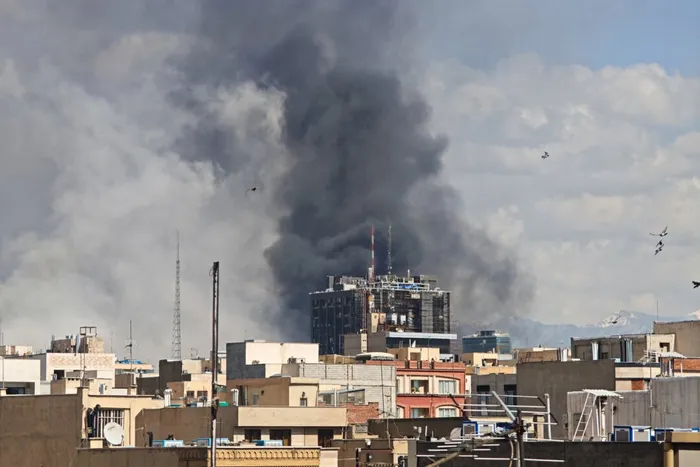
The IDF said in a post on X that a series of strikes had taken place against the Basij branch of the Islamic Revolutionary Guard Corps (IRGC) and internal security command centers in Tehran.
“The targeted command centers were used by the Iranian regime to maintain control throughout Iran,” the IDF wrote, adding that it had also hit missile launchers and other systems.
In another post on X, the Israeli air force (IAF) expanded on the nature of its campaign, saying it was an “extensive strike mission against the Iranian terrorist regime’s infrastructure throughout Iran overnight (Tuesday).”
“Among the targets attacked was a complex used by the regime for storing and launching ballistic missiles, including ‘Qadr’ missiles in Isfahan in western Iran. The complex was attacked in order to reduce further launches from it,” the IAF said.
“In addition, numerous sites used for storing ballistic missiles and defense systems of the Iranian terror regime were attacked. These strikes deepened air superiority in several areas in Iran.”
The Isfahan site was previously struck during U.S.–Israeli strikes on Iran in June 2025.
On March 3, the IDF also said in a post on X that it had destroyed a key Iranian nuclear site in the course of its operations.
According to a military spokesman, the covert site, known as Minzadehei, was the location of Iran’s nuclear program, after it was moved underground following attacks on the program last year.
Minzadehei is located on the outskirts of Tehran.
In Beirut, Lebanon, massive explosions thundered through the city on the morning of March 4, with IDF Arabic-language spokesperson Col. Avichay Adraee issuing warnings on X that people should evacuate the southern suburbs, as Israel would be striking Hezbollah targets in the area.
In a later post, Adraee expanded the warning to residents across southern Lebanon, urging them to “head immediately north of the Litani River,” which flows into the Mediterranean Sea some 18 miles north of the Israeli–Lebanese border.
The last time such a sweeping evacuation order was issued by the Israeli military in south Lebanon was in October 2024, amid a ground offensive against Hezbollah, according to The Times of Israel.
Savannah Hulsey Pointer and The Associated Press contributed to this report.