
By Evgenia Filimianova
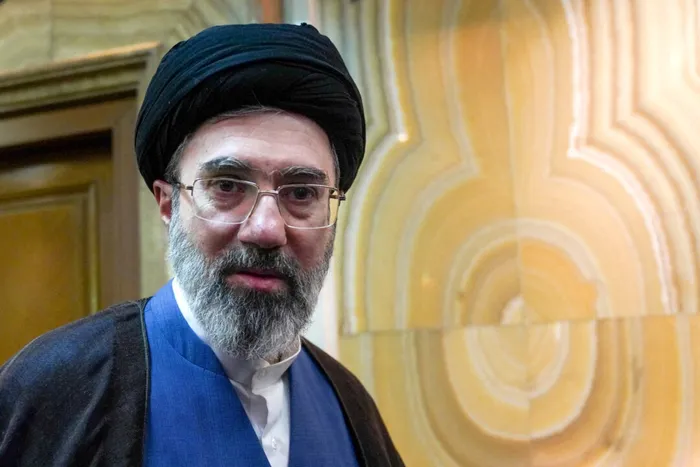
Iran’s newly appointed leader, Ayatollah Mojtaba Khamenei, said on March 12 that the Strait of Hormuz must remain closed for leverage and vowed retaliation for Iranians killed in the conflict, according to Iran’s state news agency Islamic Republic News Agency (IRNA).
The statement, delivered in writing rather than in person, marked his first major address since being chosen to replace his father, Ali Khamenei, who was killed in U.S.-Israeli strikes against Iran on Feb. 28.
Mojtaba Khamenei did not appear on camera during the broadcast. Israeli officials assessed on March 11 that he may have suffered a leg injury during attacks targeting his father’s bunker. An Israeli security official told Epoch Magazine on March 11 that the severity of Khamenei’s injury is unclear at this stage.
Khamenei signaled that Iran would pursue a prolonged campaign of retaliation.
“I assure everyone that we will not refrain from avenging the blood of our martyrs,” he said, adding that each civilian killed by Iran’s enemies constituted a separate case for revenge.
He said some retaliation had already begun but warned the effort would continue until Tehran considered justice achieved.
“We will be especially sensitive regarding the blood of our children. Therefore, the crime the enemy deliberately committed against the Shajareh-Tayyebeh school in Minab, and some similar cases, holds a special status in this process of accountability,” he said.
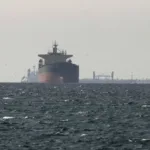
Khamenei emphasized the strategic importance of the Strait of Hormuz, through which roughly one-fifth of the world’s oil supply passes, suggesting Iran intends to keep pressure on international shipping.
“The lever of closing the Strait of Hormuz must certainly continue to be used as well,” he said.
He added that Iran had studied “opening other fronts in which the enemy has little experience and would be highly vulnerable.”
Khamenei also praised Iranian forces for resisting what he described as foreign aggression. He thanked fighters who had “blocked the enemy’s path with their powerful blows” and thwarted attempts to dominate or divide Iran.
Military Bases
The new leader issued a stark warning to countries hosting U.S. forces in the region, urging them to shut down military bases used by Washington.
“These countries must clarify their position regarding those who have attacked our beloved homeland and killed members of our people,” he said, adding that U.S. assurances of security had proven to be “nothing more than a lie.”
Khamenei warned that if compensation was not provided, Iran would seize or destroy enemy assets. “If it refuses, we will take from its assets to the extent we deem appropriate, and if that is not possible, we will destroy its assets to the same extent,” he said.
Succession
In the address, Khamenei acknowledged the death of his father and several close relatives in the airstrike that killed the former leader. He said he personally saw the body afterward.
“I had the honor of seeing his body after his martyrdom,” he said, describing what he called his father’s steadfastness even in death.
He also confirmed that his wife, one of his sisters, a niece, and his brother-in-law were killed in the same attack. His mother was reported killed earlier in the U.S.–Israeli campaign.
Khamenei said he learned of his own selection as supreme leader from state television, suggesting the decision by the Assembly of Experts was made rapidly amid wartime conditions.
Khamenei, 56, was formally chosen on March 8 by Iran’s Assembly of Experts, an 88-member clerical body constitutionally tasked with selecting the country’s supreme leader.
Long seen as a frontrunner, he has maintained a relatively low public profile but wields influence through close ties to the Islamic Revolutionary Guard Corps and conservative clerics.
U.S. President Donald Trump said on March 10 he was disappointed by Iran’s choice.
“I was disappointed because we think it’s going to lead to just more of the same problem for the country,” Trump said at a press conference at Trump National Doral.
Trump said in a March 12 post on Truth Social that while higher oil prices benefit the United States as the world’s largest producer, his top priority was preventing Iran from acquiring nuclear weapons.
“Of far greater interest and importance to me, as President, is stoping [sic] an evil Empire, Iran, from having Nuclear Weapons, and destroying the Middle East and, indeed, the World. I won’t ever let that happen!” he said.
The Associated Press contributed to this report.