
By Evgenia Filimianova
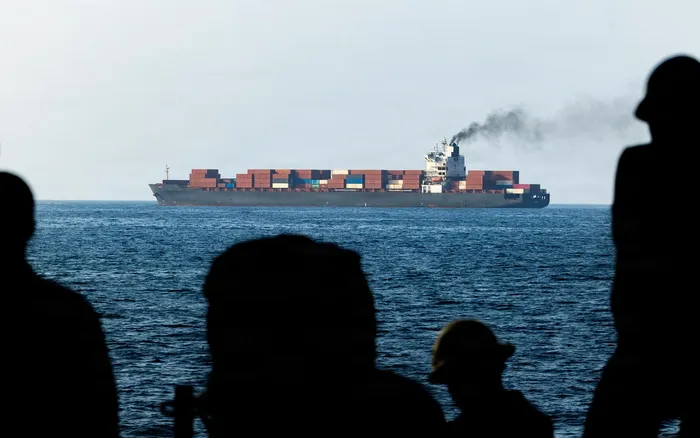
The Iranian military has warned it will target U.S. forces entering the Strait of Hormuz, hours after U.S. officials confirmed a naval operation aimed at guiding commercial vessels out of the waterway.
The warning, issued by Iranian commanders and lawmakers on May 4, comes as the United States prepares to deploy thousands of personnel and military assets in a mission dubbed “Project Freedom.” The operation is designed to restore maritime traffic through one of the world’s most critical energy corridors.
Maj. Gen. Ali Abdollahi, head of Iran’s central command, said in a statement carried by Iranian state broadcaster IRIB on May 4 that Tehran would attack “any foreign armed force” attempting to approach or enter the strait, “especially, the aggressive U.S. Army.”
He said Iran has repeatedly said that the strait is under the control of its armed forces and that safe passage must be coordinated with Tehran.
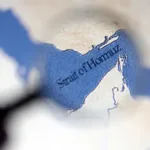
The Strait of Hormuz, which connects the Persian Gulf to global shipping routes, carries roughly a quarter of the world’s seaborne oil trade.
The Iranian military’s statement followed President Donald Trump’s announcement of “Project Freedom,” an initiative he said would restore commercial shipping through the Strait of Hormuz. It would also provide humanitarian assistance to crews running low on supplies, according to Trump’s May 3 Truth Social post.
“This process, Project Freedom, will begin Monday morning, Middle East time,” Trump said. “If, in any way, this Humanitarian process is interfered with, that interference will, unfortunately, have to be dealt with forcefully.”
U.S. Central Command (CENTCOM) said in a May 4 post on X that its forces “will begin supporting Project Freedom, May 4, to restore freedom of navigation for commercial shipping through the Strait of Hormuz.”
The operation includes “guided-missile destroyers, over 100 land and sea-based aircraft, multi-domain unmanned platforms, and 15,000 service members,” according to the statement.
CENTCOM commander Adm. Brad Cooper said the mission is necessary for global stability.
“Our support for this defensive mission is essential to regional security and the global economy as we also maintain the naval blockade,” he said.
At the same time, Trump indicated ongoing diplomatic engagement with Iran, saying on May 3 that U.S. representatives are having “very positive discussions” that “could lead to something very positive for all.”
In response to the Project Freedom initiative, Iranian officials said it forms a breach of an existing ceasefire.
Ebrahim Azizi, head of Iran’s parliamentary foreign policy and national security commission, has said that any U.S. interference in the “new maritime regime of the Strait of Hormuz” will be considered a violation of the ceasefire, according to a May 4 IRIB report.
Azizi dismissed Trump’s plan as “delusional,” adding that “no one believes the blame game scenarios.”
International Response
Concern is mounting among governments and maritime authorities worldwide over prolonged disruptions to commercial shipping through the Strait of Hormuz.
A May 4 advisory from the UK Maritime Trade Operations center (UKMTO) said that the United States had established an “enhanced security area” south of the main shipping lanes in the Strait of Hormuz. It also urged mariners to coordinate with Omani authorities due to “anticipated traffic volume.”
The center said vessels transiting near the usual routes, known as the traffic separation scheme, “should be considered extremely hazardous due to the presence of mines that have not been fully surveyed and mitigated.”According to the advisory, the threat level in the strait remains “critical” and risks remain, including naval congestion, possible mines, and heightened military activity.
In March, member states of the International Maritime Organization (IMO) meeting in London “strongly condemned the threats and attacks against vessels and purported closure of the Strait of Hormuz.”
They said the actions threatened seafarers’ safety and posed risks to navigation and the marine environment.
IMO Secretary-General Arsenio Dominguez on April 2 called on states to support diplomatic efforts to evacuate around 20,000 seafarers still stranded in the Persian Gulf and to establish humanitarian corridors for urgent aid.
“Fragmented responses are no longer sufficient to resolve this crisis,” Dominguez said. “What is urgently required is diplomatic engagement, practical and neutral solutions, and coordinated international action.”
U.S. Ambassador to the United Nations Mike Waltz said in a May 4 post on X that Iran’s actions in the waterway were “illegal and unacceptable.” He cited the use of sea mines in international waters and attempts to impose costs on civilian shipping.
Waltz said such actions risk setting a broader precedent in global conflicts, warning that the world “cannot allow the precedent to stand that one side can try to punish the world’s economies in an attempt to gain leverage.”
He added that the United States and its Gulf partners “will lead the way to defend global freedom of navigation.”