
By Chris Summers
Hungarian authorities said on March 6 that they had detained seven Ukrainian citizens, including a former intelligence officer, on suspicion of money laundering and seized two armored cars carrying $80 million in cash and $1.5 million worth of gold.
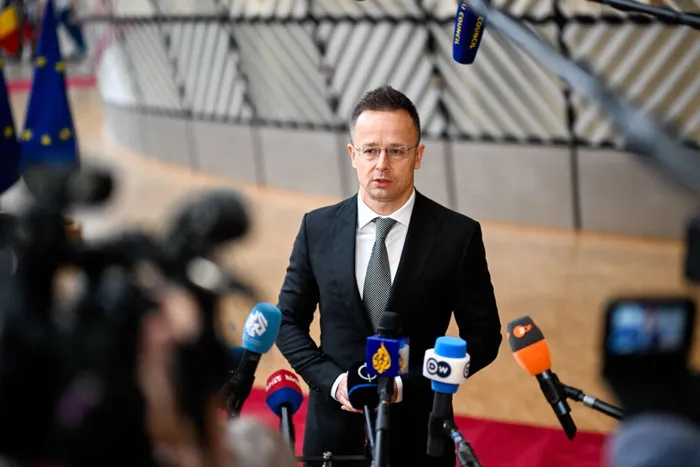
“We demand immediate answers from Kyiv regarding large cash shipments passing through Hungary that raise serious questions about a possible link to the Ukrainian war mafia,” Hungarian Foreign Minister Peter Szijjarto posted on X
Kyiv, however, says the March 5 operation was unwarranted and interfered with the operations of a state-owned bank, Oschadbank, which was transferring money between Austria and Ukraine “as part of regular services between state banks.”
“We are talking about Hungary taking hostages and stealing money. … This is state terrorism and racketeering,” Ukrainian Foreign Minister Andrii Sybiha wrote on X.
Oschadbank said in a statement that $40 million in U.S. dollars, 35 million euros ($40.4 million) in cash, and 19.8 pounds of gold—worth around $1.5 million—had been seized by Hungary.
Hungary’s National Tax and Customs Administration said on March 6 that it had detained seven Ukrainian citizens and seized the two armored vehicles used to transport cash. It said it was investigating suspected money laundering.
The Ukrainian Foreign Ministry posted on X that Ukraine’s National Police had opened criminal proceedings over the “hostage-taking of Ukrainian citizens” and the abduction of at least one bank vehicle.
“Ukrainian police have filed official requests to Europol, Hungary’s tax and customs service, and Hungarian police,” the ministry posted on X.
Ukraine and Hungary share an 80-mile border, but relations between the two countries have been frosty in recent years.
Hungary and neighboring Slovakia have maintained closer ties with Moscow than other European Union member states and disagreed with Brussels over military support for Ukraine.
On Feb. 23, Hungary vetoed new EU sanctions on Russia and a huge loan for Ukraine amid a dispute over oil supplies.
Russian Oil Pipeline Dispute
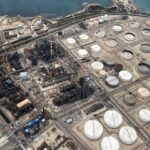
Hungary and Slovakia receive Russian oil via the Druzhba pipeline, a 2,485-mile artery into the landlocked heart of Europe. “Druzhba” means “friendship” in many Slavic languages. But the pipeline has been closed for more than a month.
Budapest and Bratislava both blame Ukraine for the prolonged halt to supplies for their refineries, while Kyiv says the outage was caused by a Russian drone strike hitting pipeline equipment in Western Ukraine on Jan. 27.
Story continues below advertisement
On Feb. 25, Hungarian Prime Minister Viktor Orban accused Ukraine of planning to disrupt Hungary’s energy system and ordered soldiers to be deployed to safeguard critical infrastructure.
Orban also reiterated his claim that the pipeline was shut for “political, not technical, reasons.”
“Since January, $900 million and 420 million euros [$486 million] in cash, as well as 146 kilograms of gold, have been transported across Hungary. If this is truly a transaction between banks, why was it not carried out by transfer? Why move such enormous sums in cash through our country?” Szijjarto posted on X.
Szijjarto said a former general in the Ukrainian intelligence service was part of the escort for the cash convoy, which the Hungarians intercepted.
“Until Kyiv provides clear explanations about the origin and purpose of the funds, Hungarian authorities will conduct a thorough investigation,” Szijjarto added.
Orban Threatens ‘Force’
Orban, who had a phone call with Russian President Vladimir Putin on March 3, posted on X on March 5, “There will be no deals, no compromise. We will break the Ukrainian oil blockade by force.”
Sybiha, in a post on X on March 5, referring to the interception of the armored cash trucks, wrote, “If this is the ‘force’ announced earlier today by Mr Orban, then this is a force of a criminal gang.”
On March 6, Sybiha posted on X, in reply to Szijjarto’s comments: “Political statements from Hungarian officials this morning show that the detention of seven Ukrainian citizens in Budapest was part of Hungary’s blackmail and electoral campaign.
“We will not tolerate this state banditism.”
Hungary is holding parliamentary elections on April 12, with Orban’s conservative FIDESZ-KDNP coalition seeking to retain power.
Orban has accused Ukrainian President Volodymyr Zelenskyy of trying to engineer an energy crisis in Hungary to influence the election and replace him with a prime minister who is more pro-Kyiv.
He has also objected to an alleged plan to accelerate Ukraine’s admission to the EU.
“We will stop things that are important to Ukraine passing through Hungary until we get the approval of the Ukrainians for oil shipments,“ Orban told state radio on March 6, “The Ukrainians will run out of money sooner than we will run out of oil.”
The Associated Press contributed to this report.