
By Nathan Worcester
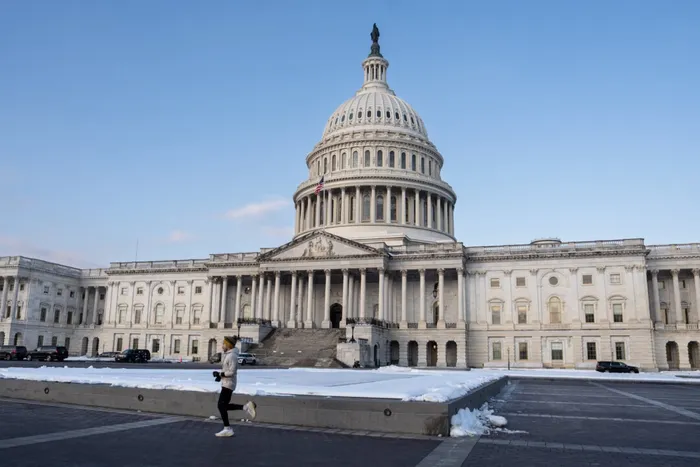
WASHINGTON—The SAVE America Act passed the House on Feb. 11.
Led by Rep. Chip Roy (R-Texas), the legislation would require Americans to prove their citizenship when registering to vote. Under the bill, Americans would also have to furnish photo identification when casting ballots, including mail-in ballots.
Its advancement sets up a potential conflict in the Senate, where Majority Leader John Thune (R-S.D.) has opposed changing the filibuster or using the standing filibuster to overcome its 60-vote threshold—a major barrier to passage in the narrowly divided upper chamber.
The SAVE America Act passed the House 218 to 213 in a nearly party-line vote. A lone Democrat, Rep. Henry Cuellar (D-Texas), voted in favor of the bill.
The final passage came several hours after a procedural vote on a rule to consider the SAVE America Act and several other pieces of legislation. That rule advanced by a narrow 216–215 vote, with Rep. Thomas Massie (R-Ky.) voting against it.
On X, Massie wrote that he opposed the rule despite supporting the SAVE America Act, citing language in the rule that would fast-track spending bills.
The House passed a weaker predecessor of the current bill, the SAVE Act, in April 2025. That measure then moved on to the Senate, which did not take up the legislation.
The House Rules Committee advanced an amended version of the bill on Feb. 10 that softened photo identification requirements, allowing voters to cast ballots with photo identification that would not verify the holder is a U.S. citizen—for example, driver’s licenses.
The amended bill also carved out an exception to the SAVE America Act for uniformed service voters. In addition, it included language requiring a process to allow American citizens who have changed their names to vote, and it ensured the legislation would take effect immediately if enacted.
Rep. Bryan Steil (R-Wis.), who was responsible for some changes to the legislation, stressed in remarks before the committee that the bill means “states will need to obtain documentary proof of U.S. citizenship when registering new individuals to vote in a federal election.”
The SAVE America Act has met with criticism from Democrats, including the Rules Committee’s ranking member, Rep. Jim McGovern (D-Mass.).
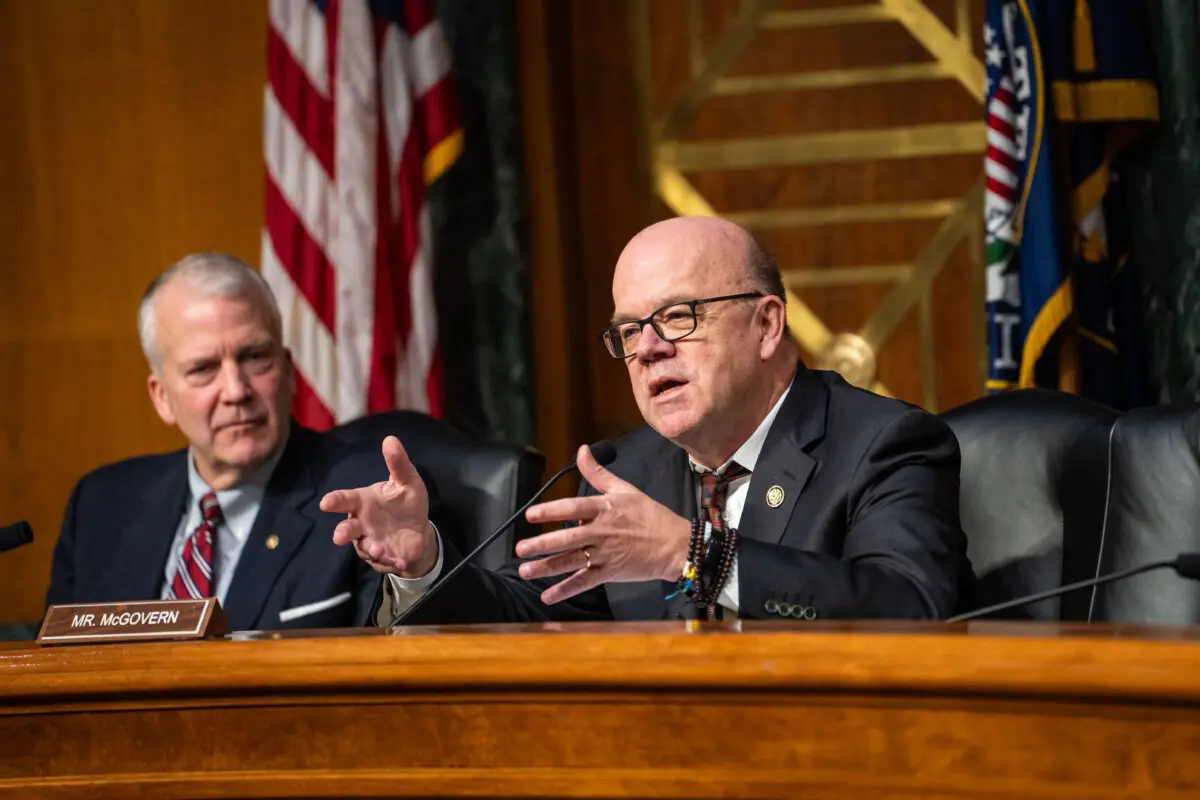
On the House floor ahead of the Feb. 11 rule vote, McGovern said it is “already illegal for noncitizens to vote in federal elections.”
“It’s about voter suppression,” McGovern said of Republicans’ push for voter ID and proof of citizenship to vote.
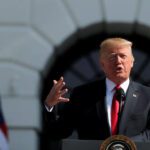
The Trump administration has signaled support for the SAVE America Act, writing on X that “American elections should be decided by American citizens ONLY.”
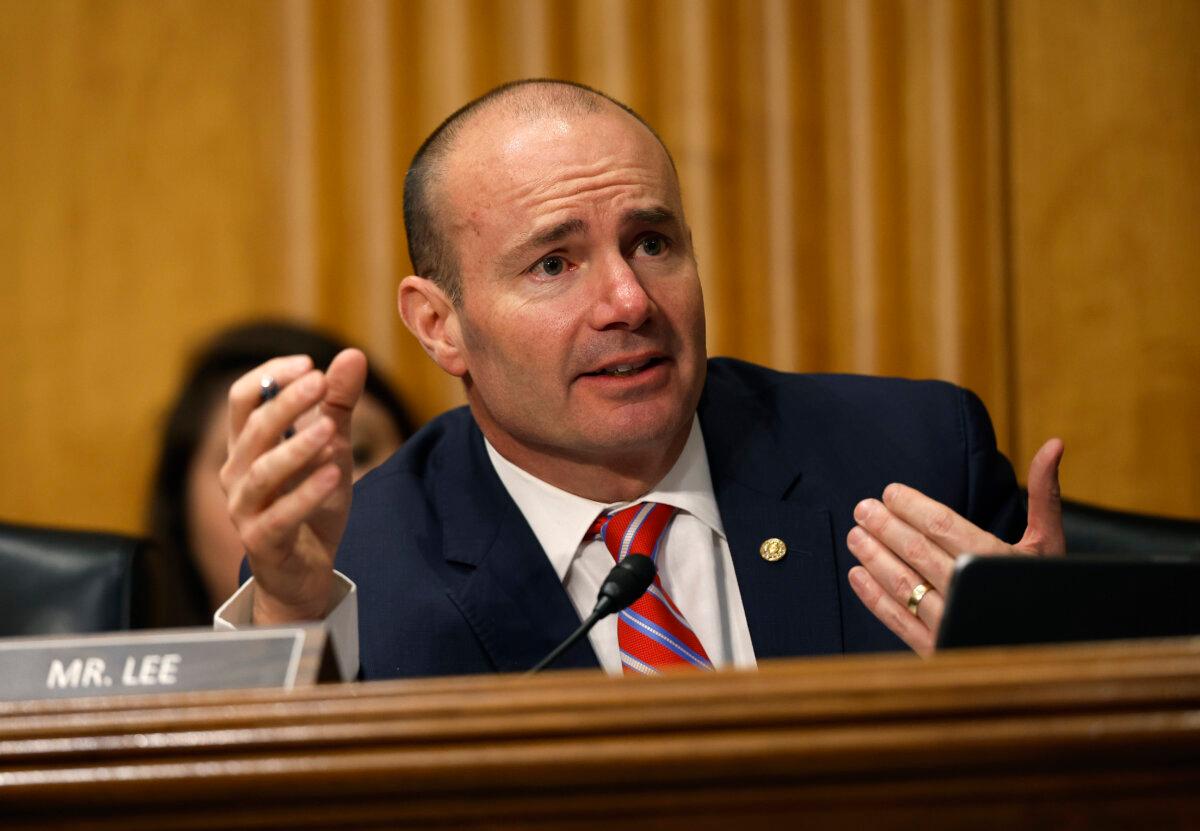
Yet, dynamics in the Senate could stymie the bill there, where support has been led by Sen. Mike Lee (R-Utah).
Lee has rallied numerous Republican cosponsors, including Sen. Lindsey Graham (R-S.C.), Sen. Rand Paul (R-Ky.), and Sen. Josh Hawley (R-Mo.).
“We continue to add more every day, and hope to be at or above 50 by the end of this week,” Lee wrote on X on Feb. 10.
Although Republicans hold a 53-seat majority in the Senate, that is not enough to overcome the 60-vote filibuster threshold.
Some Republicans, including Rep. Anna Paulina Luna (R-Fla.), have called for their colleagues to use the “standing filibuster”—an approach based on the enforcement of the two-speech rule within a single legislative day, which can be extended indefinitely. Republicans would count on Democrats eventually yielding, enabling a simple-majority vote.
Earlier this month, Trump said he would support the tactic as a means of getting the SAVE America Act across the finish line.
Thune and two frequent swing voters, Sen. Lisa Murkowski (R-Alaska) and Paul, are among the Republican senators who have signaled concerns with such a strategy, which could exhaust the filibuster at the expense of floor time.