
By Jackson Richman and Nathan Worcester
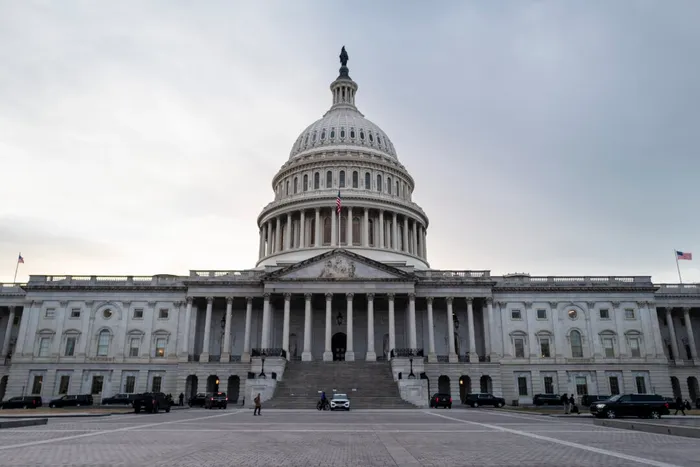
WASHINGTON—The House of Representatives passed a bill to fund the Department of Homeland Security (DHS) on the 20th day of a partial government shutdown.
The vote was 221–209. Four Democrats joined all Republicans in voting for it.
The vote came just hours after Senate Democrats again blocked a vote on legislation to fund the DHS, extending the shutdown of the agency.
The tally was 51–45.
A March 5 procedural vote to advance a full-year DHS spending bill failed to reach the 60-vote threshold it needed to move forward. A previous attempt was blocked on Feb. 24, although it garnered the support of Sen. John Fetterman (D-Pa.).
The votes came as President Donald Trump announced on March 5 that he is replacing Homeland Security Secretary Kristi Noem with Sen. Markwayne Mullin (R-Okla.). Noem is set to fill a newly created position called special envoy for the shield of the Americas. The president released the news shortly before the vote concluded.
Republicans have said funding the department is urgent amid the war in Iran and the risk of retaliatory terrorist attacks. Law enforcement is investigating whether a recent shooting at a bar in Austin, Texas, that killed three people was such an attack.
The shutdown affects only part of the DHS because Immigration and Customs Enforcement (ICE) and Customs and Border Protection are funded through 2029 under Trump’s sweeping reconciliation package passed in 2025. Congress has approved the remaining 11 appropriations bills, funding roughly 96 percent of the federal government.
Agencies affected include the Transportation Security Administration (TSA), the Federal Emergency Management Agency, and the Coast Guard.
According to figures released by House Speaker Mike Johnson (R-La.), roughly 120,000 DHS employees are currently working without pay. About 95 percent of TSA employees are working without pay during the shutdown, while roughly two-thirds of the Cybersecurity and Infrastructure Security Agency’s workforce has been furloughed.
The bill would provide $5.7 billion for the Federal Emergency Management Agency, an $873 million increase over fiscal year 2025 levels, excluding $26.37 billion for the Disaster Relief Fund.
It allocates $3.25 billion to the Secret Service, including $44 million for security planning related to major upcoming events such as the 2026 FIFA World Cup, America250 celebrations, and the 2028 Summer Olympics and Paralympics.
The legislation would also provide $7.96 billion for the TSA, including $300 million for checkpoint screening systems, funding for exit-lane staffing, law enforcement officer and canine reimbursement programs, and $13.9 million to reimburse airports for installing explosive detection systems.
The bill includes $2.6 billion for the Cybersecurity and Infrastructure Security Agency, including $40 million to continue election security activities funded in fiscal year 2024, and $122.9 million for U.S. Citizenship and Immigration Services, with $112 million for E-Verify and $10 million to reduce application backlogs.
Democratic lawmakers have said they will not support a DHS funding bill without changes to immigration enforcement policies, particularly involving ICE operations. They outlined 10 conditions after two shootings in Minneapolis that killed two protesters during encounters involving immigration agents.
Among their proposals are limiting enforcement to targeted operations, requiring judicial warrants before entering private property, ending what they describe as indiscriminate arrests, strengthening warrant standards, verifying citizenship before detention, and requiring agents to clearly identify themselves.
Democrats also want officers to display agency affiliation, last name, and a unique identification number, and to verbally provide that information upon request. They are seeking to prohibit immigration enforcement actions at “sensitive locations,” including churches, schools, child care facilities, courts, medical facilities, and polling places.
The DHS has relied on administrative warrants, which federal immigration officers are permitted to use under existing law. Although agents are not required to wear body cameras, Noem recently said immigration agents operating in Minneapolis would begin using them.
Border czar Tom Homan has defended agents’ use of masks amid calls from Democrats to prohibit them.
“I don’t like the masks either, but because threats against ICE officers are up over 1,500 percent, and assaults and threats are up over 8,000 percent, these men and women have to protect themselves,” Homan said in a Feb. 15 interview on CBS’s “Face the Nation.”
The DHS has said ICE agents will not be deployed to polling places during the midterm elections.
The White House and congressional Republicans have generally refused Democrats’ requests.
On Feb. 18, the White House called a counterproposal by Democrats to fund DHS “very unserious.”
Democratic senators told reporters that replacing Noem does not change the calculus and that reforms are still needed.
Sen. Gary Peters (D-Mich.) said “guardrails” over immigration enforcement are necessary.
Sen. Chris Murphy (D-Conn.) told reporters, “Changing the nameplate on the door doesn’t change the fact that they are committed to using DHS to terrorize communities and migrants in this country.”
Sen. Richard Blumenthal (D-Conn.) echoed Murphy’s sentiment.
“Changing the person at the top is no substitute for changing practices and power structure of a department that is out of control,” he said.
Fetterman announced on X that he will vote to confirm Mullin.