


By Mary Prenon
With the Strait of Hormuz—the primary gateway for Middle East oil exports—effectively shut down by Iran, the prices of both crude oil and gasoline have surged since the start of the U.S.–Israel war with Iran on Feb. 28.
As negotiations between the United States and Iran to end the war continue, an industry insider predicts upward pressure for oil prices will persist for decades, citing structural underinvestment in the oil industry.
U.S. West Texas Intermediate crude closed at $99.64 per barrel on March 27, more than 48 percent higher than the pre-war level of around $67 per barrel. The Brent crude oil benchmark closed at $105.32, up by 46 percent.
Meanwhile, the national average price for regular gasoline was $3.98 per gallon as of March 29, up by nearly $1 from $2.983 a month prior.
Skip York, a non-resident fellow in energy and global oil at The Baker Institute, recently discussed the vital role the Strait of Hormuz plays and the short- and long-term trends of oil prices with Siyamak Khrorrami, host of The Epoch Times’ “Market Insider.”
A Historical Threat
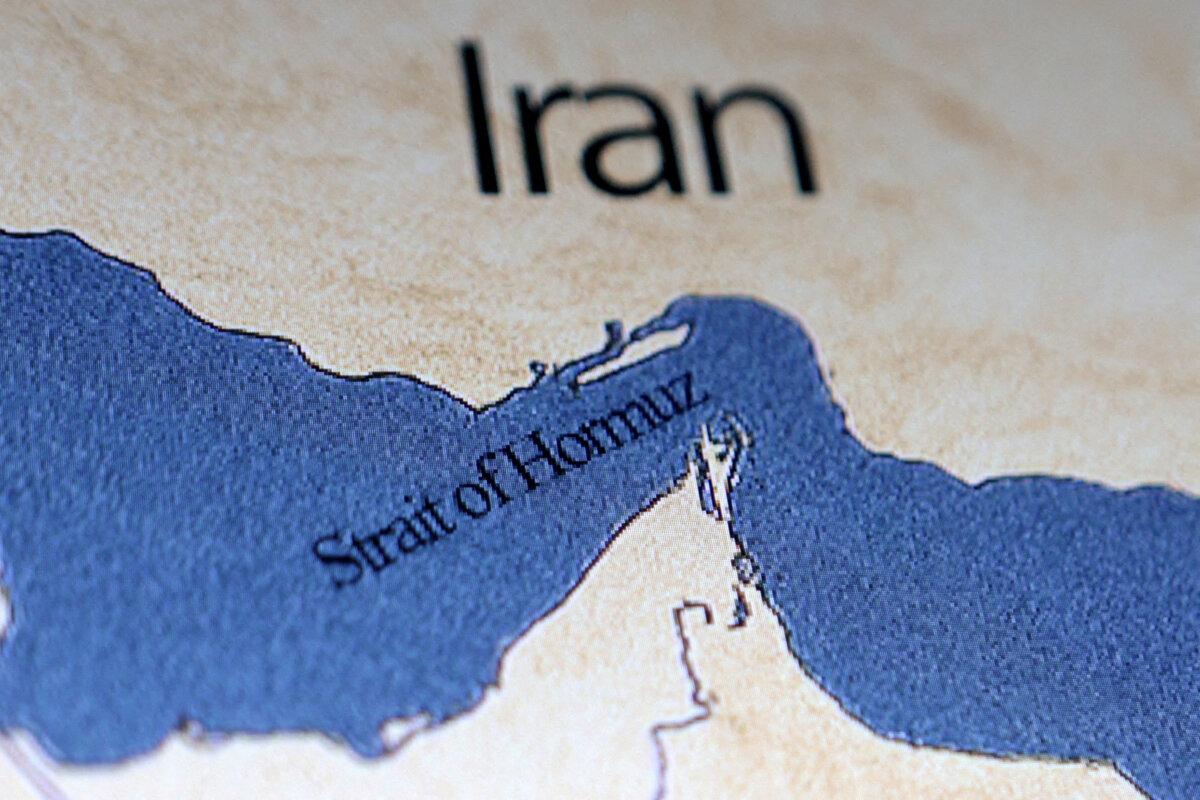
The Strait of Hormuz is a narrow body of water with Saudi Arabia and the UAE on its south shore and Iran on its north. York noted that even before the conflict, navigating the Strait of Hormuz could be challenging.
According to the International Energy Agency, at the narrowest point of the strait—roughly 30 miles wide—the navigable shipping lanes are only about two miles wide in either direction.
As a result, York said, large ships are often forced to navigate in single file and leave plenty of distance between them in case of any emergency pivots or attacks.
“For years, there’s always been a risk that there’d be threats about the Straits of Hormuz being closed. They’ve never actually been realized,” he said. “This time, they actually were.”
York said that the fear of ships being attacked by Iran had led to many shipping insurance policies being cancelled by insurers. As a result, ships that were already in the strait got stuck, and those outside the Gulf were unwilling to go in.
According to the International Energy Agency, an average of 20 million barrels of crude oil and products passed through the waterway per day in 2025, with the vast majority heading to Asia. Meanwhile, about 20 percent of the global LNG supply was exported through the strait, most of which also going to Asia.
“So we’re seeing a real pinch on petroleum energy consumers, both of crude oil, petroleum products, and natural gas,” York said. “But as the conflict has gone on, we’re now starting to see that supply disruption start to spread itself across the world as those Asian consumers go and look for alternative supplies.”
York said that people may begin to see changes in shipping patterns toward late April and into May if the conflict persists.
‘A National Security Concern’
He said that before the shale boom in the mid-2000s, the United States depended heavily on the Persian Gulf region for crude oil, importing about 5 million to 6 million barrels per day. After that, U.S. imports from the region dropped dramatically.
The U.S. shale boom, also called the “shale revolution,” started in 2004 in the Barnett Shale with the adoption of unconventional drilling and completion techniques such as hydraulic fracturing and horizontal drilling. These innovations later massively boosted domestic crude oil production.
The Energy Information Administration estimated that the United States produced about 3.04 billion barrels of crude oil in 2023, or 8.32 million barrels per day, directly from shale. Shale oil accounted for about 64 percent of total U.S. crude oil production in the year.
In 2025, the United States imported an average of 490,000 barrels of crude oil and products from the Persian Gulf region, according to the Energy Information Administration. York said most of the imports now go to California.
“We’ve sort of taken ourselves off dependency on the Strait of Hormuz, but our allies and friends in Europe and Asia are still heavily dependent on the strait,” he said.
“So from a national security interest, although we don’t need the volume, our friends and allies do. That’s why it’s a national security concern for the U.S.”
York noted that U.S. gasoline prices have also risen because the U.S. East Coast region used to import a large amount of gasoline from European refineries, and Europe was heavily dependent on crude oil from the Middle East. When the Strait of Hormuz closed, the European refineries were “starved of crude.”
As a result, gasoline supplies to the United States quickly dropped, he said. “So all prices rise really quickly, and that’s what we’re now starting to see in the U.S.,” York said.
Missing Shale Response
York said increasing oil production is very difficult in the short run.
“It takes a long time to do it. So that’s why there’s not expected to be much of a production supply response in the near term outside of the Middle East, and that’s why we’re increasingly looking upon strategic petroleum reserves and drawdowns,” he said.
York noted that the U.S. shale industry has not responded at scale yet.
“The rig count has only gone up by three since the conflict started,” he said.
York said the situation seems to back up claims since the outbreak of the COVID-19 pandemic that the supply chains in the shale industry were very tight, especially labor shortages.
“That probably explains why we’re not seeing this big response with more rigs in the field and more completion crews,” he said.
Post-War Price Trends
Predicting the direction of oil prices after the war, York analyzed two scenarios: one with an end to the current Iranian regime and the other with the regime remaining in power.
“In both scenarios, oil prices are going to fall from where they are right now,” he said. “I think they fall more in the first scenario, but I don’t think they fall all the way back down into the 60s.”
York said one of the factors that had kept oil prices at around $60 per barrel before the war was a huge inventory buildup from late 2024 through 2025. “We’re now using that inventory, so that’s going to tighten the market up a bit,” he said.
He estimated that if the current regime is ousted, oil prices could drop to about $70 to $75 a barrel. However, if the current regime remains in power, that could add another $5 to $10 per barrel, due to the risk of Iran again closing the strait.
“My theory is going to be that as long as the current regime stays in place, the risk premium that we put on Middle East barrels is going to be higher than what was in place before the conflict started,” he said.
York said the forward curve indicates West Texas Intermediate crude oil prices will remain above $80 per barrel through 2026 and into 2027, as supply lags are expected to persist even after the war ends.
He outlined several reasons for the delay. First, the Strait of Hormuz would need to reopen. Second, confidence would have to be restored that it is safe to transit. Third, tanks already in the Strait would need to clear out so vessels waiting outside the Persian Gulf can enter.
York said restoring that flow wouldn’t take long—likely in a matter of weeks.
However, he said that if oil facilities are significantly damaged in any escalation of the war, it would take much longer to bring volumes of crude and refined products passing through the strait back to 20 million to 22 million barrels per day.
“I think that’s what the forward curve is pricing in, that there will be damage to these facilities and that those facilities will need to be repaired over months. And that’s why oil prices stay elevated through the rest of 26 and into 27.”
Ishaq Dar, Pakistan’s Foreign Minister, said in a March 28 X post that Iran had agreed to allow 20 Pakistani-flagged ships to pass through the Strait. The move came two days after President Donald Trump announced that Iran had let 10 oil tankers through the key waterway.
Trump has recently cited progress in negotiations with Tehran to end the war, but Iranian officials have downplayed the significance of those communications.
Structural Underinvestment
Over the long term, York said upward pressure on oil prices will persist into the 2030s and 2040s, citing more than a decade of underinvestment in the oil industry amid the push in the West for “net zero”—the long-term shift away from fossil fuels toward a low-carbon economy.
The Paris Agreement, signed in 2015 by 196 parties, significantly accelerated global “net zero” and green-energy transition planning. Both the European Union and the Biden administration set the goal of achieving net-zero emissions by 2050.
The United States withdrew from the Paris Agreement during Trump’s first term, with the president at the time saying the agreement would cost the United States up to $3 trillion in lost GDP and 6.5 million jobs by 2040, while allowing major polluters like China and India to continue to expand emissions. Under the Biden administration, the United States rejoined the agreement, and withdrew again in 2025 after Trump began his second term.
York said that in the past decade, many upstream oil companies put their investment plans on hold, “as if net zero by 2040, or 2050, was going to happen.” He said that, although the transition seems to be slowing down, the investment pattern hasn’t changed yet.
York said that it takes a long time, “five, seven, 10 years,” for investments to translate into production. Thus, he said if the demand for crude oil continues to grow at the present pace—800,000 to 1 million per day—the supply would be much tighter into the 2030s.
“That’s going to put upward pressure on prices,” he said.
Meanwhile, York said that geological factors would also put upward pressure on oil prices.
“Oil prices are always a race between technology and geology, and eventually geology wins, because you can have technological innovations that are and were doing incredibly, and we’re doing things in the industry now that no one even envisioned five years ago, let alone 10 years ago,” he said.
Ryan Morgan contributed to this report.