
By Rachel Roberts
Greenland should hold talks with the United States government without Denmark being present, a Greenlandic opposition leader said on Jan. 7, as Washington’s push for control of the Arctic island continues.
U.S. President Donald Trump again recently brought up the topic of the United States purchasing Greenland, a self-governing territory which is part of the Kingdom of Denmark.
Trump first expressed interest in Greenland in 2019 during his first term in office.
Story continues below advertisement
Greenland is considered a critical site for the United States’ ballistic missile defense system because of its strategic location between Europe and North America, as well as its location along the shortest path over the arctic between Washington and nuclear-armed Moscow. In addition, its untapped mineral resources are expected to help reduce U.S. dependence on China.
Greenland has not been a colony of Denmark since 1953 and has had home rule since 1979, with its own parliament and government. However, Copenhagen retains authority over foreign affairs and defense of the territory, which has a population of around 57,000 of chiefly Inuit descent.
Dialogue Without Denmark
“We encourage our current [Greenlandic] government actually to have a dialogue with the U.S. government without Denmark,” Pele Broberg, leader of the main opposition party, Naleraq, and the most prominent advocate for an independent Greenland, told Reuters.
“Because Denmark is antagonizing both Greenland and the U.S. with their mediation.”
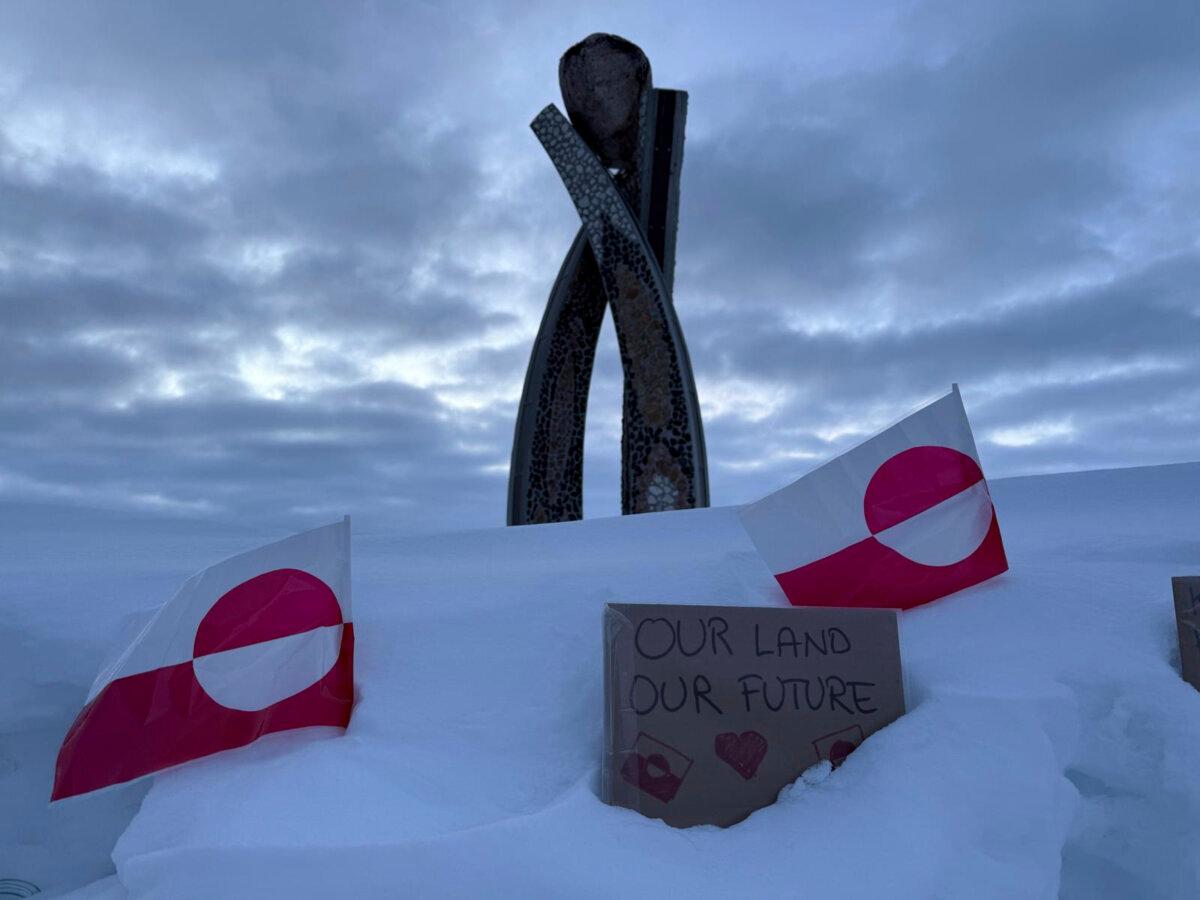
All the Greenlandic parties favor independence but differ on how, and when, to achieve it. The island is part of NATO and the EU and its people have full Danish citizenship.
Naleraq called for a rapid transfer to full independence—which is allowed under international law, should the people of Greenland want it. Naleraq won 25 percent of the vote, doubling its seats to eight, in last year’s election.
Nalareq, which is not part of the governing coalition, has said it favors a defense agreement with Washington and could pursue a “free association” arrangement, whereby Greenland would receive support and protection from the United States in exchange for military rights, without becoming a U.S. territory.
Greenlandic Foreign Minister Vivian Motzfeldt told local newspaper Sermitsiaq on Wednesday that the territory is not legally allowed to hold talks directly with the United States without Denmark’s presence.
“We have rules for how to resolve issues in the Kingdom,” she said.
Story continues below advertisement
The Danish and Greenlandic foreign ministers and U.S. Secretary of State Marco Rubio are due to meet next week.
“My greatest hope is that the meeting will lead to a normalization of our relationship,” Motzfeldt told the paper.
Greenlanders Favor Independence
A poll from January 2025 reveal that while a majority of Greenlanders (56 percent) favor independence from Denmark, just 6 percent said they wanted to become part of the United States.
The Greenlandic economy currently relies heavily on Danish subsidies, and the arctic island has been part of the Nordic kingdoms of Denmark and previously Norway for more than 600 years.
Denmark’s Defense Minister Troels Lund Poulsen on Thursday posted on X a photograph showing the coffin of a Danish soldier the ministry said was killed in Afghanistan in 2011, intending to highlight the support that Copenhagen has given to the United States over the years.
“First in Afghanistan and then in Iraq, Danish soldiers fought shoulder to shoulder with our allies,” he wrote, adding that “Many skilled, heroic service members paid the highest price.”
In an unusual move, the Tivoli amusement park in central Copenhagen flew the Greenlandic flag on Thursday.
NATO diplomats discussed the Greenland situation in Brussels on Thursday, agreeing the alliance should strengthen Arctic security.
EU foreign policy chief Kaja Kallas said the bloc of 27 nations was considering how to respond if what she termed “concerning” messages from Washington turn into action.
Rubio appears not to favor military action, according to France’s foreign minister, although the U.S. secretary of state told reporters Wednesday that all options remain on the table, a position the Trump administration has consistently taken in negotiations with other nations.
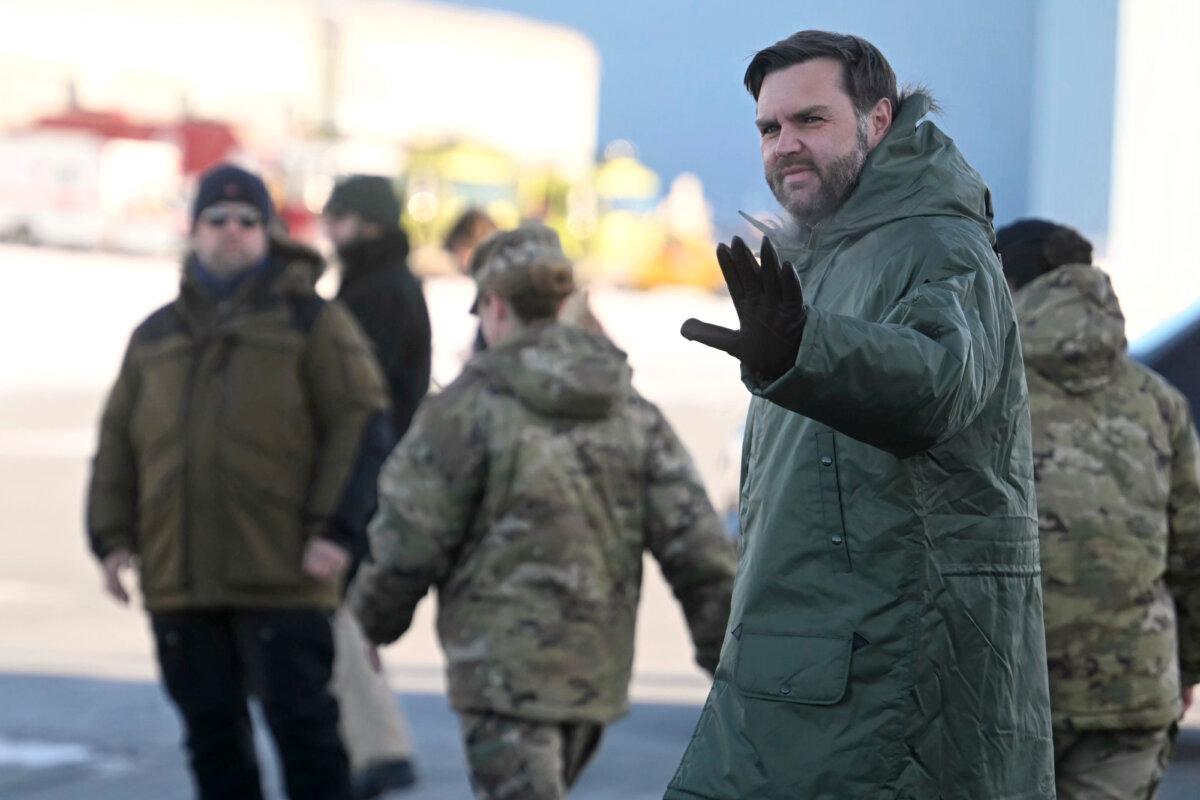
“We are going to make sure we defend America’s interests,” U.S. Vice President JD Vance told Fox News in an interview that aired Wednesday.
“And I think the president is willing to go as far as he has to make sure he does that.”
But not all Republicans in Congress are on board with the idea.
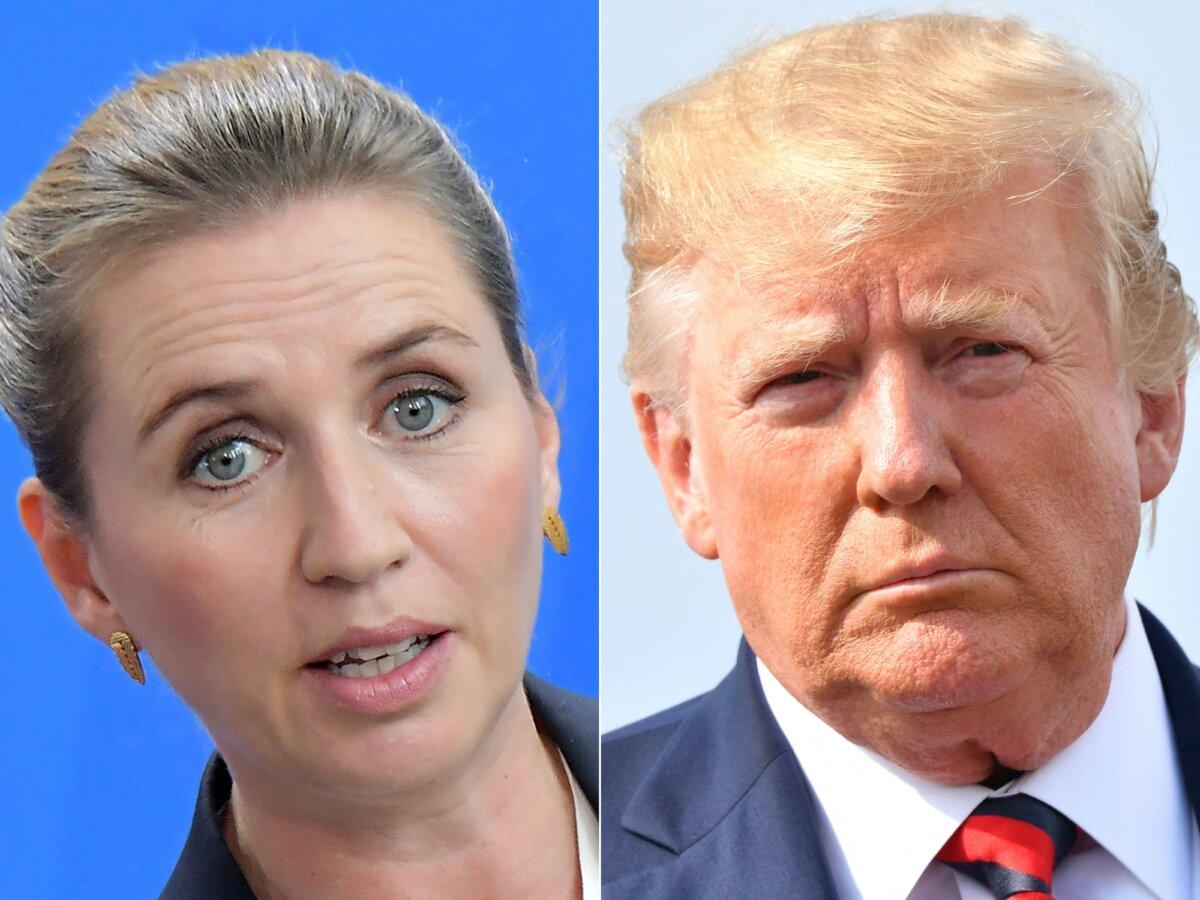
“Greenland is not part of America and we can’t simply take it because we want to,” Sen. Lisa Murkowski (R-Alaska), who has often broken with Republicans on policy, said in a Senate speech, echoing the warning of Danish Prime Minister Mette Frederikson. “To do so would be a colossal mistake. It would end NATO.”
Earlier this week, leaders from major European powers signed a joint statement stressing their support for the future of Greenland to be determined by “Denmark and Greenland, and them only.”
European Response
British Prime Minister Keir Starmer “reiterated his position” on Greenland in a call with Trump on Thursday—the second this week between the two leaders, the UK government said.
The most recent call included a discussion on how to deter Russia in the High North—the Arctic region that includes Greenland.
The UK prime minister ceded that, although European allies had stepped up in recent months to defend Euro-Atlantic interests, “more could be done to protect the area,” according to a Downing Street statement.
Starmer also spoke to Danish Prime Minister Mette Frederiksen on Thursday afternoon.
“Both leaders agreed on the importance of deterring Russian aggression in the High North and that NATO should step up in the area to protect Euro-Atlantic interests,” Downing Street said.
Trump has warned that both Chinese and Russian ships are stalking the Arctic waters around Greenland, which Denmark disputes.
An existing treaty signed with Denmark in 1951 gives the United States military access to the island, operating within the framework of NATO and Danish sovereignty, with Denmark retaining ultimate authority. A bilateral defense cooperation treaty between the United States and Denmark, signed in December 2023, allows a more permanent presence of U.S. forces at specific Danish military bases.
Reuters contributed to this report.