

By Victoria Friedman
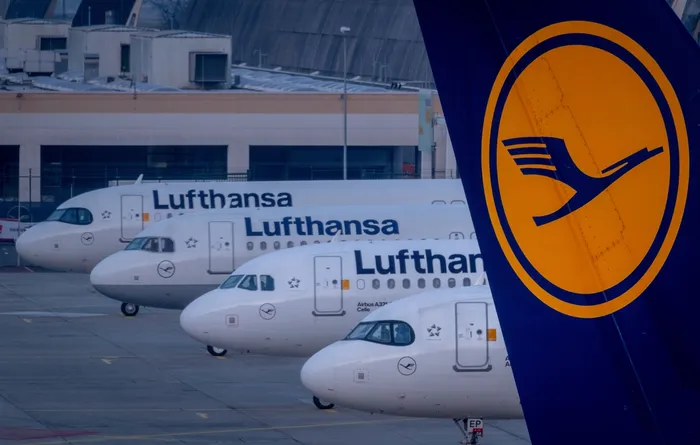
German airline Lufthansa announced on April 21 that 20,000 short-haul flights would be canceled this summer due to the ongoing fuel crisis sparked by the Iran war and subsequent blockade of the Strait of Hormuz, a vital route for global oil shipments.
Lufthansa said in a statement that the flights “will be removed from the schedule through October, equivalent to approximately 40,000 metric tons of jet fuel, the price of which has doubled since the outbreak of the Iran conflict.”
The carrier said that the changes will reduce the number of “unprofitable short-haul flights” across its network, and will be carried out across Lufthansa Group’s six hubs in Brussels, Frankfurt, Munich, Rome, Vienna, and Zurich.
Lufthansa added that passengers will still have access to the group’s global network of flights, but “due to the increase in jet fuel prices, this will be achieved significantly more efficiently than before.”
The airline said that its jet fuel supply has been secured for the coming weeks, and that it expects to have a “largely stable fuel supply.”
“Lufthansa is pursuing a range of measures to this end, including the physical procurement of jet fuel as well as price hedging,” the statement reads.
The first flight cancellations were implemented on April 20, effective through to the end of May, with medium-term route planning for the rest of the period from June onward to be published in late April or early May.
Responding to the announcement, Kirill Dmitriev, Russia’s special presidential envoy on foreign investment and economic cooperation, said in an April 21 post on X that an “energy crisis tsunami” is heading for Europe.
“This is just the beginning,” Dmitriev said.
The International Air Transport Association’s Jet Fuel Price Monitor reported that for the week ending April 17, the global average jet fuel price fell by 6.7 percent from the week before to $184.63 per barrel—but that is still 105.1 percent up on last year’s average.
European Jet Fuel Supplies
The announcement came days after the Dutch government estimated that the European Union has about five months’ supply of kerosene—which is used as jet fuel—left.
The government said in an April 20 letter to parliament that the available supply of kerosene is currently about 78 percent of normal levels, reflecting a roughly 22 percent disruption after imports were cut off due to supply issues caused by the Iranian blockade.
It also outlined possible scenarios, ranging from a manageable disruption to a full-scale supply crisis.
Others have made estimates of Europe’s potential supply, including International Energy Agency Executive Director Fatih Birol, who said on April 16 that Europe has “maybe 6 weeks or so of jet fuel left.”
He said that flight cancellations could occur soon if restrictions through the Strait of Hormuz—which carries the traffic of around one-fifth of the world’s oil—continue.
Birol also criticized the so-called toll booth system that Iran has applied to some ships, allowing them to travel through the strait for a fee, saying it risked setting a precedent that could be enforced in other key waterways.
On March 31, President Donald Trump criticized countries currently unable to get jet fuel for failing to get involved in “the decapitation of Iran.”
“I have a suggestion for you: Number 1, buy from the U.S., we have plenty, and Number 2, build up some delayed courage, go to the Strait, and just TAKE IT,” Trump said in a Truth Social post.
“You’ll have to start learning how to fight for yourself, the U.S.A. won’t be there to help you anymore, just like you weren’t there for us. Iran has been, essentially, decimated. The hard part is done. Go get your own oil!”
Other Airlines Cutting Capacity
Other global airlines have said they are cutting capacity, as well as raising fares or fees, due to rising fuel prices as a result of the conflict in the Middle East.
Last week, Air Canada said it would stop flying to New York City’s John F. Kennedy International Airport and raise baggage fees on some flights due to rising fuel costs.
Earlier this month, American Airlines said it would raise checked baggage fees and tighten some economy class benefits as part of the carrier’s “continuing evaluation of pricing in light of the current operating environment.”
American Airlines’ move followed similar fee increases by Delta, JetBlue, Southwest Airlines, and United Airlines in response to the surge in fuel costs.
Virgin Australia said last week it was raising fares, and Australian carrier Qantas Airways said last month it would increase fares on its international routes in response to the surge in jet fuel costs.
Similarly, Air New Zealand also announced in March broad price increases and plans to cancel around 1,000 flights.
Guy Birchall and Owen Evans contributed to this report.
Related posts:
 Iran Attacks 2 Container Ships After Trump Extends Ceasefire
 Trump Says US Negotiators Will Travel to Pakistan for Peace Talks With Iran
 Trump Says US ‘Loading up the Ships’ Ahead of Iran Talks, Signals Military Option If Diplomacy Fails
 US to Blockade Strait of Hormuz After US–Iran Talks End Without Deal, Trump Says