

By Andrew Moran
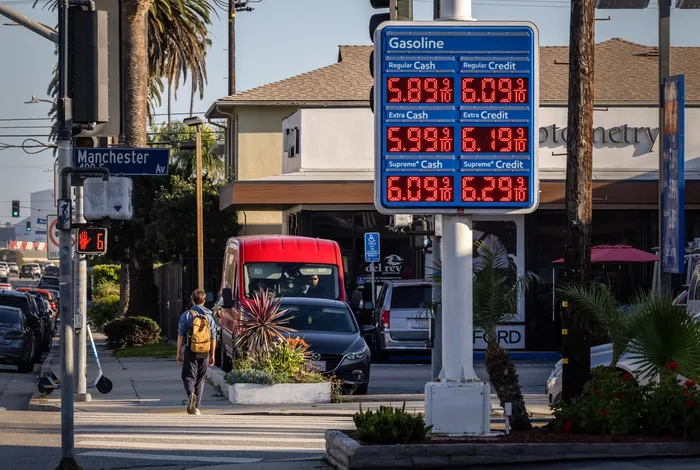
Treasury Secretary Scott Bessent said gasoline prices could ease back toward $3 a gallon by September following a sharp increase triggered by the war in Iran.
The conflict—now nearing its eighth week—has driven a rapid surge in fuel costs.
The national average was about $2.90 per gallon before the fighting began. As of April 15, prices have climbed above $4, according to the American Automobile Association.
Bessent said he believes that prices at the pump will steadily decline once Middle East tensions cool and the Strait of Hormuz—the vital choke point that carries a fifth of the world’s oil supply—is fully reopened.
“I’m optimistic that during the summer, we will see gas with a three in front of us sooner rather than later,” he told reporters at an April 15 press briefing.
“I’m optimistic that sometime between June 20 and September 20, we can have $3 gas again.”
He said that the administration will be watching gas stations. Bessent said that although they raised gas prices quickly in response to surging crude oil prices, he hopes they will lower them just as fast.
Economists call it the “rocket and feathers” effect, an asymmetrical price transmission between crude and gasoline.
The pass-through from wholesale to retail accelerates when oil prices climb like a rocket. When crude decelerates, however, retail prices are slow to adjust, often taking weeks or months to return to pre-spike levels—falling like a feather.
This is a result of stations’ aiming to exhaust their higher-cost inventories and businesses’ protecting their profit margins. Additionally, market competition is limited, as the number of stations is lower today than a decade ago.
Despite a hot start to the trading week, global energy markets have stabilized.
The price of a barrel of West Texas Intermediate—the U.S. benchmark for oil prices—has declined by about 10 percent since April 13 to below $92. RBOB gasoline—the benchmark for U.S. wholesale gasoline—has also tumbled by about 2 percent this week.
Soaring energy prices have contributed to the increase in headline inflation.
March’s annual consumer inflation rate rose to 3.3 percent, the highest level since May 2024. However, underlying inflation trends appear stable, as core inflation, which excludes the volatile energy and food components, has been tame. Additionally, producer inflation and import prices have come in below economists’ expectations.
Gas Prices Eating Tax Windfall
This year, the average tax refund is up about 11 percent from a year ago, to almost $3,500.
“It has been a fantastic tax season,” Bessent told reporters. “It has gone smoothly. It has gone efficiently from the point of view of the IRS, but most importantly, it’s been a great tax season for the American people.”

But although consumers could be enjoying a large windfall this tax filing season, economic observers fear this gain could be offset by the pain at the pump.
Compared with two decades ago, consumers are less sensitive to higher fuel costs.
Still, the recent surge could squeeze wallets across the country, especially if energy prices remain elevated, said Sal Guatieri, senior economist at BMO Capital Markets.
“Apart from undermining confidence, the increase will erode spending power, particularly for lower-income households,” Guatieri said in an April 2 research note. “Gasoline and other fuels account for 2 percent of U.S. personal consumption, so the price increase, if sustained, could cut annual spending by about 0.7 percent.”
This would work out to about $1,000 for the average U.S. household, he said.
So far, shoppers have weathered the financial storm.
Total credit and debit card spending per household advanced by more than 4 percent year-over-year in March, representing the strongest growth since early 2023, data from Bank of America show.
Excluding gasoline, total card spending still climbed by 3.6 percent.
At the same time, low-income households could be more at risk because gas accounts for a greater share of their monthly budgets, the bank’s economists noted in the latest report.
“Those with lower incomes curbed discretionary purchases (spending outside of groceries, utilities, and gasoline) last month, and their [year-over-year] spending growth on discretionary goods dropped back relative to increases seen among middle- and higher-income households,” they said.
Total card spending among low-income households edged up 2.2 percent year-over-year.