

By Panos Mourdoukoutas
Concerns about the stability of the fast-growing private credit market mounted last week as more investment funds restricted investor withdrawals, contributing to volatility on Wall Street.
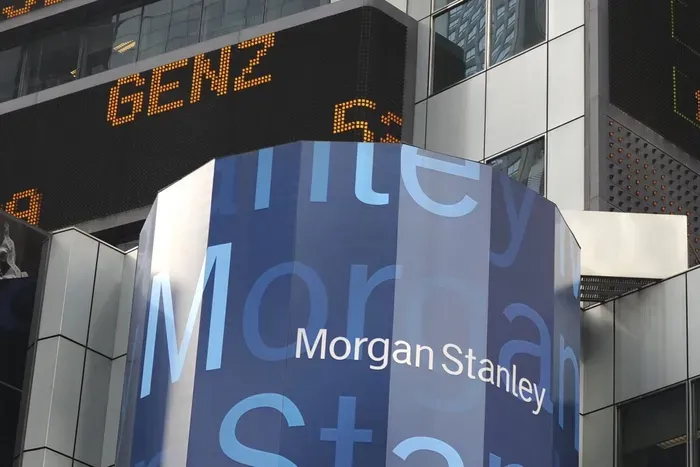
Morgan Stanley revealed in a letter to investors on March 12 that it had limited investor withdrawals from its $8 billion non-traded business development company, North Haven Private Income Fund LLC, causing its stock to fall by more than 4 percent following the news.
Earlier, BlackRock, the world’s largest asset manager, disclosed on March 6 that it had restricted withdrawals from its $26 billion HPS Corporate Lending Fund—which was designed for wealthy individuals—after a surge in redemption requests from clients. Shares of the company fell by more than 7 percent on the day.
In February, Blue Owl Capital, one of Wall Street’s largest private credit managers with more than $300 billion in assets, announced that it would block investor withdrawals from its OBDC II fund, rattling the private credit market.
The latest wave of redemption limitations has revived debate about the risks of a market that has expanded rapidly over the past decade and now plays a central role in directly financing corporate America.
Private Credit Explained
Private credit is a direct credit market that provides loans made by non-bank financial institutions—including private equity firms, alternative investment funds, and asset managers—rather than financial intermediaries such as traditional commercial banks.
Unlike bank lending or publicly traded debt markets, private credit deals are negotiated directly between lenders and borrowers and are not traded on open exchanges. That structure allows lenders to move quickly and tailor financing packages, but it also makes the market less transparent, less liquid, and riskier.
For years, private credit operated quietly in the shadows of the traditional banking system. Today, it has grown into a multi-trillion-dollar market that finances everything from corporate buyouts to mid-sized companies that can’t easily borrow from banks.
Russell Investments estimates the global private credit market at $1.5 trillion–$2 trillion, with the United States accounting for roughly 75 percent of it.
Private credit is dominated by large asset managers and private equity firms that specialize in direct lending. These firms raise capital from pension funds, insurance companies, and wealthy individuals looking for superior market returns.
Borrowers typically include mid-size companies, private equity-owned firms, and businesses involved in mergers and acquisitions. Many of these borrowers rely on private credit because they may not qualify for traditional bank financing or want to avoid the regulatory and disclosure requirements associated with public debt markets.
Private equity deals are a major source of demand for these loans. When a buyout firm acquires a company, it often finances part of the transaction with private credit rather than bank loans or high-yield bonds.
Subprime borrowers, such as consumers with low credit scores, are another source of demand for these loans.
Software companies that lack the physical assets to serve as collateral for corporate loans are another source of demand for private credit.
Notably, a large share of private credit financing comes from banks, with Moody’s Investors Service estimating it at $300 billion.
The combination of exponential growth, tighter liquidity, and closer ties with the banking system is now prompting investors and analysts to question whether strains in the sector pose systemic risk that could spread to the broader economy.
Moody’s stated that the increasing interdependence between banks and private credit firms raises the risk of incentive misalignment, as the institutions are both partners and competitors in the lending market.
Key Factors Driving Growth
Several structural changes in financial markets have fueled the rapid expansion of private credit.
One key factor has been the tighter regulation of banks following the global financial crisis. Stricter capital requirements made many traditional lenders less willing to extend risky or leveraged loans, leaving room for private lenders to step in.
At the same time, institutional investors have been seeking higher yields amid ultra-low interest rates for many years. Private credit funds promised attractive returns compared with government bonds or traditional fixed-income securities.
“The market grew quickly because traditional banks pulled back under tighter regulation, which created room for private lenders to step in and supply capital,” Steven Rogé, a certified financial planner at R.W. Rogé & Co., told the Epoch Times.
Private credit funds were rapidly attracting individual investors with low-teen yields, steady valuations, and perceived lower sensitivity to interest-rate fluctuations, though the space looked almost “suspiciously tidy,” Rogé said.
Vulnerabilities in the Sector
Recent events have highlighted vulnerabilities in the sector, particularly around liquidity and credit risks, as some private credit loans have been extended to software companies that are under threat of extinction from AI models.
Some private credit funds have begun limiting investor withdrawals amid rising redemption requests. These restrictions can occur because the underlying loans are difficult to sell quickly without significant losses.
In one recent case, funds managed by Blue Owl Capital, BlackRock, and Morgan Stanley have restricted withdrawals, raising questions about whether liquidity pressures could spread across the market.
These moves came amid broader turbulence in credit markets and a series of corporate bankruptcies, including those of subprime auto lender Tricolor and auto parts supplier First Brands Group, that rattled investors.
When coupled with softer repayment patterns, the concern is that the problem may be widespread, while the growing links between banks and private credit firms could amplify risks, raising the potential for spillover effects if banks run into trouble.
Potential Impact on the Economy
Despite the growing anxiety, most analysts do not yet see private credit stress as an immediate systemic threat.
The sector’s structure means that losses are typically borne by investors in private funds rather than by deposit-taking banks. This reduces the likelihood of a classic banking crisis.
However, if private credit lenders sharply pull back, companies that rely on them for financing could face tighter credit conditions. That could slow mergers and acquisitions, reduce corporate investment, and put pressure on heavily indebted businesses.
Still, Brian Riley, the director of credit payments and co-head of payments at Javelin Strategy & Research, believes that private credit in consumer lending is not at the point of an imminent crisis.
“For insured banks, this is not a major concern. They are reserved for potential losses and have navigated through more severe periods, such as the Great Recession,” he told The Epoch Times.
However, recent market shocks in private credit may force investors to reconsider the easy profits earned during the boom years and confront the real risks of lending to weaker, high-risk companies.
“Without the safety and soundness measures required of banks and the Dodd-Frank stress testing requirements to ensure liquidity, there are indeed issues that private equity has not planned for,” Riley said.
Rogé believes the potential impact of private credit on the broader economy is a matter of perspective.
“Private credit is large, though still much smaller than the mortgage market was during the financial crisis. The bigger issue is interconnectedness. Many private lenders use borrowed money, and traditional banks are still part of that chain,” he said.
“Wells Fargo, Goldman Sachs, and others have exposure through lending relationships with asset managers. So the risk has moved but has not vanished.”
Sunil Kansal, head of consulting at Shasat Consulting, sees the impact of private credit issues as likely to remain contained, compared with a traditional banking crisis, because private credit funds do not take deposits and are not central to the payment system.
“However, if credit conditions tighten significantly, companies that rely on private credit financing may face higher borrowing costs or fewer refinancing options, which could slow investment and private equity deal activity in parts of the corporate sector,” he told The Epoch Times.