

By Andrew Moran
Investors are no longer pricing in a Federal Reserve rate hike later this year, but they expect a higher-for-longer policy stance.
Last week’s futures market data indicated that traders were betting that the central bank would raise interest rates in October or December to address rising war-driven inflation pressures.
Wall Street backed off this forecast to start the trading week, but markets still anticipate tighter monetary policy for longer.
Traders have signaled that the next quarter-point rate cut will take place in September 2027, according to new CME FedWatch data.
The two-year Treasury yield, which typically tracks Fed policy expectations, also registered a sharp pullback, falling about nine basis points to around 3.83 percent.
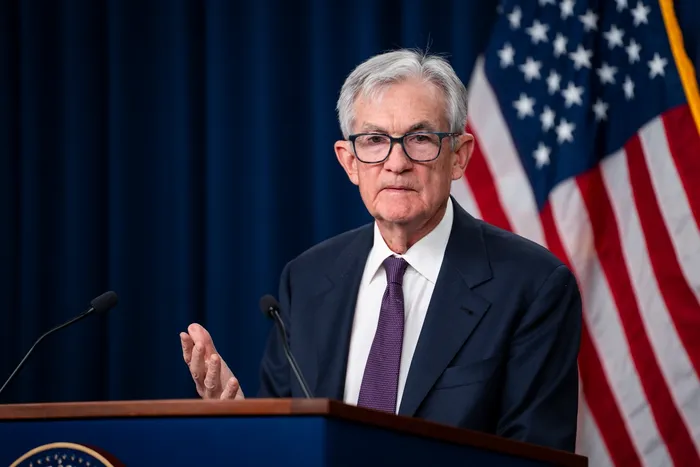
Dovish movements in the U.S. bond market occurred during Fed Chair Jerome Powell’s March 30 talk at Harvard University.
While Powell avoided questions surrounding the long-term direction of interest rates, he acknowledged that inflation expectations are “well anchored beyond the short term.”
He said it would be unnecessary to raise interest rates because of the oil price shock, citing the long and variable lags in monetary policy.
“By the time the effects of a tightening in monetary policy take effect, the oil price shock is probably long gone, and you’re weighing on the economy at a time when it’s not appropriate. So the tendency is to look through any kind of a supply shock,” Powell said.
Minutes from the January Federal Open Market Committee meeting highlighted that officials deliberated the possibility of a rate hike being the next policy action.
Powell also told reporters that he and his colleagues discussed a rate hike, although he reaffirmed that it is not the base case for anyone at the central bank.
Moving forward, the chief challenge for policymakers is to look through higher energy prices and President Donald Trump’s tariffs and instead examine structural inflation.
Excluding the administration’s global sweeping tariffs, Powell believes that inflation is running closer to the 2 percent target than what the headline numbers indicate.
Hike, Cut, or Pause—Those Are the Questions
Fed Board member Stephen Miran echoed Powell’s remarks, noting that higher crude oil prices have yet to push up inflation expectations.
“There’s no evidence of it thus far, and you can move the monetary policy rate all you want—today, tomorrow—but it’s not going to affect inflation the next couple of months,“ Miran told CNBC’s ”Squawk on the Street” on March 30.
A barrel of West Texas Intermediate—the U.S. benchmark for oil prices—has surged by 46 percent this month to above $100 per barrel on the New York Mercantile Exchange.
Gasoline prices have also surged to almost $4 per gallon.
The University of Michigan’s March consumer sentiment index revealed the one-year inflation outlook rising to 3.8 percent, but the five-year forecast dipped to 3.3 percent.
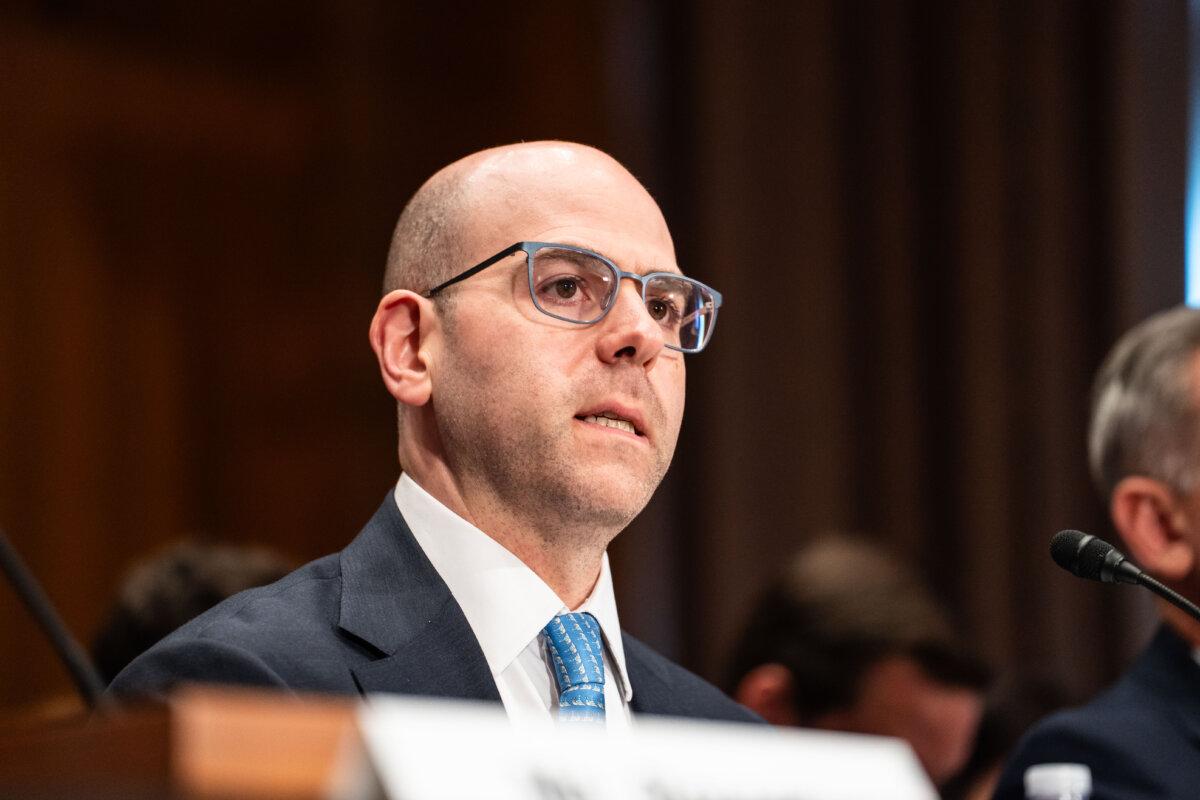
But Miran believes that the Fed could bring the benchmark federal funds rate “about a point easier, gradually done over the course of a year.”
Since joining the institution in September 2025, Miran has dissented and backed lowering the policy rate at each meeting.
In an interview with Fox Business on March 20, Fed Vice Chair for Supervision Michelle Bowman said she has written down two to three rate cuts this year to support the labor market.
However, Fed Board member Christopher Waller thinks it would be best to pause and see what happens in the coming months, whether geopolitical tensions or employment conditions.
“If we get another 90,000 jobs decline in the next jobs report, that’ll be like four negative reports out of five. To me, that’s not zero. So, at that point, you need to start thinking … this labor market isn’t good,” Waller said.
“I don’t think this war is going to help in any way going forward, but we’ll have to see what happens with inflation.”
He voted with his colleagues this month to keep policy intact.
The updated Summary of Economic Projections—a quarterly report highlighting officials’ expectations for policy and the economy—still forecasts one rate cut this year.
Eyes on the Data
For months, officials have warned that the Fed’s dual mandate—maximum employment and price stability—is under simultaneous threat, requiring a balanced approach to crafting policy.
February’s annual inflation rate in the consumer price index report came in at 2.4 percent.
However, producer inflation registered back-to-back higher-than-expected increases, and the Fed’s preferred inflation gauge—the personal consumption expenditure price index—remained close to 3 percent.
Due to the Iranian conflict that has raised the cost of crude oil and gasoline, early forecasts suggest a sizable jump in the March and potential April inflation readings.
The Cleveland Fed’s Nowcasting model suggests that the 12-month rate will reach 3.2 percent in the March consumer price index report.
Market watchers will now brace for a week of employment data.
The first will be the job openings data for February, followed by private sector payrolls and layoffs. The main event will be the March nonfarm payrolls report, which is projected to show 55,000 new jobs and an unemployment rate of 4.4 percent.
“The potential importance of March’s job report can not be understated,” Jay Woods, chief global strategist at Freedom Capital Markets, said to The Epoch Times in a note.
“This will be a major focus coming off the heels of a hotter-than-expected inflationary print and February’s surprising job losses.
“Add that to fears that inflation may spike thanks to the rising cost of oil, and it will give the Fed plenty of data to sift through at their April meeting.”
If the jobs report comes in line with consensus forecasts, this will give the Fed more time before taking rate action, Woods said.