
By Aldgra Fredly
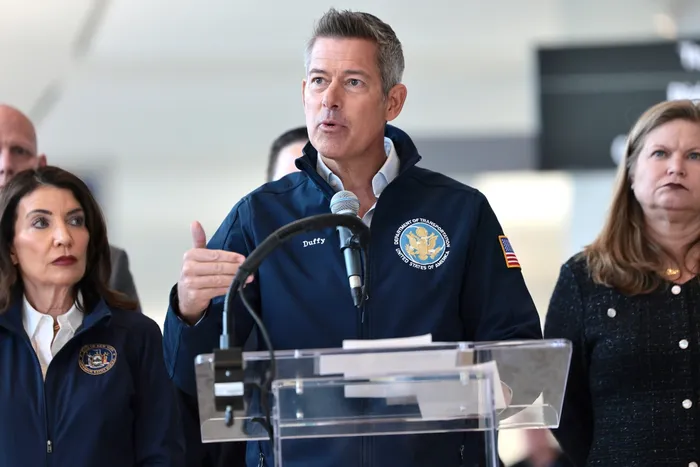
U.S. Transportation Secretary Sean Duffy said on April 21 the department requires $10 billion in additional funding from Congress to overhaul the nation’s air traffic control with a new software system.
Duffy told Reuters in an interview that the additional funding would go toward developing new software aimed at improving the efficiency of air travel and reducing flight delays.
“This tool lets us see and then spread flights in a way that allows for way less disruption,” he told the news outlet. “We could fix this.”
Congress allocated $12.5 billion last year under the One Big Beautiful Bill to upgrade air traffic control infrastructure and equipment to enhance aviation safety. At an April 21 event, Duffy provided an update on the project, saying it is expected to be completed in about two and a half years.
Duffy said the Federal Aviation Administration (FAA) has replaced nearly 50 percent of copper wires, converted 270 radio sites nationwide, installed new surface awareness systems at 54 airports, and transitioned 17 towers to electronic flight strips using the allocated budget from Congress.
“We are going to need more money for the software side of this build,” he said at the event.
“Congress is … going to have to find a pathway to get us the rest of that money. It’s going to take us time to develop it, deploy it, debug it, train on it. And so getting that software started now, hopefully as our build completes with all of the infrastructure, we will have the technology of the software ready to meet up in two and a half years and have a brand new system for America to use.”
The Transportation Department said in January the overhaul would involve launching an airspace modernization office to oversee the installation of a new air traffic control system and creation of an advanced aviation technologies office to oversee the integration of drones and other air mobility vehicles into U.S. airspace.
The FAA will also move more key leadership posts to permanent roles and consolidate management of finance, information technology, and human resources under the administrator, according to the Transportation Department, adding that the restructuring will not lead to workforce reductions.
Multiple safety-related incidents happened at airports over the past year due to equipment issues. In May 2025, air traffic controllers in Denver were forced to switch to emergency backup frequencies after they lost contact with aircraft for about 90 seconds. The controllers had to use emergency backup because both primary and main backup frequencies went down.
Another incident took place in late April 2025, when controllers overseeing Newark Liberty International Airport lost contact with planes for about 30 seconds, leading to flight delays.
Naveen Athrappully and Reuters contributed to this report.