

By Andrew Moran
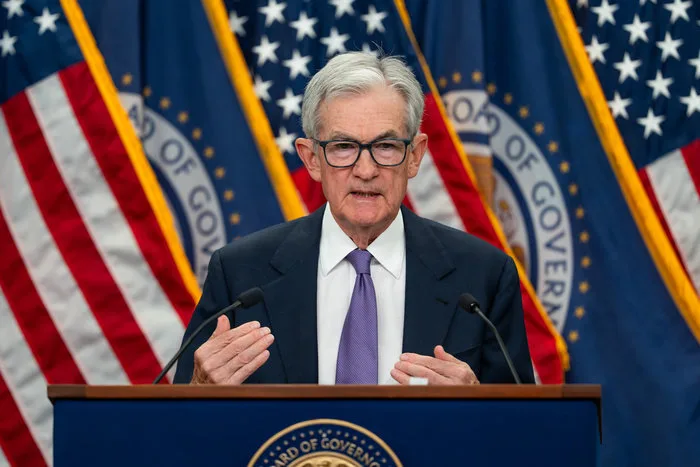
The Federal Reserve was thrust into the spotlight on Jan. 11, after chair Jerome Powell said the Department of Justice threatened a criminal indictment against the central bank over the institution’s over-budget renovations of its headquarters and his congressional testimony last summer.
Powell alleged that it was an administration-wide pressure campaign to force Fed officials to lower interest rates. Meanwhile, President Donald Trump denied any knowledge of the probe by federal prosecutors.
Here is what to know about the criminal probe.
What Happened
In a Jan. 11 video statement posted on X, Powell confirmed that, two days prior, the U.S. central bank had been served with grand jury subpoenas by the Department of Justice.
U.S. officials threatened a criminal indictment over Powell’s Senate Banking Committee testimony last summer, over perjury allegations related to renovations of the institution’s headquarters in Washington.
The central bank chief alleged that the probe is not really about the renovations or his testimony.
“Those are pretexts,” Powell said. “The threat of criminal charges is a consequence of the Federal Reserve setting interest rates based on our best assessment of what will serve the public, rather than following the preferences of the president.”
Trump denied any knowledge of the Justice Department’s probe into the institution, turning the subject to the chair’s job performance.
“I don’t know anything about it, but he’s certainly not very good at the Fed, and he’s not very good at building buildings,” the president told NBC News on Jan. 11.
Last month, Trump teased legal action against Powell surrounding the years-long overhaul of the Fed’s office buildings, saying that the project is “way over budget.”
“We’re thinking about bringing a suit against Powell for incompetence. Because think of it, these aren’t outstanding buildings—these are small buildings,” Trump said during a news conference at Mar-a-Lago in Palm Beach, Florida.
National Economic Council Director Kevin Hassett, speaking to reporters on Jan. 12, called it one of the most expensive buildings in the history of Washington.
“I guess the question is, if you think the building costs $20 billion or $10 billion, do you think at some point that it’s appropriate for the federal government to investigate?” Hassett said.
“If I were Fed Chair, I would want them to do that. I think that it’s really important to understand where the taxpayer money goes and understand why it goes this way or that.”
Fed Renovations
In 2017, the Federal Reserve Board approved the first comprehensive overhaul of its headquarters in the central bank’s history.
When the project was initially approved, the budget was $1.9 billion. The price tag has since climbed to $2.5 billion due to rising labor and material costs, asbestos and soil contamination, and extended construction timelines, according to the Federal Reserve’s Inspector General, an in-house watchdog.
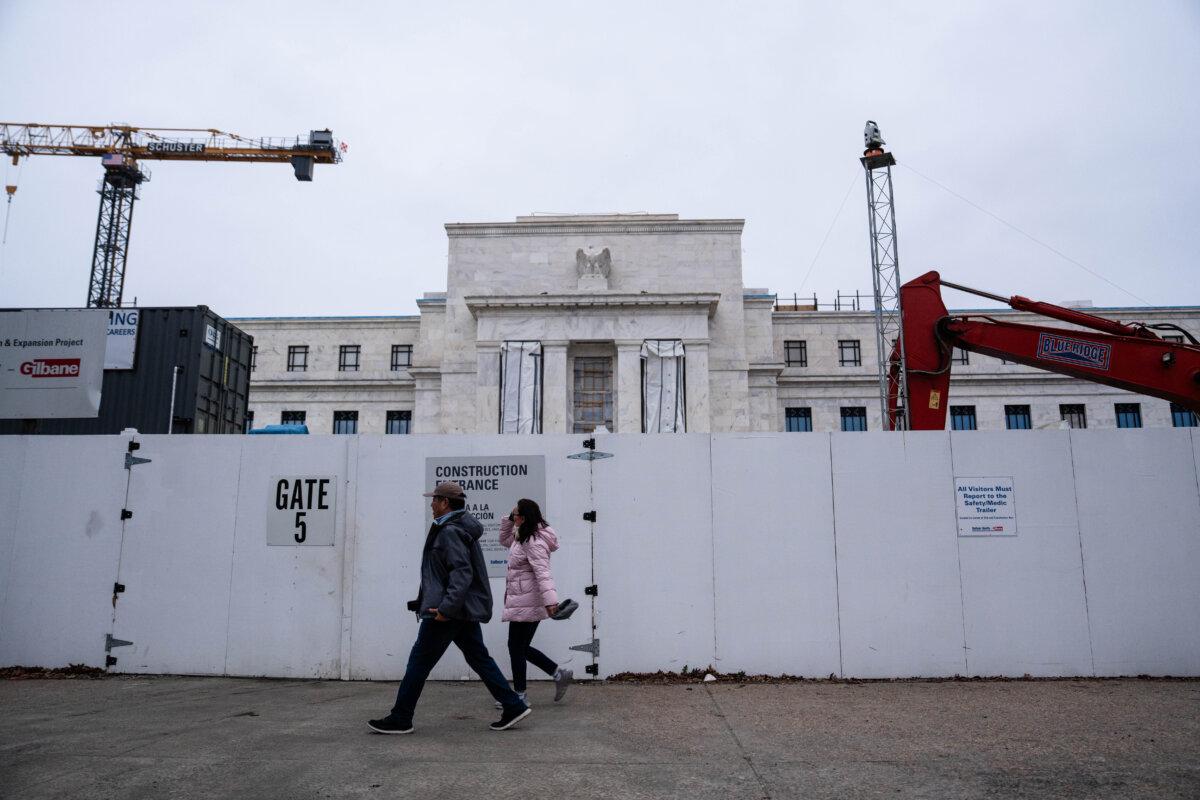
Trump, while touring the construction site in July 2025, estimated that the total cost was between $3.1 billion and $3.2 billion. This received pushback from Powell, who said the administration added the renovation of the Martin building—the primary entrance and security screening area for employees of the Federal Reserve, which was completed in 2021.
Meanwhile, appearing before the Senate Banking Committee in late June, Powell rejected allegations that the Fed was spending lavish sums on renovations, describing the previous headquarters as “not really safe.” He also denied media reports of luxury upgrades.
“There’s no VIP dining room. There’s no new marble,” he told lawmakers. “There are no new water features. There’s no beehives. And there’s no roof terrace gardens.”
“So all of the sort of inflammatory things that the media carried are either not in the current plan or just inaccurate.”
Rate-Cut Debate
Trump has repeatedly criticized Powell and his colleagues for not lowering interest rates at a faster pace since the president’s return to the White House for a second term.
After lowering interest rates by 100 basis points from September 2024 to December 2024, the Fed hit the pause button in the first eight months of last year, saying that it was cautiously assessing economic data and waiting for more clarity on the impact of the Trump administration’s policies on inflation. Monetary policymakers restarted their easing cycle in September 2025, following through on a quarter-point rate cut.
In total, the central bank reduced the benchmark federal funds rate—a key policy rate that influences borrowing costs for businesses, consumers, and the federal government—by 75 basis points in 2025 to a target range of 3.5 percent and 3.75 percent.
The president says inflation has been lower than expected, and therefore, the rates should be “1 percent and maybe lower than that.”
In a June 2025 Truth Social post, Trump accused Powell of costing the United States “hundreds of billions of dollars” by failing to cut rates.
“You have cost the USA a fortune and continue to do so,” Trump wrote. “You should lower that rate by a lot.”
Treasury Secretary Scott Bessent, appearing before the Economic Club of Minnesota on Jan. 8, says economic models suggest that rates should be between 2.5 percent and 3.2 percent.
Others have agreed with the president that the Fed should have lowered interest rates a lot sooner.
“I believe that the Fed needs to be proactive with policy to stave off a potential collapse in the labor market,” Siebert Financial CIO Mark Malek said in a note emailed to The Epoch Times.
Fed Gov. Christopher Waller had also championed rate cuts earlier than when the central bank restarted its rate-cutting cycle.
Noticing signs of deteriorating employment conditions, Waller supported lower rates in early summer.
“If you’re starting to worry about the downside risk [to the] labor market, move now, don’t wait,” Waller told CNBC’s “Squawk Box in June.
Monetary Policy Independence
There was no shortage of reaction to the news of a federal investigation into the Federal Reserve system.
Former Fed Chairs Ben Bernanke, Alan Greenspan, and Janet Yellen co-signed a joint statement on Jan. 12, alleging that the criminal inquiry is an attempt to undermine the Fed’s independence.

“This is how monetary policy is made in emerging markets with weak institutions, with highly negative consequences for inflation and the functioning of their economies more broadly,” the statement said.
“It has no place in the United States, whose greatest strength is the rule of law, which is at the foundation of our economic success.”
Hassett, a top contender to replace Powell in the spring, took a wait-and-see approach.
He told CNBC’s “Squawk Box” he has not been involved in conversations with the Justice Department ahead of its contact with Powell.
“So I don’t really have anything to add other than I respect the independence of the Fed and the independence of the Justice Department, and we’ll see how it goes,” Hassett said.
An investigation will play out, he says, but for now, there is a building that has incurred “dramatic cost overruns and plans for the building that look inconsistent with the testimony.”
Scores of lawmakers on both sides of the aisle, meanwhile, also responded to the Justice Department’s investigation over “possible perjury allegations.”
Sen. Thom Tillis (R-N.C.), a member of the banking committee, said on Jan. 11 that he would oppose the president’s appointees to the central bank, including Powell’s replacement, “until this legal matter is fully resolved.”
Sen. Elizabeth Warren (D-Mass.), speaking to reporters at the National Press Center on Jan. 12, echoed Powell’s comments, suggesting this is about lowering interest rates.
Implications for the Economy
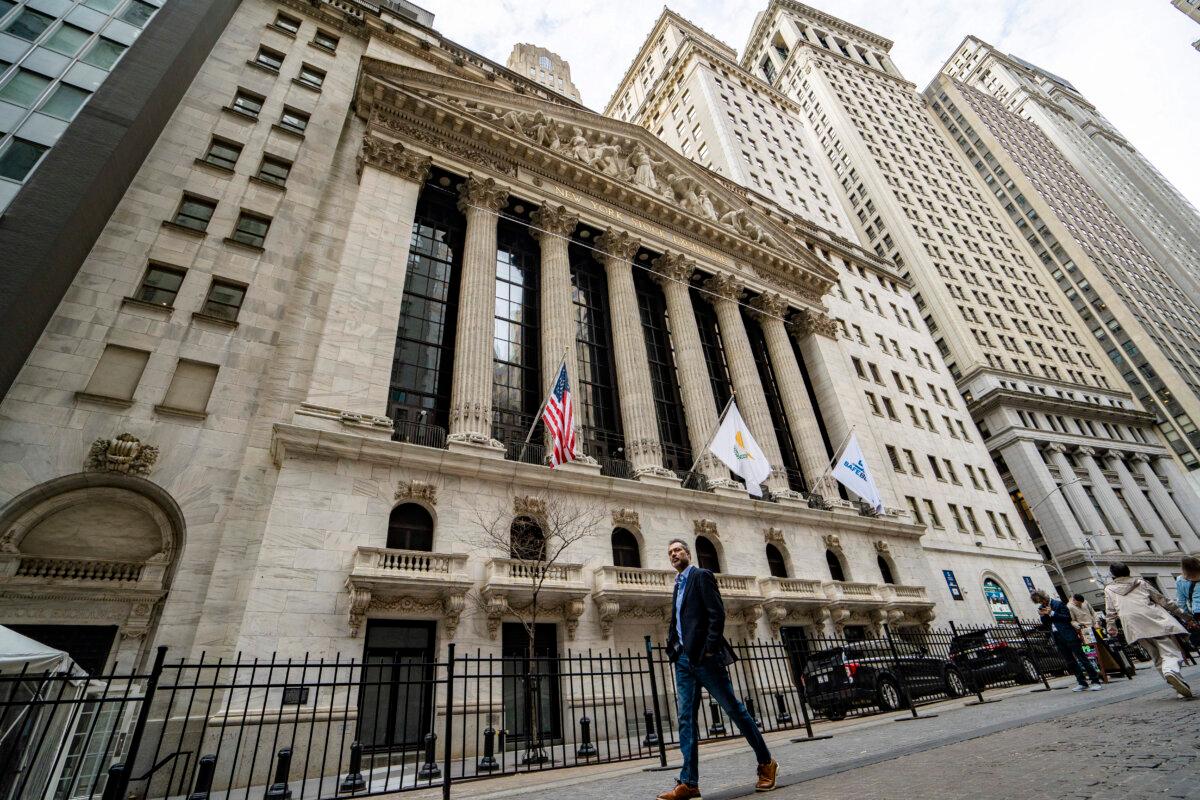
U.S. stock futures declined when Powell confirmed the federal investigations. They continued their drop in early trading on Jan. 12, then recovered from session lows and turned positive toward the closing bell.
Over the years, various papers have highlighted the importance of monetary independence and institutions free from political interference.
A 1988 paper concluded that independent institutions “deliver a lower rate of inflation” than those for which the government is the final policy authority. A 2023 paper, co-authored by economists Charles Goodhart and Rosa Lastra, reiterated this finding.
But while Fed critics have championed central bank independence, many of them have also supported revisiting policy mechanisms and personnel decisions.
Former Federal Reserve Governor Kevin Warsh recommended sweeping fundamental changes to how the Fed conducts business.
“We need regime change in the conduct of policy,” he said in a July 2025 interview with CNBC’s “Squawk Box.”
“Their hesitancy to cut rates, I think, is actually … quite a mark against them,” Warsh said. “The specter of the miss they made on inflation, it has stuck with them. So one of the reasons why the president, I think, is right to be pushing the Fed publicly is we need regime change in the conduct of policy.”
Powell’s term is up in May, and the president is expected to decide on his replacement sometime this month.
Predictive markets data indicate that Hassett reclaimed the lead from Warsh. According to Polymarket, Hassett has a 43 percent chance of being named the next head of the U.S. central bank, followed by Warsh (38 percent) and Fed Governor Christopher Waller (9 percent).
The Fed will hold its next Federal Open Market Committee policy meeting on Jan. 27 and 28. Investors overwhelmingly expect officials will leave interest rates unchanged.
Jackson Richman contributed to this report.
Related posts:
 Glenn Greenwald trashes media ‘cone of silence’ around Hunter Biden email scandal
 The story of how the 2020 election was stolen is finally taking shape
 New Whistleblower Claims FBI Leaders Delayed Hunter Biden Investigation: Sen. Johnson
 Republicans Plan to Start a Committee to Probe ‘Weaponization of the Federal Government’