
By Rob Sabo
Several energy companies have announced the closure of some of their refineries in California in recent months, citing the regulatory environment and operational losses.
Multiple experts in the state’s oil and gas industry recently spoke with The Epoch Times about the closures and their potential impacts on fuel prices and fuel availability in the Golden State.
Refinery Closures
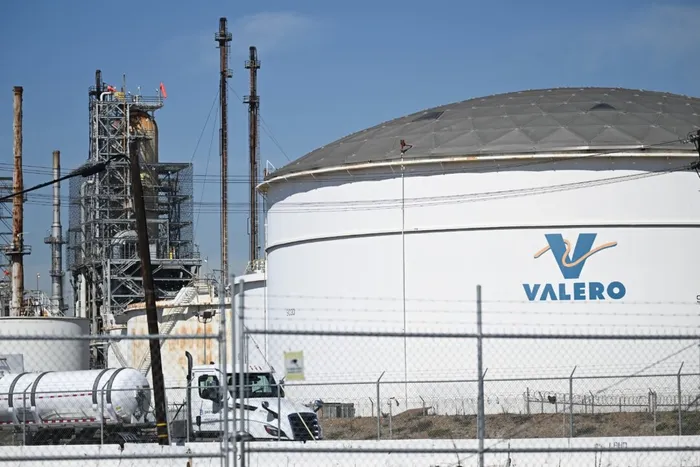
Valero Energy Corporation announced in April 2025 that it would shutter its refinery operations in Benicia, in the San Francisco Bay area. The company also said that it had evaluated the refinery assets in Benicia and Wilmington, near the Port of Long Beach, and concluded that the carrying values of both assets were not recoverable.
Valero said it would continue serving the Golden State’s oil needs through existing inventories and oil imports.
The Wilmington refinery produced 15 percent of the asphalt supply for the entire Southern California region and had a capacity of 135,000 barrels per day. The Benicia refinery on the Carquinez Straits of San Francisco Bay, meanwhile, produced as much as 170,000 barrels per day and employed more than 400.
While the Benicia refinery was originally slated to cease production in April 2026, it actually ceased production in late January. The closure comes on the heels of Phillips 66 ending operations at its Los Angeles refineries in the fourth quarter of 2025.
Phillips 66 operated refineries in Wilmington and Carson that distributed fuel throughout California, as well as to Nevada and Arizona. The dual sites spanned 650 acres and employed about 600.
Chevron, meanwhile, announced in August 2024 that it was relocating its headquarters from San Ramon to Houston, Texas. The company had operated in the Golden State since 1879 and employed more than 2,000 people in San Ramon. Its refineries in Richmond and El Segundo supply more than 1,800 retail locations in the state.
Key factors
Michael Mische, a professor at the University of Southern California’s Marshall School of Business, told Siyamak Khorrami, host of The Epoch Times’s “California Insider,” that Valero’s and Chevron had incurred heavy asset write-offs before they made those decisions.
Valero said in the April 2025 announcement that it had written off a combined $1.1 billion of assets in Benicia and Wilmington in the first quarter of the year.
Chevron revealed in a January Securities and Exchange Commission filing that it had recorded after-tax charges of $3.5 billion to $4 billion in the fourth quarter of 2023, including asset write-offs and impairment charges, primarily in California.
“Of course, they vacated California. Their corporate headquarters is now in Houston,” Mische said, referring to Chevron.
In responding to the company’s Benicia refinery-closure decision during an April 2025 earnings call, Valero CEO Lane Riggs cited California’s regulatory environment as the primary reason.
“California has been pursuing policies to move away from fossil fuels for the past 20 years,” he said. “The consequence is that the regulatory and enforcement environment is the most stringent and difficult in North America.”
Phillips 66 also cited “changes in governmental policies or laws that relate to our operations, including regulations that seek to limit or restrict refining” as a reason for its decision to cease operations in its announcement.
California Gov. Gavin Newsom signed Assembly Bill AB X2-1 on Oct. 14, 2024, which became effective on Jan. 13, 2025. The bill allows the California Energy Commission to regulate refiners by enforcing minimum inventory levels to prevent spikes in price, effectively capping their profit margins.
“That piece of legislation (was) one of the primary last factors that went into decisions to close these refineries down,” Mische said.
Additional regulations enacted in the state have led to increased production and operating costs for oil refiners.
In 2020, Newsom issued an executive order requiring all new passenger vehicles to have zero emissions by 2035. In 2022, the California Air Resources Board (CARB) adopted new regulations to pave the way for the state’s zero-emission standards.
The state’s Cap-and-Invest Program, meanwhile, has a goal of carbon neutrality by 2045 and requires increasingly stricter standards for carbon emissions.
Mische said that without a significant change in policy and stance toward the oil industry, the state may lose another one or two refineries by 2032.
Potential Impact
Mike Ariza, former senior refinery technician and control board supervisor at the Benicia refinery, told Khorrami that Valero’s refinery operations in Benicia were the most complex and efficient in the state.
The refinery produced between 4.5 million and 4.7 million gallons of gasoline per day, as well as about 600,000–700,000 gallons of jet fuel and diesel fuel, he said.
A bad storm or major problem at one of California’s ports could have huge ripple effects across the state’s fuel supply, Ariza said.
“If something like that happens, we will very quickly run out of gasoline,” he said.
“We don’t have a lot of inventory—14 days, we will run out of supplies. Not only will prices go through the roof, but you will end up having shortages.”
Mische said that 85 percent of all light-duty vehicles in California use gasoline or diesel fuel, and airplanes require “jet fuel”—gasoline or diesel fuel specially refined for jet engines.
“These refineries, as they’re shutting down, place greater and greater pressure, not only on prices but on the supply chains themselves,” he said. “It’s quite possible that you’ll have supply disruptions.”
Californians pay the second-highest average gas prices in the United States, behind Hawaii. Gasoline averaged $4.38 a gallon on Jan. 4, the American Automobile Association reported. The national average was $2.88 per gallon. Fuel prices in remote Mono County along the Eastern Sierra Nevada mountains averaged $5.56 per gallon.
Meanwhile, California Assembly member Stan Ellis, a Republican representing Kern and Tulare counties, expressed concerns about the impact of Valero’s refinery closure on the U.S. military installations in the state.
“Forty-some bases, counting National Guard and … the Marines, and all the bases, naval stations, in California. Where are they going to get their fuel?” he said.
A November 2025 Institute for Energy Research (IER) report warned that several U.S. military installations in California could face jet fuel supply challenges if the state’s refinery capacity declines due to closures.
The state has the nation’s largest concentration of military personnel and national security activity.
According to a 2022 California Research Bureau report, California had more than 30 military installations, including facilities for the Army, Navy, Air Force, Coast Guard, and National Guard.
Ellis said India is a supplier of California’s imported crude, but there are few options to refine it outside of the state.
“This is serious business, and these are facts,” he said. “We’re simply trying to bring awareness to the fact that we have an issue and we need to address it.”
He calls for existing oil fields to be exempt from the California Environmental Quality Act (CEQA), passed in 1970, which requires environmental review and public disclosure for projects that could significantly impact the environment, including refineries, roads, and large buildings.
Separately, Mische is calling on Congress to repeal or modify California’s restrictive policies through the legislative process to support refiners.
“That probably won’t be very successful, but nonetheless, we’re going to give it a good shot this legislative session,” he said.