
By Michael Zhuang
News Analysis
After U.S. special forces captured Venezuelan leader Nicolás Maduro to stand trial in federal court, Chinese state media moved swiftly to condemn Washington—while allowing an unusually raw surge of anti-American hatred on its heavily censored social media platforms.
Within hours of Maduro’s capture, the Chinese Communist Party’s (CCP’s) propaganda mouthpiece Xinhua News Agency published a sharply worded commentary accusing the United States of engaging in “naked hegemonic behavior.” The piece was rapidly republished across major Chinese platforms. The comment sections were flooded with emotional and, at times, openly violent anti-American rhetoric that would normally be swiftly censored. This was unusual for China’s heavily censored internet environment.
For analysts of China’s information controls and censorship, this episode provided a familiar yet rarely visible example of how Beijing manipulates public opinion—by tightly defining the political narrative at the top, then selectively releasing public emotions below.
Setting the Tone From the Top
The Xinhua commentary framed the U.S. operation against Maduro as a repudiation of the “rule-based international order,” casting Washington as a lawless actor trampling national sovereignty. That political verdict set the emotional parameters for the discussion that followed.
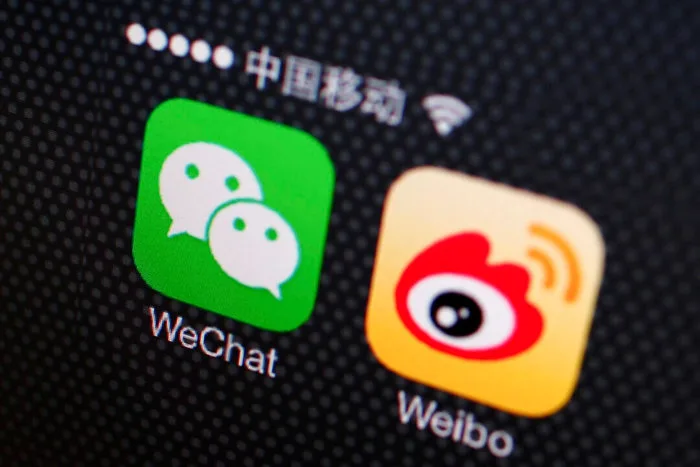
Once the narrative was established, Chinese social media platforms—including mainstream microblog sites like Sina Weibo—allowed comment sections to remain largely unfiltered. The result was a flood of incendiary language where the United States was labeled a “bandit state,” “terrorist power,” and a force that deserved “vengeance and reckoning.” Some comments invoked colonial history, the treatment of Native Americans, or World War II to amplify their accusations.
In the past, such language, especially when it veers toward hatred or violence, was typically scrubbed quickly from China’s internet. Its widespread survival in this case was notable.
‘Official Framing, Popular Venting’
A China-based U.S.–China relations scholar, who spoke to The Epoch Times using the pseudonym Qi Da’an due to safety concerns, described the moment as a textbook example of what he called an “official framing, popular venting” strategy.
“State media commentary provides the political narrative and moral judgment, framing the incident within an anti-hegemony and anti-interference discourse,” Qi said. “At the same time, comment sections are selectively loosened, allowing harsher and more emotional language to surface in order to amplify public resentment toward the United States.”
According to Qi, the comments themselves often appeared dull, recycling familiar nationalist slogans. He suggested that some comments were likely mass-produced by the regime’s so-called “50-cent Army,” known as “wumaos” in Chinese, made up of paid agitators posting pro-CCP comments.
Controlled Discourse and Emotions
Zou, a China-based analyst who studies the CCP’s information controls, spoke to The Epoch Times while identifying himself only by his surname for safety reasons. He said the phenomenon reflects a highly structured media propaganda playbook rather than an accidental lapse in censorship.
“This loosening of moderation is targeted,” he said. “The permitted commentary is overwhelmingly focused on criticizing the United States and does not spill over into discussions of China’s domestic politics, economy, or governance. Put plainly, emotion is allowed—but its direction is tightly controlled.”
The goal, he said, is not to broaden debate but to narrow it. By funneling anger outward—toward the United States—the system provides a controlled outlet for domestic frustration while preventing discussion from drifting toward China’s own governance, economic turmoil, or leadership.
In the short term, the tactic can create the impression of popular unity and moral outrage, according to Xia, another China-based scholar in U.S.–China relations who spoke to The Epoch Times while revealing only his surname for safety reasons. He pointed out that over time, repeatedly mobilizing nationalist anger carries risks.
“Anti-American sentiment is repeatedly mobilized but never truly absorbed or resolved,” he said. “Over time, this creates a form of emotional dependence. When authorities later try to rein it back in, they may find it difficult to contain—and it can even trigger new backlash at home.”
Dissenting Voices Were Briefly Visible
Amid the flood of ultranationalist comments, a small number of dissenting posts also surfaced—another sign of temporary loosening rather than systemic change.
One user argued that the U.S. action against Maduro and Russia’s invasion of Ukraine may look similar on the surface but differ fundamentally in nature. One, the commenter wrote, targeted an authoritarian regime; the other sought territorial expansion.
Such comments were quickly drowned out by the dominant tone—and in many cases later deleted by the regime’s censors.
A Division of Labor in China’s Information Control
Analysts say the phenomenon shows a clear division of labor within the party’s propaganda apparatus.
State media provides what Zou called a “legitimacy narrative,” invoking international law, multilateralism, and selective foreign reactions to frame China’s official stance. Online commenters, meanwhile, supply emotional force—anger, grievance, and moral outrage—creating the appearance of popular resonance.
“It’s a coordinated effect,” he said. “Official position plus public emotion.”
More importantly, Zou added, the performance is aimed primarily at domestic audiences.
“Many Chinese people who follow international news closely are already reading foreign coverage through VPNs. This messaging is designed for those who stay inside the system,” he said.
The brief eruption of anti-American anger following Maduro’s capture illustrates how the CCP treats emotion as a governing tool. Public outrage is permitted, but only when it reinforces official narratives, and only for as long as it remains useful. Once its purpose is served, the same controls that allowed it to surface are poised to shut it down again.
Xing Du contributed to this report.