
By Jack Phillips
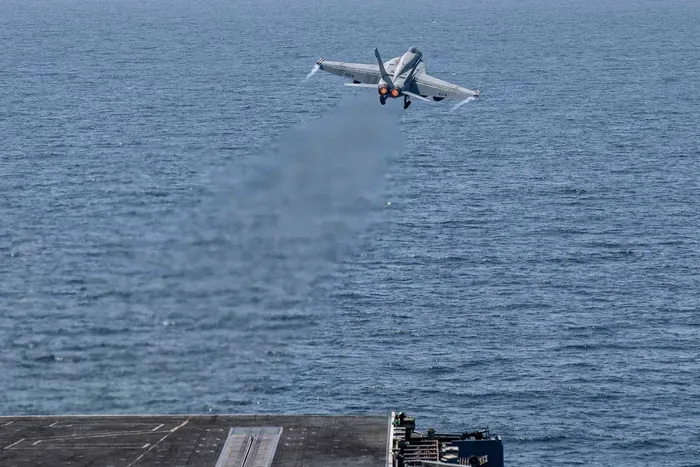
The U.S. military command leading the war effort against Iran said that more than 9,000 targets have been struck and more than 9,000 flights have been conducted so far since the conflict started in February.
In an operational update on March 23, the U.S. Central Command (CENTCOM) said it’s still focusing on “striking targets to dismantle the Iranian regime’s security apparatus.” Around 140 Iranian naval vessels have been destroyed, it said.
Around the same time, CENTCOM disputed recent rumors that an American F-15 fighter plane was shot down over Kuwait and said it was part of an Iranian disinformation campaign meant to sway opinion about the war.
“Lies about U.S. aircraft being shot down by Iran have been circulated multiple times on different platforms using fake or misleading imagery. To be clear: No U.S. fighter aircraft have been shot down by Iran,” the command wrote in a post on X.
Earlier in March, U.S. officials confirmed that Kuwaiti air defenses shot down three F-15s in what it described as a friendly fire incident and that three American pilots were safe.
The U.S. and Israel launched strikes on Iran on Feb. 28 after saying they had failed to make enough headway in talks aimed at ending Iran’s nuclear program. Early strikes killed the top Iranian leader, Ayatollah Ali Khamenei, and dozens of other officials.
Iran has launched missiles and drones at Israel, U.S. assets in the Middle East, and neighboring countries. Iran has also effectively shut down the strategic Strait of Hormuz, which normally carries about one-fifth of the world’s oil and significant amounts of liquefied natural gas, driving up energy and gasoline prices worldwide.
More than a dozen countries late this past week released a statement calling for the strait to be reopened, although none has publicly pledged to send military assets there to safeguard the passage of commercial vessels.
Israel’s military said on March 24 that its fighter jets had carried out a wave of strikes in central Tehran on Monday, targeting command centers including facilities associated with the Iranian Revolutionary Guard’s intelligence arm and the country’s Intelligence Ministry. It said that more than 50 other targets had been hit overnight, including ballistic missile storage and launch sites.
Iranian officials on Tuesday, through state-affiliated media Tasmin News Agency, said Iran fired missiles at Israel, striking Tel Aviv and other areas.
President Donald Trump said on Monday that U.S. and Iranian officials had held “very good and productive” conversations about a “complete and total resolution of hostilities in the Middle East” and that he was postponing for five days a plan to hit Iran’s energy grid.
Talks began on Sunday, he said, and continued into Monday, with Special Envoy Steve Witkoff and Trump’s son-in-law Jared Kushner involved.
Senior Israeli political sources in Jerusalem told Epoch Magazine Israel that Egypt, Turkey, and Pakistan worked behind the scenes to mediate between Washington and Tehran, with Pakistan serving as the lead intermediary.
Some Iranian officials denied that talks have been held.
Iran’s parliament speaker, Mohammad-Bagher Ghalibaf, said on Monday that reports of talks being initiated are “fakenews” that he said are being used “to manipulate the financial and oil markets and escape the quagmire in which the U.S. and Israel are trapped.”
On Tuesday, Pakistani Prime Minister Shehbaz Sharif said Pakistan welcomed and fully supported ongoing efforts to pursue dialogue to end the war, writing on social media that he is willing to hold talks between Iran and the United States.
“Subject to concurrence by the U.S. and Iran, Pakistan stands ready and honored to be the host to facilitate meaningful and conclusive talks for a comprehensive settlement,” he said, tagging Trump, Witkoff, and Iranian Foreign Minister Abbas Araghchi on social platform X.
Reuters contributed to this report.